Skin Analysis Software Data Privacy: Clinic Guide
Skin analysis software data privacy starts with knowing where images go, why they are used, who can access them, and how each copy is removed....

Choose a skin analysis machine by testing repeatable capture, clear reports, data access, and ownership costs against your clinic’s workflow. A long feature list can’t show whether your team can use the results.
Comparing suppliers gets difficult when one brochure counts lighting modes and another counts software maps. Both may promise a detailed scan, yet leave out how scores are defined, what software costs, or what happens to client records when you leave.
Start with the buying decision you need to make. A small practice may need consistent photos and clear explanations during consultations. A distributor also needs written software, training, and support terms that they can explain to buyers.
This skin analysis machine buying guide gives you a practical way to compare those needs. You’ll find a demonstration checklist, questions for reading reports, and a three-year cost example. Manufacturer documentation, a published precision study, and FDA guidance support the distinctions below; they don’t establish the performance of every scanner.
Key Takeaways
- Test repeated captures under the same documented conditions before choosing a skin analysis machine.
- A repeatable score still needs a clear definition and evidence for its intended use.
- Test report export, record access, and account closure before signing a software agreement.
- In the fictional 36-month worksheet below, the lower equipment price produces the higher modeled subtotal.
- Match the exact model and software version to written documentation and support terms.
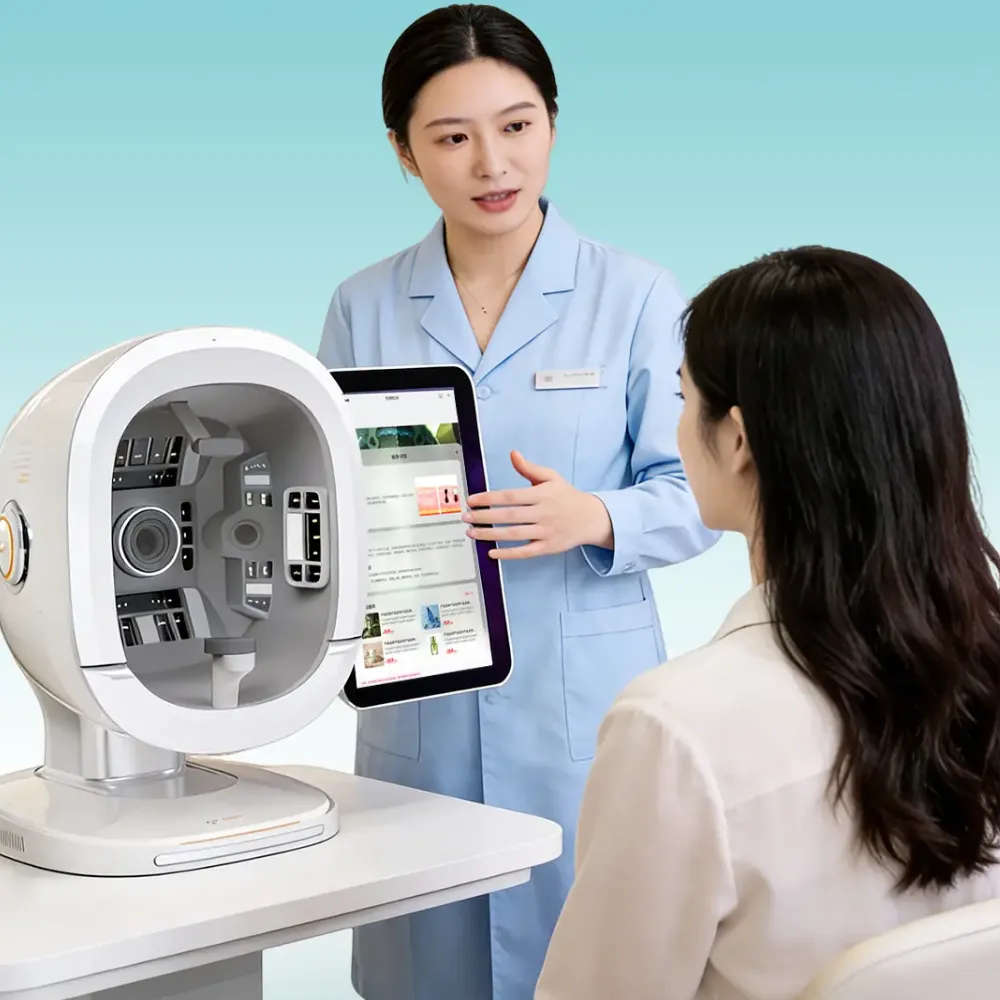
Start with the task: baseline photos, a visual consultation, or follow-up comparisons. Write down what your team must show a client and keep in their record. That gives you a useful basis for comparing skin analysis equipment.
Browse the current skin analysis machine range to build a shortlist, then request the manual and a sample report for each exact model. Category descriptions help you discover options; the model documents should support your decision.
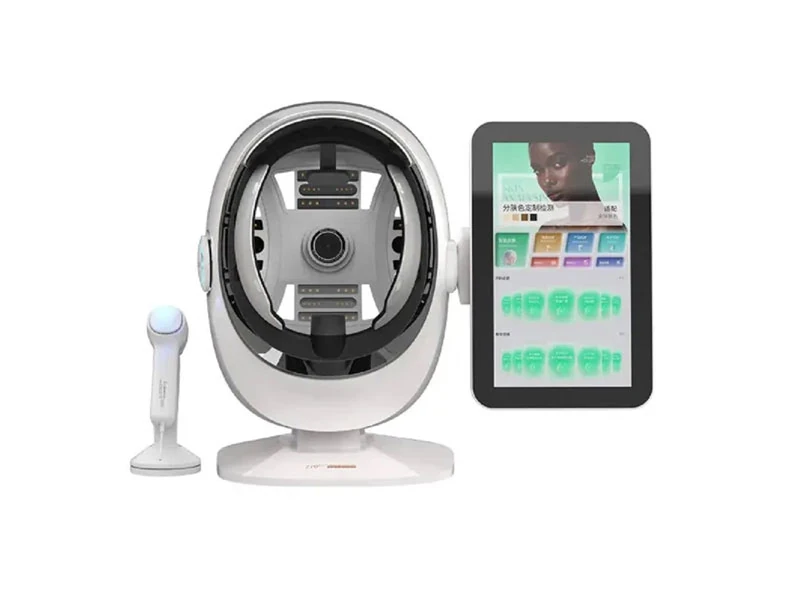
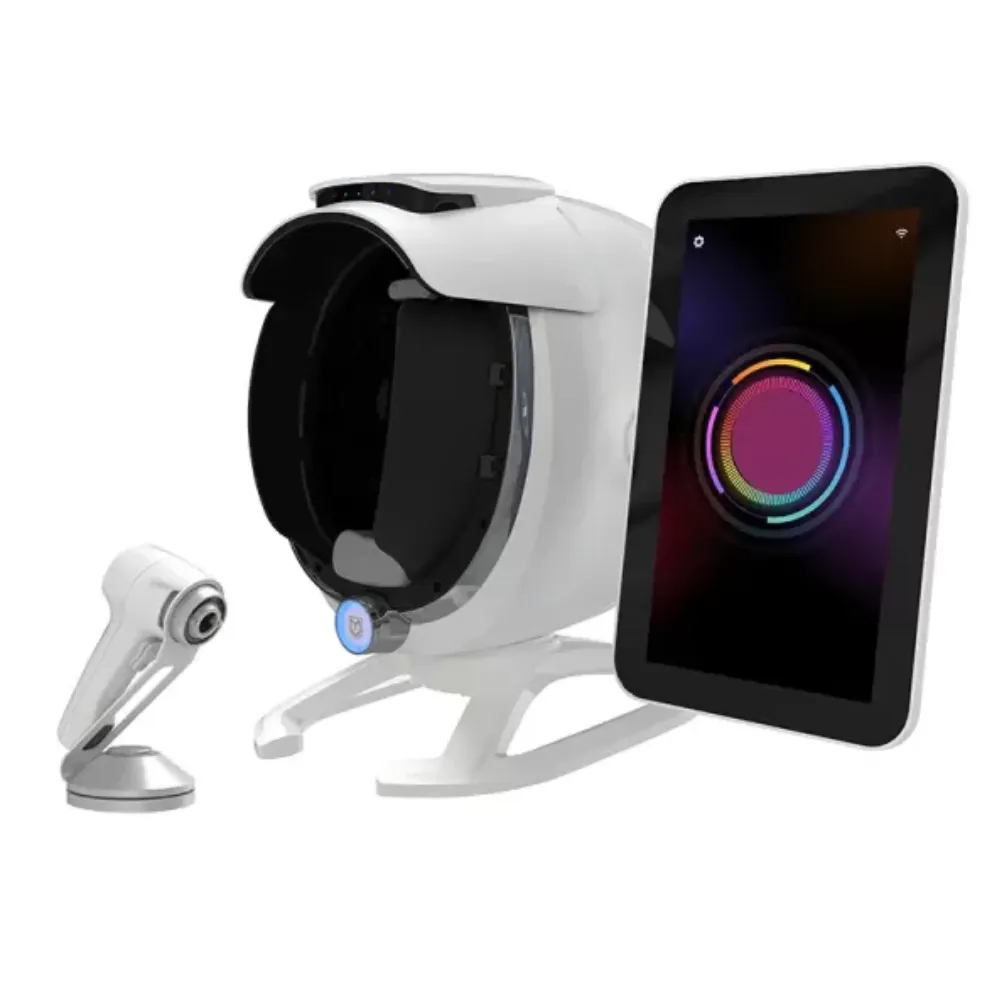
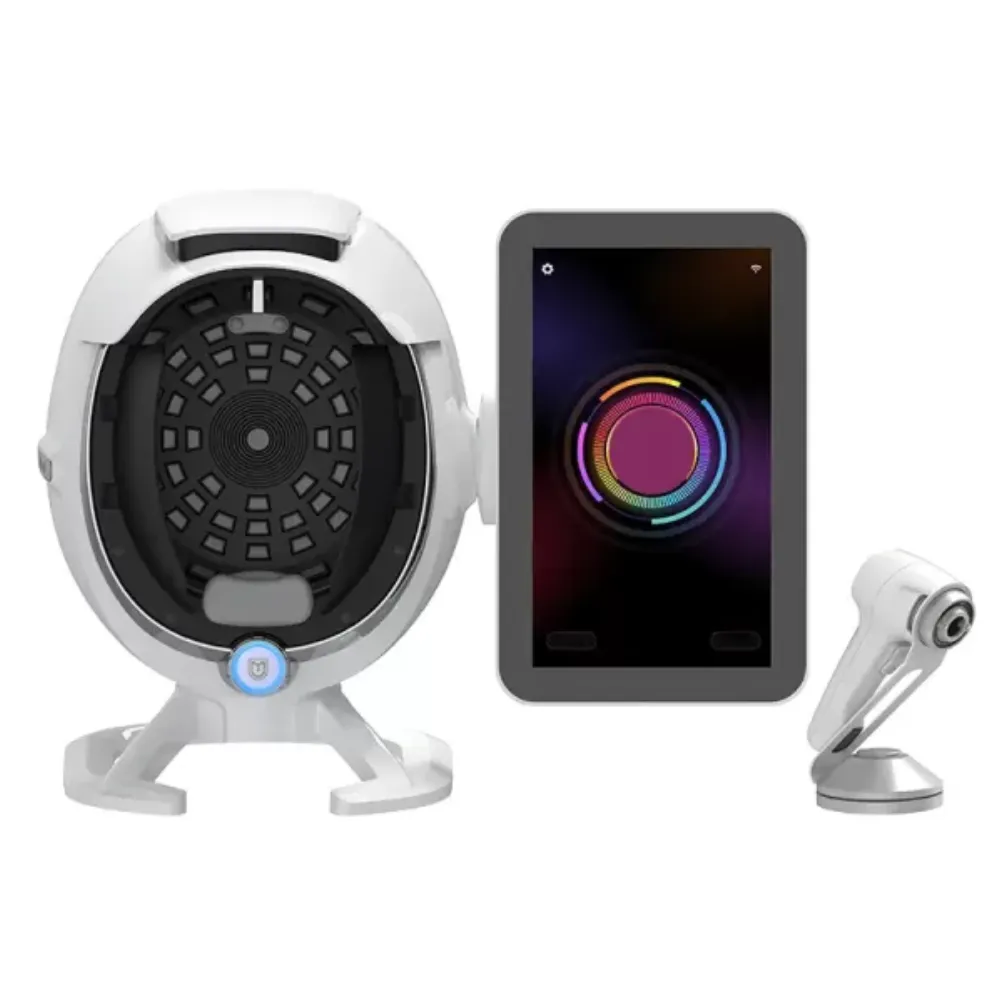
Ask what the skin analysis machine captures and what its software works out from the images. Does a feature use a separate light, a filter, a generated view, or an extra probe? A count of displayed maps won’t tell you. Ask to see the source behind each one.
For a named example, Canfield’s VISIA product documentation describes standard, cross-polarized, and ultraviolet (UV) lighting. It lists features such as spots, wrinkles, texture, and pores. These are Canfield’s descriptions of its system. They don’t prove another maker’s features or accuracy.
Use this table to turn a brochure claim into a test request:
| Advertised Feature | What to Ask the Supplier to Show |
|---|---|
| Multiple spectra or modes | Each source image beside any software-generated maps |
| 3D analysis | How it captures face shape and which measures use it |
| Moisture score | Whether it uses a contact probe or estimates from an image |
| Progress tracking | Matched views, dates, settings, and clear score meanings |
| Automatic recommendations | How it selects advice and how staff review it |
A professional skin analyzer should make these differences clear. If an AI skin analyzer reports hydration, ask how it measures or estimates that value. What tests support the method? A score from a photo and a reading from a probe need their own evidence.
Time the whole task: consent, skin preparation, setup, explanation, cleaning, and saving the record. A short scan can still sit inside a much longer visit. Use the full time when planning your diary.
Check the skin analysis machine’s space, power, computer, and network needs. Have a staff member find an earlier record and explain the new report without help from the seller. For app-based options, ask what controls camera distance, light, and face position. Compare those controls with the scanner’s actual setup.
A useful demonstration shows what happens when a person leaves the chin rest and returns. One polished sample report won’t show how positioning, preparation, and capture settings affect your day-to-day records.
Agree on a short procurement test with the supplier. Follow the model’s instructions and obtain the participant’s permission. This checks workflow and repeat capture; it does not replace formal validation.
Ask the vendor to explain acceptable variation for each output. Don’t invent a universal pass threshold for a skin analysis machine. If there is no documented tolerance, record that gap and request an explanation before accepting the result.
Fictional buyer example: Alex runs a practice with two staff who carry out skin consultations. At a skin analysis machine demo, they ask a volunteer for consent to three scans, leaving the chin rest each time. The scores change, and the seller can’t explain the skin-preparation rules.
Alex holds the order and asks for the written steps and data on how well each score repeats. They now have a clear request to resolve before buying. This example doesn’t show that the device works or fails.
Ask two separate questions: do the numbers repeat, and do they measure the stated feature? The first concerns repeatability; the second concerns validity. Agreement with another device is a third check. A stable score alone doesn’t prove that a device can diagnose disease.
A 2022 Visia precision study by Henseler studied eight volunteers. Each person had three captures at each of two visits, one week apart, with set capture rules. The small study concerns the system tested at that time. It does not validate current VISIA 3D, a LufenBeauty model, or broad use to diagnose disease.
For any skin analysis machine, ask for data on the exact feature, device, software version, and people it was tested on. How did the study assess skin tones? How many people were in each group, and where did the system struggle? A broad “all skin types” claim doesn’t answer those questions.
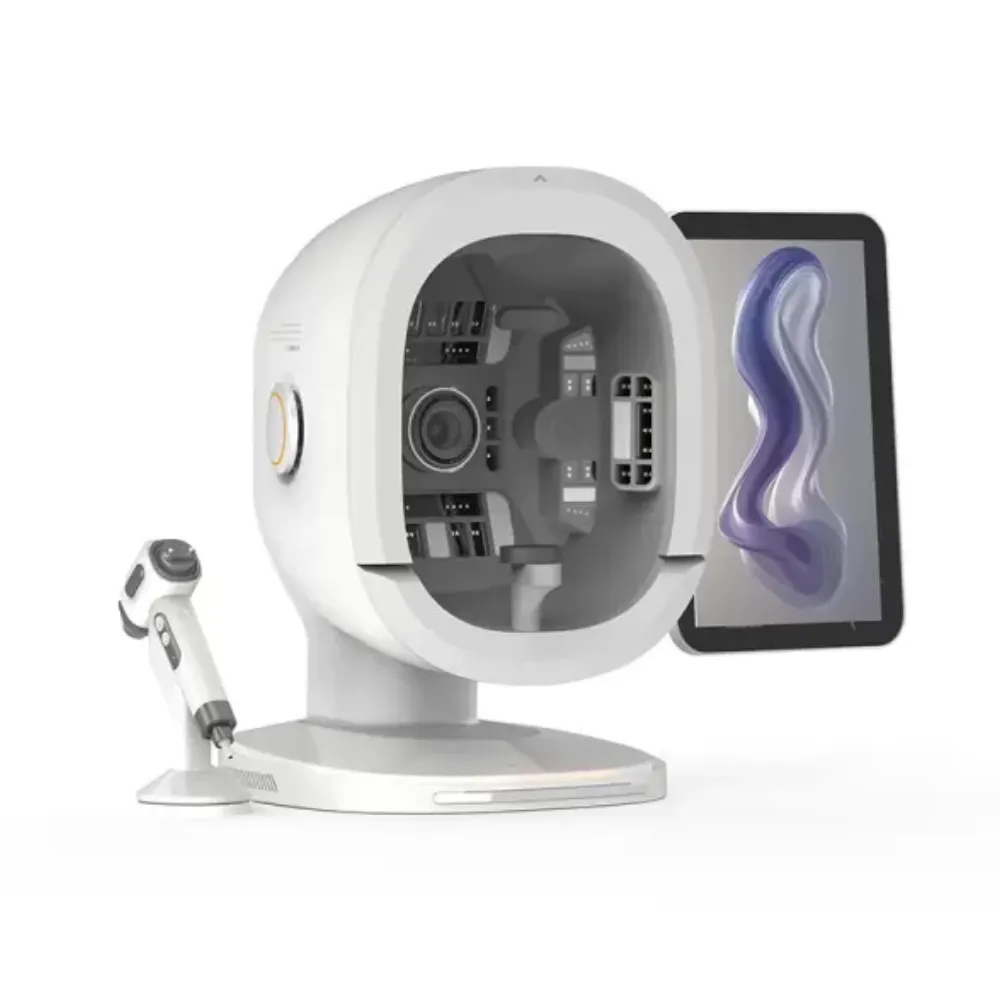
Before buying a skin analysis machine, obtain a sample report that you are allowed to review. Use a demonstration record or an appropriately de-identified example. Ask the supplier to explain each result in plain language.
A feature count, a percentile, and a combined score have different meanings. For a count, ask which face area was checked and what counts as one feature. For a percentile, ask who forms the reference group. For a combined score, ask how the parts add up and what the scale means.
For each skin analysis report, ask whether a higher number is better, worse, or just more of a feature. Is it a raw value or a rank against other people? A percentile is not a percentage of healthy skin. Keep that distinction clear when staff explain results to clients.
Next, compare a new report with the first scan. Check that the face view, area, method, and scale match. Does a software update change the scoring rules or apply new rules to old images? You need to know before treating a score change as a change in the skin.
Have your staff explain one result without diagnosing a disease or promising treatment results. If they rely on a vague term such as “skin age,” ask what it means and what data support it. A skin analysis machine should help staff explain what is known. Its report should also make clear what the score cannot tell them.
Ask the seller to make a test record and export it. Open the file outside the system and check the images, dates, client details, and score labels. A readable PDF is useful. It may still lack the source images or data files you would need to move records to a new system.
Next, ask who can view and change records on the skin analysis machine. Where does the data go, who stores it, and can it be used to train models? Check who can restore a backup and test that process with a sample record. Review the terms against the laws and recordkeeping duties that apply to your practice.
Test what happens when your account closes. Ask about the steps, fees, file types, and how long records stay after the paid term ends. Does a request to delete data also cover backups? Confirm how you would keep the records your clinic is required to retain.
Compare quotations for a defined configuration and time period. Record the currency, quote date, included hardware, software term, storage allowance, delivery, training, and taxes. Confirm which costs are fixed and which increase with users, branches, or saved records.
The table below uses invented teaching assumptions in USD. Offers A and B are fictional; these are not LufenBeauty prices, competitor quotations, or market averages. Assume both offers meet the buyer’s functional requirements solely for this cost illustration.
| Cost Input | Offer A | Offer B |
|---|---|---|
| Equipment | $6,000 | $4,500 |
| Delivery and setup, one time | $500 | $500 |
| Software per month | $50 | $100 |
| Service allowance per year | $300 | $300 |
| 36-month modeled subtotal | $9,200 | $9,500 |
Calculate the subtotal as equipment plus setup, plus 36 monthly software payments, plus three annual service allowances. Offer B starts $1,500 lower but incurs $1,800 more in software fees. Under these assumptions, it ends $300 higher over three years.
This skin analysis machine worksheet is a subtotal, not a complete landed or operating cost. It excludes taxes, import duties, financing, insurance, computer or furniture upgrades, extra storage, supplies, unexpected repairs, and downtime. Add the applicable items from your own written offers.
Fictional buyer example: Priya is comparing the two invented offers for a new consultation room. They initially favor Offer B’s $4,500 equipment price, then calculate the recurring software cost over 36 months. The comparison changes their next step: Priya asks both suppliers to confirm licensing, storage, and renewal terms in writing. They keep both on the shortlist until function and contract checks are complete; the arithmetic alone doesn’t select a winner.
For another teaching assumption, allow 20 consultations per month at 10 minutes each and $24 per staff hour. That adds $80 monthly, or $2,880 over 36 months. Your real skin analysis machine workflow may take more or less time, so use observed visit tasks and local labor costs.
Don’t assume every scan produces a paid visit or a treatment sale. Model a low-use month, a staff-training period, and a service interruption. If the purchase only works financially with an unproven sales increase, resolve that assumption before ordering.
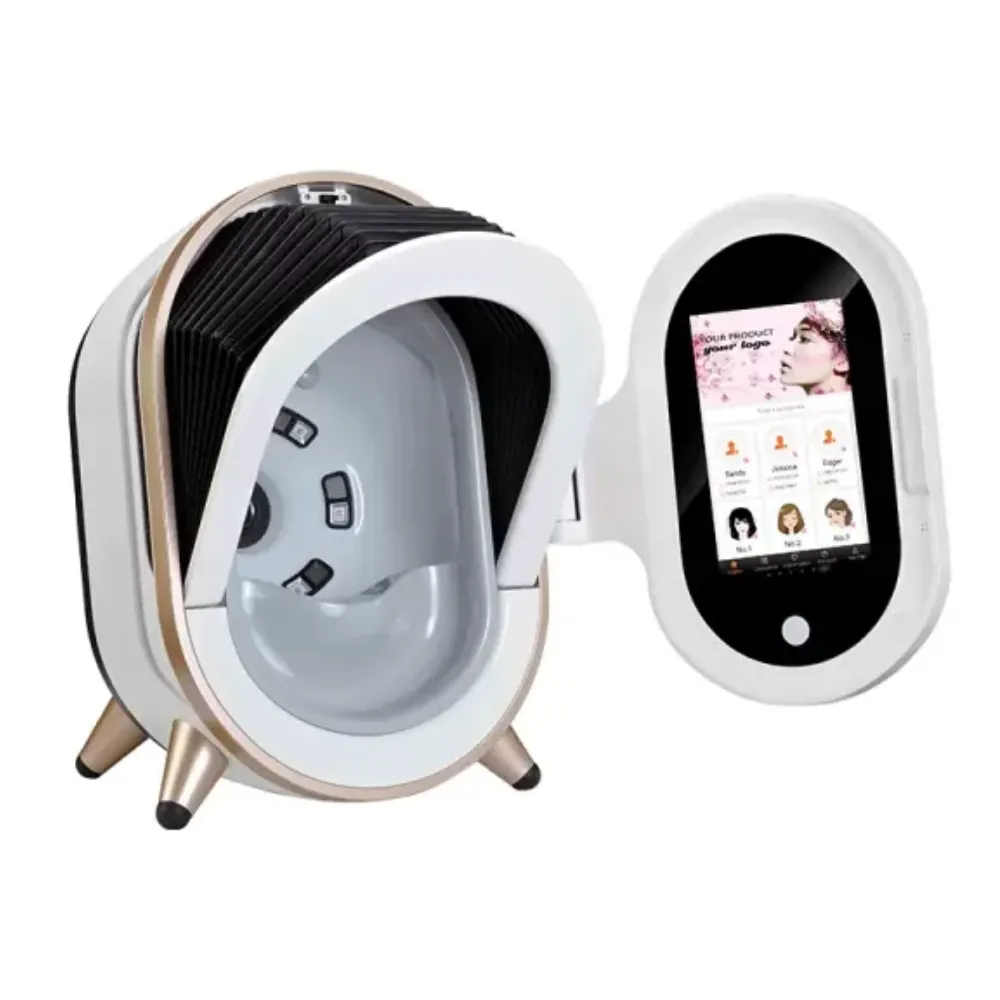
Match the skin analysis machine on the quote to the manual, demo setup, and software licence. Check who makes it and what role the seller has. Two products with similar names or cases need not be the same system. Ask for the exact model code and the name shown on its label.
Start with what the device is meant to do and the country where you will use it. Ask which rules apply to that setup and obtain the required documents. A cosmetic imaging system and a device used to diagnose disease may follow different rules. The seller should explain which route applies and why.
The FDA’s registration and listing reminders state that registration and listing do not denote approval, clearance, or authorization. FDA also does not issue registration certificates to medical-device facilities. Check any claimed status against the exact model and its applicable route. A logo or certificate image alone won’t establish that status.
For LufenBeauty, review the published supplier background with the documents for your order. Its skin analysis machine category lists names such as K33 and M9 Magic Mirror Max. Those listings show what is marketed. They don’t confirm the model’s full specs, stock, or status in your country.
Agree on what must arrive before you accept the skin analysis machine. List the model, software access, manuals, training, and demo checks. Put the due date, remedy for a failed check, and return terms in the order. Make sure both sides can tell when each check has passed.
Ask who pays repair freight, which parts are covered, and how software access works during a repair. Confirm support hours, who handles an unresolved fault, and the cost of spare parts. Ask about update and renewal fees too. A warranty term needs clear exclusions and a repair process to be useful.
Check the support scope: Use LufenBeauty’s training and support information to prepare questions about your chosen model. Request a written training plan and warranty terms for that analyzer. Confirm the general website statements for your actual order.
Choose one that meets your essential capture, report, data-access, and support needs within an affordable ownership budget. Test it with your staff and available space. A smaller feature set can be appropriate when the outputs are clear and the workflow fits your consultations.
Pay more only when the added functions solve a defined task and have suitable supporting evidence. Ask what the AI calculates, how staff review its output, and whether it changes fees or data use. The AI label alone doesn’t establish extra value.
There is no single accuracy figure for every skin analysis machine and every output. Request results for the specific feature, reference method, population, and software version. A repeat-capture demonstration helps assess consistency; it cannot establish all clinical or diagnostic claims.
Obtain an itemized, dated quotation for the configuration and market you need. Compare purchase price, software, storage, training, delivery, support, and local costs. The fictional worksheet above explains the method; its dollar amounts are not a published selling-price range.
Do not treat a cosmetic skin analysis report as a medical diagnosis. Any diagnostic claim needs evidence and applicable authorization for that exact intended use. Clinical assessment belongs with an appropriately qualified professional; a cosmetic score should not determine treatment on its own.
Choose your skin analysis machine by working through evidence, workflow, data, cost, and support in that order. Keep a short record of what each supplier demonstrated and which questions remain unanswered. That record is more useful than comparing brochure feature totals.
First, establish that the required outputs are defined and supported. Then have your staff complete the consultation and retrieve the records they need. Compare costs only after you understand the software, training, export, and service terms behind each offer.
Before placing an order, resolve any gap that would prevent your team from using the system as intended. Examples include an unexplained score, missing export access, an unclear licence, or documents that name a different configuration. Put the agreed acceptance checks into the purchase paperwork so both sides know what delivery means.
For your LufenBeauty skin analysis machine shortlist, request model specifications and pricing. Include your intended use, destination country, expected consultation volume, software needs, and support questions so the reply can address your actual buying criteria.