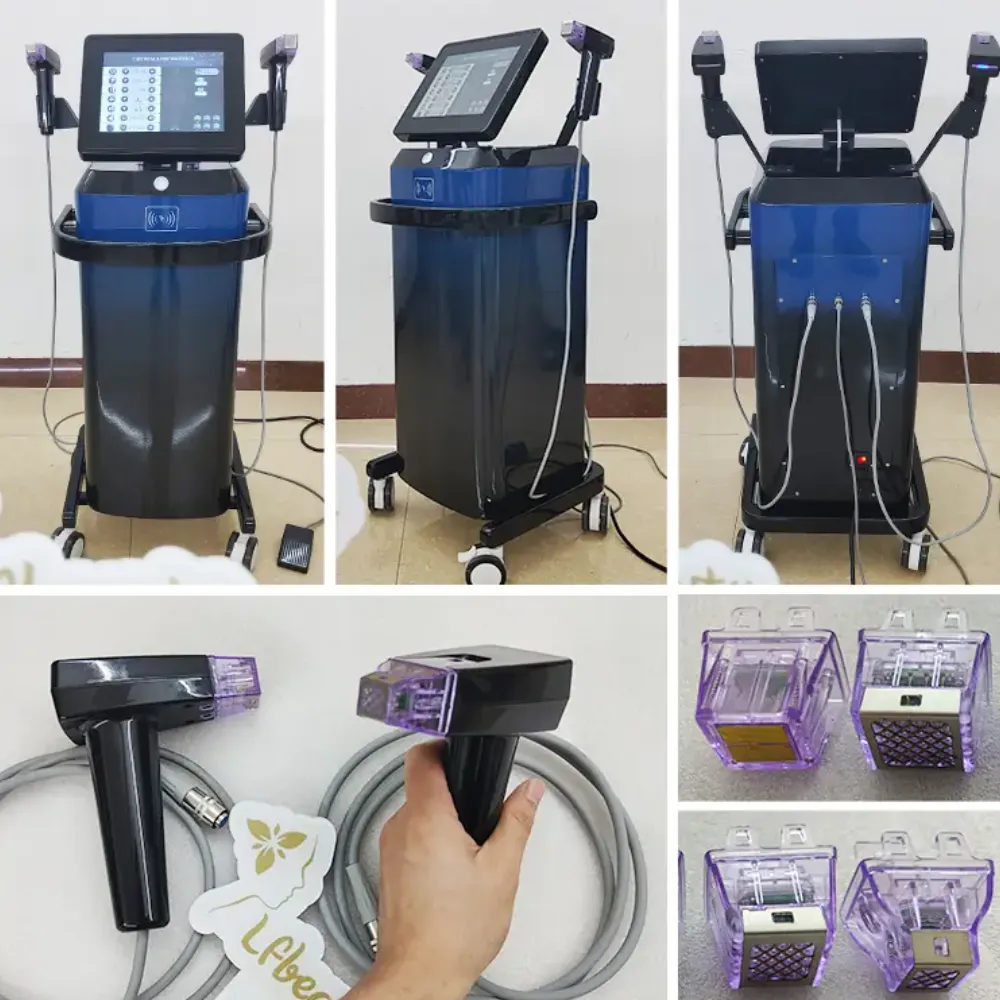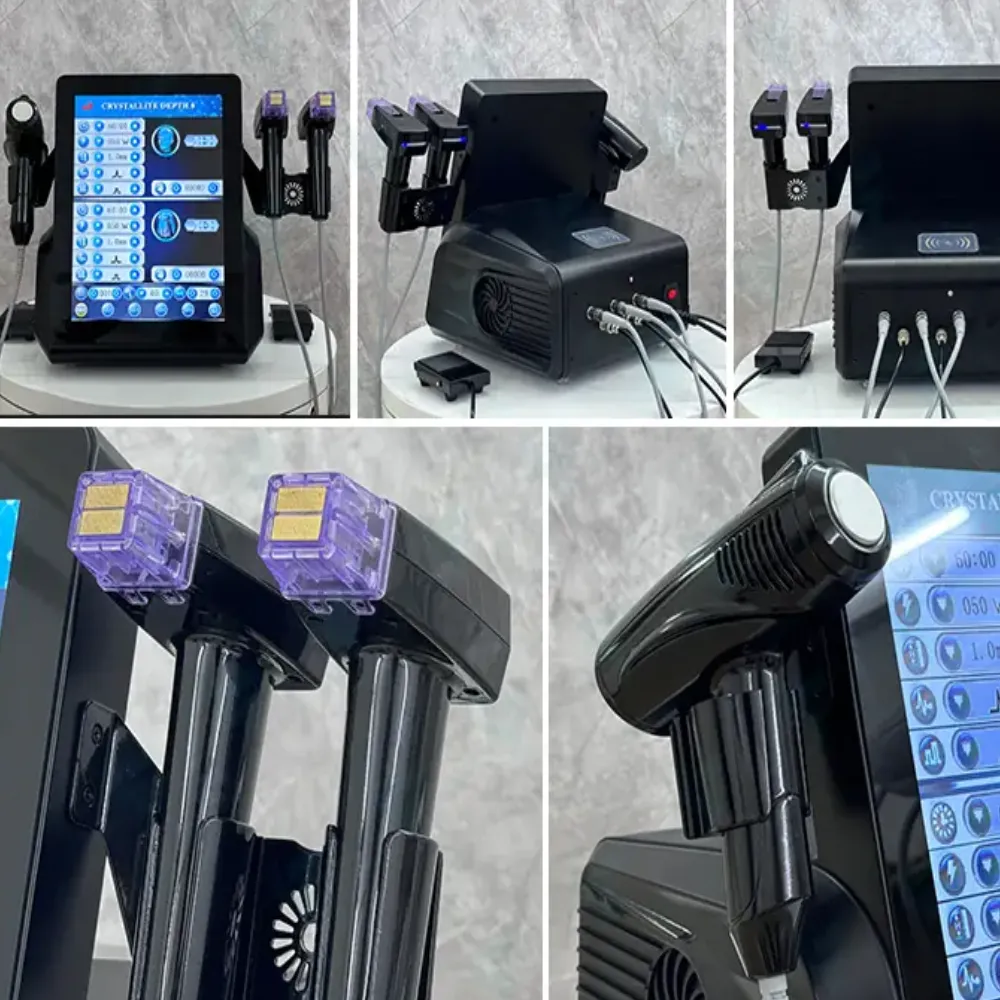
RF Microneedling Machine Maintenance: Service and Downtime Planning
Start RF microneedling machine maintenance with the instructions for your exact model. Separate care that trained operators may perform from technical work assigned to the...

RF microneedling needle depth can describe a selected device setting or a measured depth in tissue, depending on the document. It is different from the thermal effect around the electrodes, so buyers need to know exactly what each number means.
Two quotes may list the same depth yet describe different things. One may show the available settings, while another refers to needle extension or a claimed heat effect. Comparing those figures as if they were the same can leave a key question unanswered.
If you are reviewing RF microneedling needle depth before buying a machine, ask for the measurement definition first. This guide explains the terms, shows how to read a specification, and gives you a document checklist. You can use it to prepare a clear review with the supplier and your clinical team.
Key Takeaways
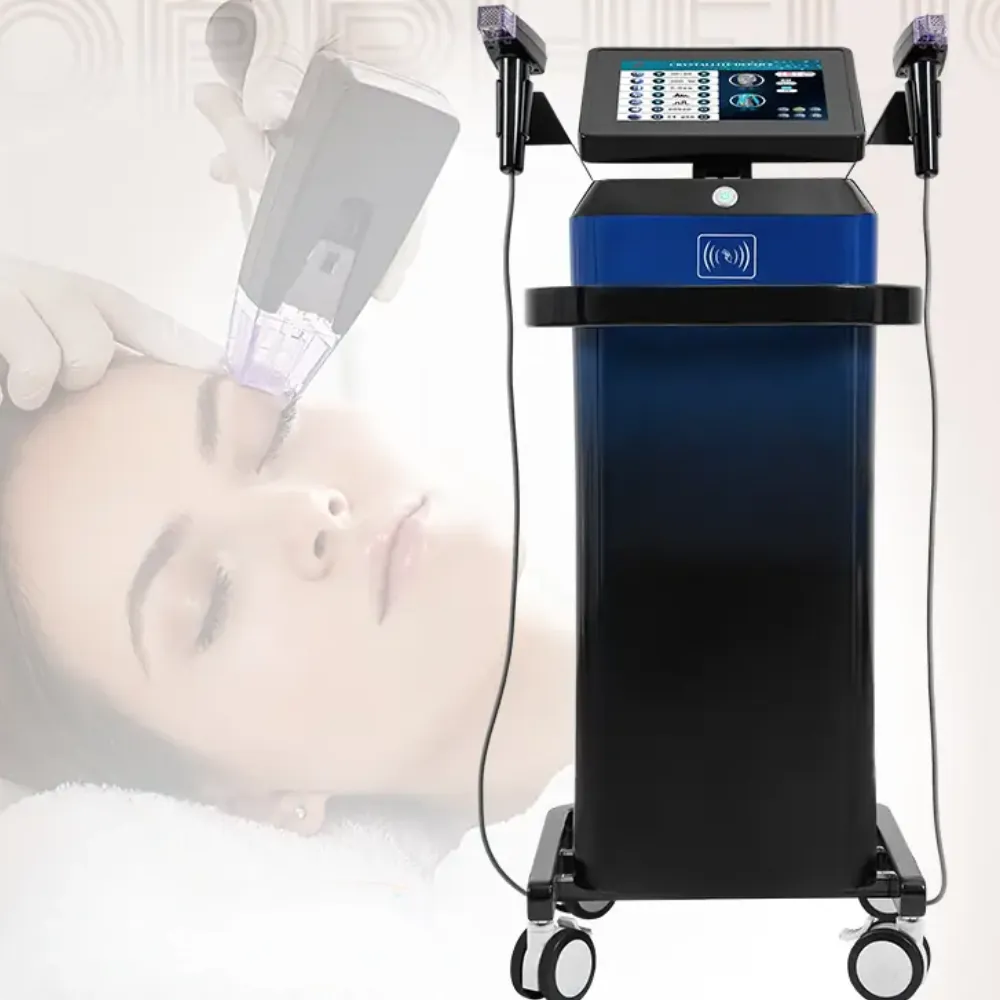
A displayed number tells you what setting the device offers or what its control is set to. It is not, by itself, a separate test of needle reach in tissue. For an RF microneedling needle depth comparison, record that distinction beside the figure.
Needle protrusion means how far the needle extends from a stated reference surface, such as the tip face used in the test. Ask which surface the supplier uses and how the extension was measured. A mechanical test of that distance answers a different question from a tissue study.
The table below is a purchasing aid. It separates the claims so your team can request the right evidence without treating every depth label as a clinical result.
| Term | What it describes | Evidence to request |
|---|---|---|
| Displayed setting | A nominal control value | Current interface and instructions |
| Needle protrusion | Extension from a stated reference surface | Defined mechanical measurement method |
| Tissue penetration | Observed entry into a tissue sample | Sample, method, and measured endpoint |
| Thermal effect | Heat-related change under tested conditions | Separate thermal or tissue-effect data |
Reviewing a specific package? Request model-specific depth documents from LufenBeauty, with the machine, handpiece, and cartridge code you are considering.
Actual penetration describes how far the needle or its channel reaches in the tissue being studied. The result needs a defined sample and a measurement method. It should not be treated as a guarantee for every patient or use condition.
RF stands for radiofrequency, the energy delivered through the system’s electrodes. A thermal claim describes a different effect from the needle’s physical reach. Ask how that effect was defined and tested rather than adding an assumed heat distance to the needle length.
Illustrative scenario: A buyer receives a quote headed “treatment depth.” The supplier clarifies that the figure describes a claimed thermal effect, while the cartridge specification uses a separate needle value. The buyer puts the two claims in different fields before comparing another machine.
That simple separation makes RF microneedling needle depth easier to review. Label RF microneedling needle depth by what was measured. Keep the source wording beside your plain-language label. If the meaning is still unclear, mark it pending and ask for clarification.
The VIOL Medical SCARLET S product specification lists an electrode depth range of 0.5–3.5 mm with adjustment in 0.1 mm units. This is a manufacturer’s specification for that named product, checked on October 16, 2026. It is not a LufenBeauty specification or a treatment recommendation.
The range identifies the listed lower and upper values. The adjustment unit identifies the stated interval between settings. Neither field, on its own, proves how closely actual extension or tissue penetration matches a selected value.
When reviewing RF microneedling needle depth, keep those fields separate. A clear product sheet shows the controls on offer. An accuracy claim needs its own meaning and test results.
Step size describes the gap between selectable settings. Accuracy concerns how close a measured result is to the intended value under a defined method. Repeatability asks how closely repeated test results agree under the same stated conditions.
A control with 0.1 mm steps does not establish an accuracy of plus or minus 0.1 mm. Extra decimal places on a screen are not a test report. Ask the supplier what it means by “precision” before entering that term into a comparison sheet.
For RF microneedling needle depth, ask for the test method and the conditions behind any tolerance claim. The tolerance is the permitted difference defined for that test or product claim. Do not invent a pass limit from the displayed step size.
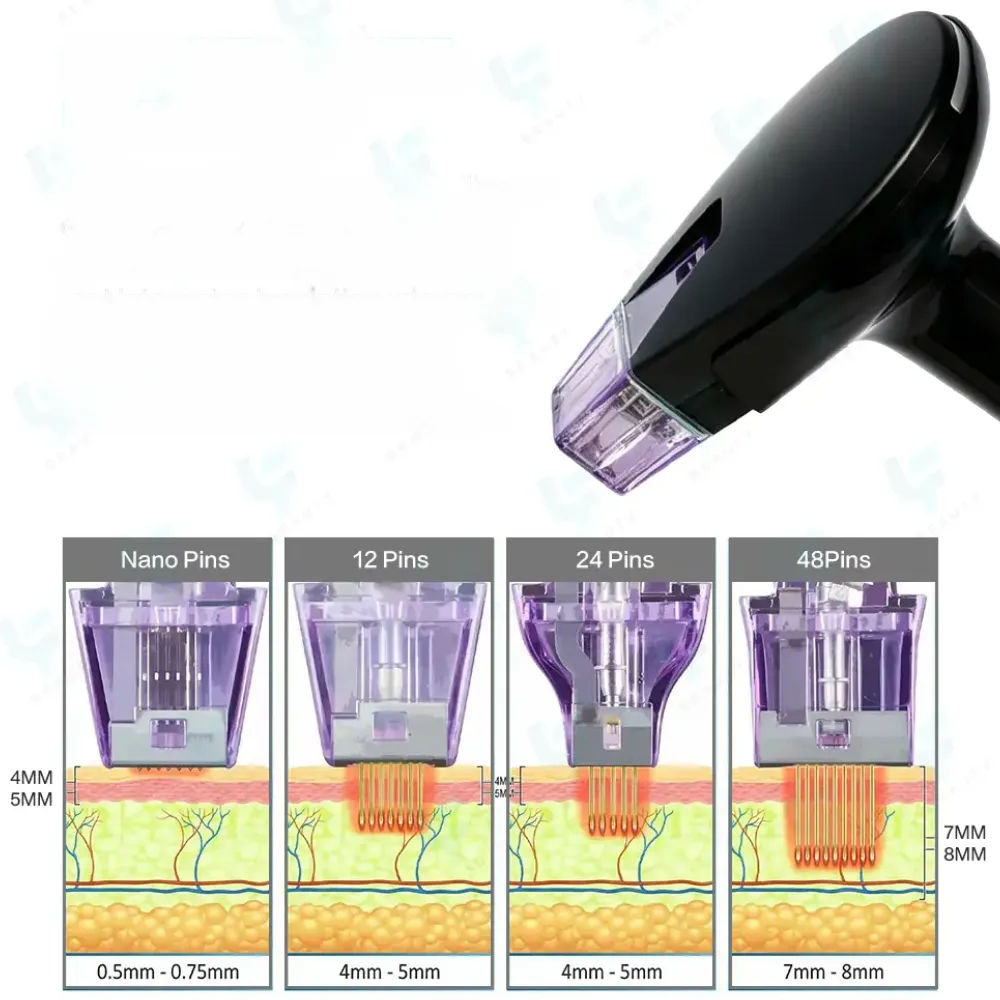
Name the machine and handpiece first. Then match the range to the exact cartridge code and relevant version. Don’t assume that the largest number in a brochure applies to every tip sold with the platform.
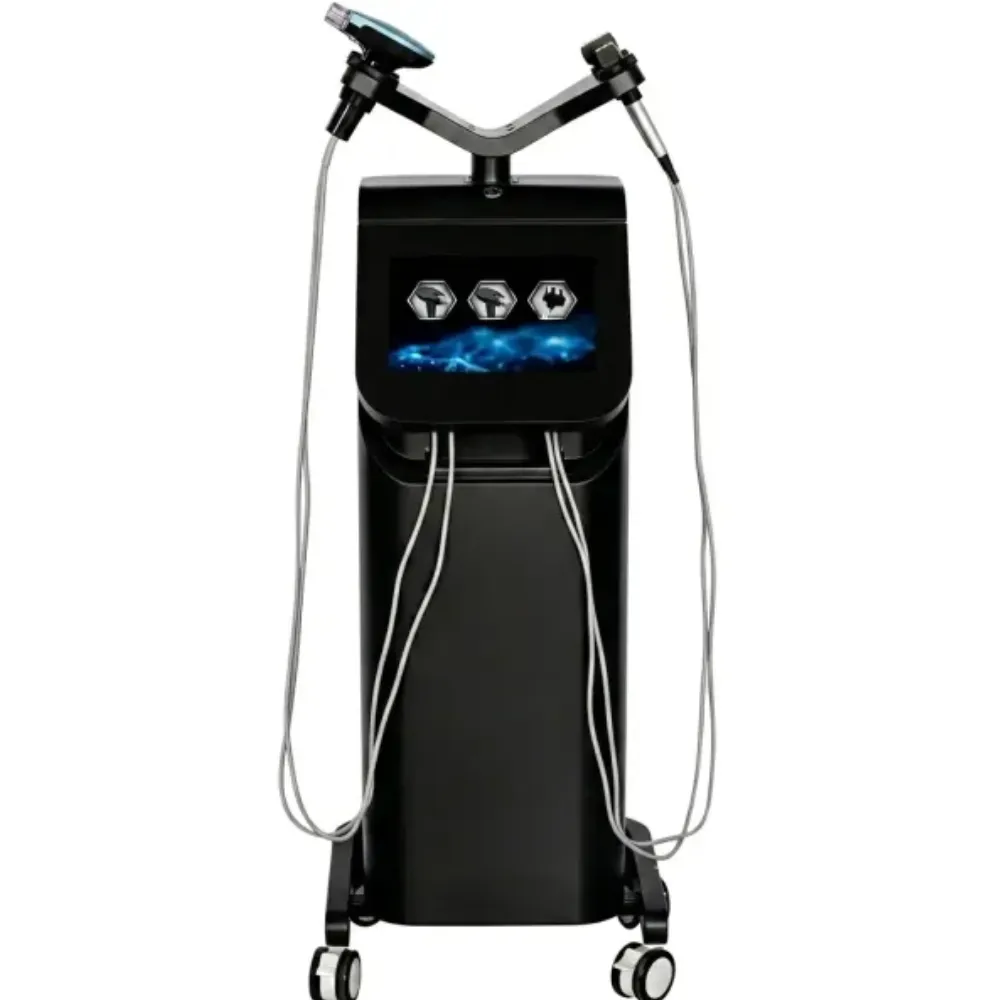
You can use the professional RF microneedling machine category to identify a candidate for further review. Request the current documents for that configuration before treating its features as confirmed. The category label alone does not establish a specific tested depth range.
Needle insulation is another design field to record. The guide to insulated and non-insulated RF needle designs explains that distinction. An RF microneedling needle depth comparison still needs the actual tip code, rather than an insulation label alone.
A mechanical extension test may support a statement about needle travel from a reference surface. A tissue study may support an observation about a channel within its sample. Neither should silently stand in for the other in an RF microneedling needle depth review.
Ask which tool was used and how its calibration was checked. Request the reference surface, sample conditions, and number of repeat tests. If the test uses a load, ask how it was defined. These are document questions for the responsible supplier or engineer, not instructions to take the handpiece apart.
A 2019 original study by Gordon H. Sasaki examined microneedling and microneedling with RF. Its RF tissue observations paired a nominal 0.5 mm setting with a 0.7 mm channel and a nominal 1.5 mm setting with a 1.3 mm channel. The histology came from one facelift patient’s preauricular skin; a separate water-loss study involved ten subjects.
Those values are observations from the reported sample, not a ten-person average of depth accuracy. The paper disclosed company-related consultancy and research support. Its ordinary microneedling results should not be mixed with its RF results.
The study illustrates why the method and sample matter. It does not establish a universal error allowance, a correction formula, or clinical settings for other systems.
For an RF microneedling needle depth purchase review, use research to ask a sharper question: what does this evidence actually measure? Your own candidate model needs evidence tied to its configuration. Another system’s study cannot prove its depth accuracy.
Illustrative scenario: A clinic team sees a fine adjustment step in a brochure and initially calls it “verified accuracy.” After asking for the test definition, the team finds that only the selectable increment has been supplied. It changes the accuracy field to “awaiting evidence” rather than guessing a tolerance.
A thermal claim needs its own test conditions and endpoint. Ask which electrode, RF mode, sample, and observation method support it. A temperature measurement and a tissue-change image may describe different endpoints, so record the definition used.
RF microneedling needle depth is not a fixed sum of needle travel plus a universal thermal distance. Do not carry a figure from another brand’s material into your equipment sheet. If thermal data have not been supplied, keep that claim unverified.
This official Cutera overview introduces its Secret RF platform. It can provide background for a discussion about a complete system. It does not verify RF microneedling needle depth accuracy, LufenBeauty compatibility, or clinical settings.
Use the overview as orientation, then return to the written model documents. A video is not a substitute for a test method or the device’s instructions for use.
Use a short file to bring the RF microneedling needle depth claims together. Give each claim a source and status. Name the person who will get the next answer. That is more useful than a single unexplained “precision” score.
The worksheet below is a buying aid. It is not a regulatory standard or a promise that every supplier provides every type of test. Ask what evidence is available and where its limits lie.
| File item | What to record | Status to use if missing |
|---|---|---|
| Configuration | Machine, handpiece, tip code, version | Identity pending |
| Depth range | Minimum, maximum, unit, source | Range pending |
| Adjustment step | Selectable increment and source | Step pending |
| Mechanical evidence | Reference surface, method, results | Extension evidence pending |
| Accuracy claim | Definition, tolerance basis, results | Accuracy not verified |
| Repeatability | Repeats and result distribution | Repeatability not verified |
| Tissue evidence | Sample and observation limits | Tissue evidence not supplied |
| Thermal claim | Endpoint and test conditions | Thermal claim not verified |
Keep the latest instructions for use, or IFU, in the same packet. Note the document version and date. If the supplied model or tip changes, reopen the checks linked to that item.
If the quote and instructions name different tips, ask which one is being offered. Keep that point open until the files match.
For the broader selection process, use the RF microneedling equipment buying guide. This file focuses on the depth claim within that larger review. It should support, rather than replace, the full purchasing decision.
Ask the supplier and your responsible team to agree in writing on what delivery checks will cover. Record who reviews the documents and how an unexplained difference will be handled. Do not create a clinical test on patients to fill a missing engineering record.
RF microneedling needle depth checks need a method that fits the claim and the official instructions. A delivery check is not proof of every clinical outcome. Leave unsupported claims open until the right evidence or review is available.
Review training and after-sales support, then ask which terms apply to the offered package. Clarify who handles a depth-related question and which model details they need. Keep the response with the quote and technical file. Date the RF microneedling needle depth review, and note who approved each closed item.
The FDA’s October 15, 2025 RF microneedling safety communication reports serious complications with certain uses, including burns, scarring, fat loss, disfigurement, and nerve damage. It advises seeking licensed providers with relevant training and experience, and states that the devices should not be used at home. These points make intended-use documents and training part of the equipment review.
The communication does not supply a universally safe depth or establish clearance for a particular LufenBeauty model. Have the qualified clinical team review the exact device and intended use. A buying sheet cannot turn a maximum value into a choice for a patient.
There is no single value this purchasing guide can recommend for every device, patient, or treatment. Read RF microneedling needle depth with the exact system and its instructions in mind. Clinical selection belongs with the qualified provider’s assessment.
No. A larger listed range does not, on its own, prove more accurate control or better outcomes. Compare the supported configuration, intended use, and evidence behind the claim before ranking equipment.
No. A step is a control interval, while accuracy needs a defined measurement and result. In an RF microneedling needle depth comparison, give them separate fields and request evidence for each.
They describe different measurements. Ask how a thermal claim was defined, rather than assuming it equals the needle’s physical reach. The supporting data need to match the particular system and test conditions.
A general mechanical microneedling chart does not establish the RF behavior of a different device. It also cannot replace that system’s IFU or a clinical review. Use a purchasing checklist to request evidence, not to select treatment settings.
Illustrative scenario: A distributor attaches a model list, tip codes, and a table of supplied and pending documents to a draft quote. The supplier can now answer each depth question against an identified configuration. The order remains under review until the agreed questions are resolved.
Use the same approach for RF microneedling needle depth. Define the number, match it to the exact equipment, and keep the test limits beside the result. A clear record makes it easier to see what has been verified and what still needs an answer.
Ready to review a specific configuration? Contact LufenBeauty with your machine and cartridge requirements. Request the available specifications, instructions, and supporting documents for RF microneedling needle depth on that exact package.