How to Choose an RF Microneedling Machine for a Professional Aesthetic Clinic?
Choosing an RF microneedling machine involves more than comparing power ratings and needle counts.. Two machines may look similar on paper but offer very different treatment options once you look at needle depth, handpieces, RF output, and treatment modes.
For an aesthetic clinic, that difference matters. A machine used mainly for facial rejuvenation may not have the right configuration for body treatments, while a clinic looking for more than microneedling may need non-invasive RF and other treatment options as well. Knowing which features actually matter can help you avoid choosing a machine that does not fit your clinic’s treatment needs.
Why RF Microneedling Machines Are Important for Professional Aesthetic Clinics
RF microneedling combines microneedling with radiofrequency (RF) energy. During treatment, fine needles create controlled micro-channels in the skin while RF energy is delivered to targeted tissue depths. This dual-action approach is widely used in professional aesthetic clinics to support the appearance of firmer, smoother, and more even-looking skin.
For clinics, one of the main advantages of RF microneedling is its versatility. Adjustable treatment parameters make it possible to tailor sessions to different facial and body areas, allowing practitioners to address a broad range of client concerns with a single platform.
Combining Microneedling With RF Energy
Microneedling and RF energy work through different mechanisms. Microneedles provide controlled physical stimulation, which can trigger the skin’s natural repair process. RF energy produces targeted heat within the dermis, helping to stimulate collagen and elastin production. Depending on the device, insulated or non-insulated needles may be used to deliver energy to specific skin layers.
When combined, these two mechanisms may help improve the appearance of uneven texture, fine lines, and atrophic acne scars over a series of treatments. This combination also allows practitioners to treat the skin at multiple levels, which is more difficult to achieve with either technology alone.
Supporting Skin Tightening and Skin Rejuvenation
RF microneedling is commonly included in professional skin tightening and skin rejuvenation protocols. It may help address concerns such as mild to moderate skin laxity, fine lines, enlarged pores, uneven skin texture, and acne scarring. Because treatment depth, energy output, and needle configuration can be adjusted, practitioners can customize each session based on the client’s skin condition and treatment goals.
Visible results typically develop gradually as collagen remodeling occurs. Most clients require a series of treatments spaced several weeks apart, and individual outcomes vary depending on factors such as age, skin quality, and adherence to the recommended treatment plan.
Adapting Treatments for Different Areas
Facial and body treatments require different approaches. Smaller areas such as the forehead, cheeks, and perioral region often call for precise depth control and smaller handpieces. Larger body areas, including the abdomen, thighs, and upper arms, may require broader coverage and deeper needle penetration to address skin laxity or textural concerns.
The ability to adjust needle depth, RF energy settings, and applicator configurations is therefore essential. Many RF microneedling machines offer interchangeable handpieces with varying needle counts, making it easier for practitioners to adapt protocols across different anatomical regions without compromising treatment quality.
Key Features to Look for in a Professional RF Microneedling Machine
Not all RF microneedling systems offer the same level of treatment control. When comparing machines, it is worth paying particular attention to features that affect treatment depth, RF energy delivery, and how easily the device can be adapted to different areas and treatment goals.
Adjustable Needle Depth and RF Energy Control
Treatment depth is one of the most important features to consider when choosing an RF microneedling machine. Different areas of the face and body may require different treatment depths, so a system with precise depth adjustment gives practitioners more control over how the needles reach the target tissue.
RF energy control is equally important. Adjustable output, frequency, and pulse modes allow practitioners to modify the treatment according to the area being treated and the desired treatment approach. Together, precise needle depth and controllable RF energy provide greater flexibility than a system with fixed settings.
Multiple Needle Configurations for Different Treatment Areas
Needle configuration can have a direct impact on how efficiently different areas can be treated. Smaller needle arrays are useful for localized or more delicate areas, while larger configurations can cover broader treatment zones.
For a clinic offering both facial and body treatments, having several needle options can make it easier to adapt the treatment to different anatomical areas and concerns. It also avoids having to use the same needle configuration for every treatment.
Insulated and Non-Insulated Needle Options
The type of needle used can influence how RF energy is distributed within the tissue. Insulated needles limit RF delivery along the insulated portion of the needle, concentrating the energy closer to the exposed tip. Non-insulated needles allow RF energy to be delivered along a larger section of the needle.
The choice between the two depends on the treatment approach and the type of energy delivery required. For clinics, having access to different needle types can provide more options when developing treatment protocols.
Vacuum-Assisted Needle Delivery
Needle insertion is another feature worth considering, particularly for clinics performing treatments repeatedly throughout the day. A vacuum-assisted handpiece draws the skin toward the treatment tip before insertion, helping maintain closer contact during the procedure.
This feature helps make needle insertion more stable and controlled. It is particularly useful for areas where consistent skin contact is difficult to maintain.
Important Factors to Consider Before Purchasing an RF Microneedling Machine
The right RF microneedling machine should fit more than the treatment itself. Before making a purchase, clinics should also consider how the equipment will fit into their existing services, daily workflow, and routine maintenance.
Treatment Menu and Future Services
The first step is to look at the treatments already offered by the clinic. A practice focused on facial rejuvenation may have different requirements from one that also provides body firming or stretch mark treatments.
It is also worth considering whether the machine can support new treatment services in the future. A system that fits both current and planned services may be more practical than one designed for a single application.
Clinic Workflow
An RF microneedling machine should be practical for everyday use, not just technically capable. Consider how much setup is required between treatments, how easily practitioners can switch between treatment functions, and whether the controls are straightforward to operate.
For clinics with several practitioners, a clear and consistent operating process can also make daily use easier.
Equipment Reliability
How often the machine will be used should also influence the purchasing decision. A clinic with a steady treatment schedule may place greater importance on stable operation and thermal management than a practice that uses the device only occasionally.
Features designed to support continuous operation can be especially relevant when the machine is expected to run for extended periods during the working day.
Consumables and Maintenance
Consumable requirements can affect both routine maintenance and ongoing operating costs. Before purchasing, clinics should check which components are single-use, how frequently consumables need to be replaced, and what cleaning procedures are required after treatment.
The handpieces and other reusable surfaces should also have clear maintenance and disinfection guidelines. Straightforward maintenance can make it easier to keep the equipment ready for regular clinical use.
Technical Support and After-Sales Service
The purchase does not end when the machine is delivered. Clear operating instructions, troubleshooting support, and access to technical assistance can be important when equipment is used regularly.
Clinics should also check what type of training, spare parts support, and after-sales service the supplier provides before making a final decision.
How a Multifunctional RF Microneedling Machine Can Improve Clinic Efficiency
A multifunctional RF microneedling machine can help clinics handle different treatment needs without switching between several separate devices. By combining multiple treatment functions in one system, practitioners can simplify equipment use while offering more treatment options.
One System for Different Skin Concerns
A multifunctional system can support different approaches for concerns such as skin tightening, acne scars, fine lines, and uneven skin texture. Practitioners can choose the appropriate treatment function for each concern instead of using a separate machine for every type of treatment.
Flexible Treatment Options for Facial and Body Areas
A clinic that treats both the face and body needs different treatment approaches for different areas. A multifunctional system can support both types of treatment, making it easier to manage facial rejuvenation, skin tightening, body firming, and stretch mark treatments within the same equipment setup.
Less Equipment Switching During Daily Treatments
When several treatment functions are available on one system, practitioners do not need to move between different machines as often. This can make the treatment room easier to manage and reduce unnecessary equipment changes between appointments.
A Broader Treatment Menu From One Platform
A multifunctional system can also help clinics offer more treatment options without adding a separate device for every new service. Fractional RF microneedling, non-invasive RF, and thermal RF can serve different stages or approaches within an aesthetic treatment program, giving clinics more flexibility in arranging their services.
What MakestheRF Microneedling Machine a Practical Choice for Clinics?
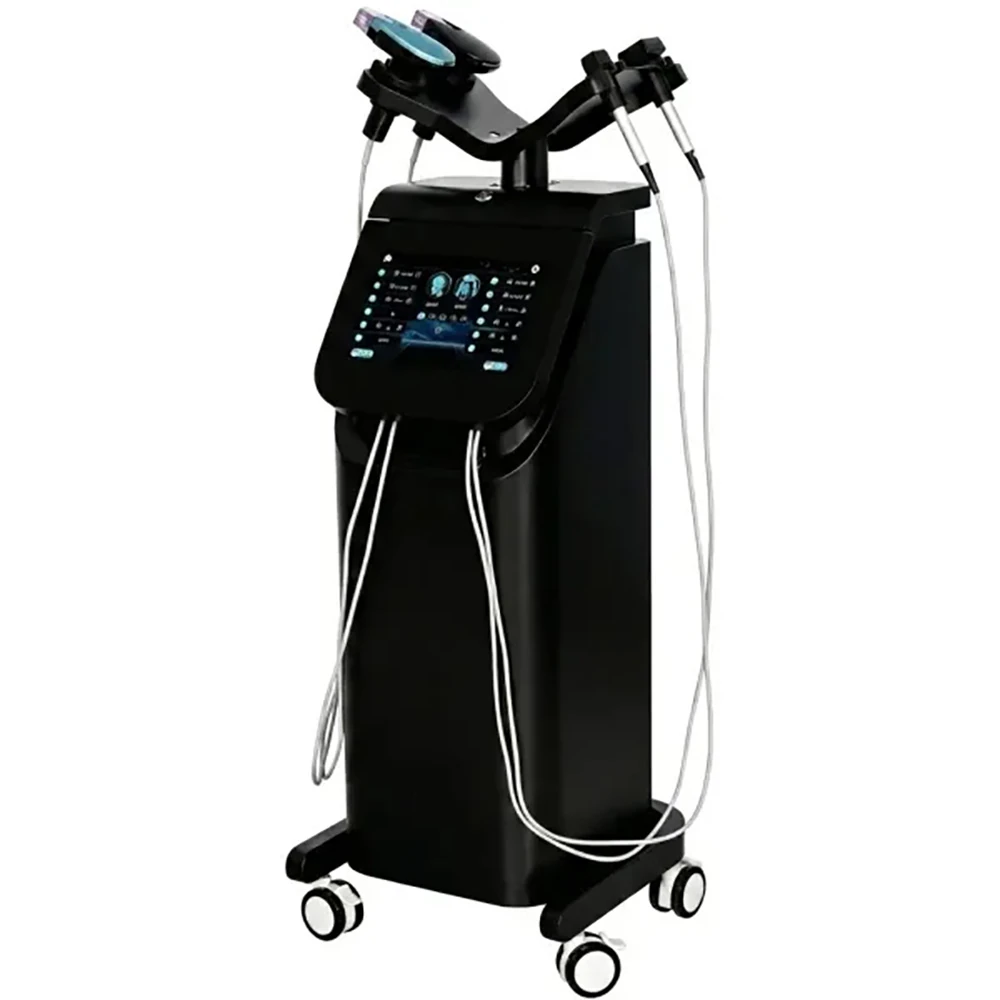
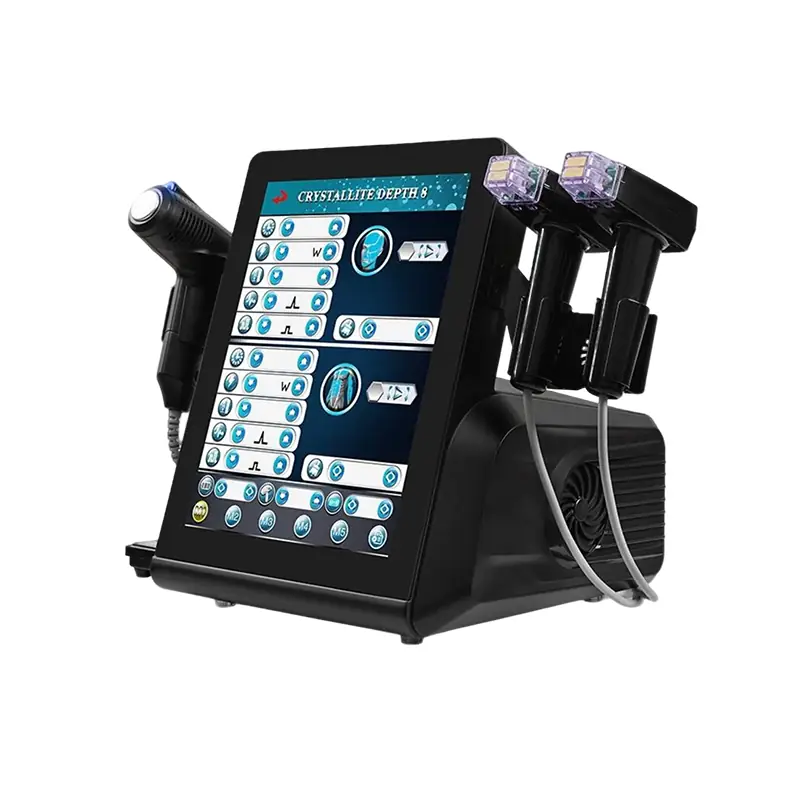
For clinics that provide both facial and body treatments, this multifunctional system combines several RF-based treatment options with adjustable treatment parameters in one platform. Its main advantages are treatment flexibility, precise microneedle delivery, and stable operation for regular clinic use.
Multiple RF Treatments in One System
The system combines M8 fractional RF microneedling, EMRF, non-invasive RF, and thermal care, allowing clinics to provide different treatment approaches without relying on a separate device for each function. With 12-pin, 24-pin, 48-pin, and Nano Pin options, it can also be adapted to different facial and body treatment areas.
Precise and Flexible Treatment Control
The system provides adjustable RF output of 0–200 W for the face handpiece and 0–300 W for the body handpiece, with a 2–4 MHz operating frequency and Single and Continuous modes. The microneedle handpiece uses a stepping motor with an insertion error of less than 0.05 mm, while the integrated vacuum system helps keep the skin closely positioned during needle insertion.
Designed for Regular Clinic Use
For clinics with a high daily treatment volume, the system uses real-time skin impedance monitoring and automatic compensation to adjust power output as skin impedance changes. An industrial-grade air-cooling system is also included to support continuous operation during an 8–10 hour daily clinic schedule. The 12.1-inch capacitive touchscreen with pre-programmed treatment protocols further simplifies everyday operation.
Frequently Asked Questions
Q1: What should I check if the needles do not insert smoothly or the client experiences strong discomfort during treatment?
A: First, check that the probe and handpiece are properly connected. Then make sure the Vacuum function is turned on through the touchscreen. Insufficient skin suction or holding the probe at an angle can increase insertion resistance. Keep the probe firmly vertical against the skin before activating needle insertion with the foot pedal.
Q2: What is the difference between EMRF and non-invasive RF, and which handpiece should I use?
A: EMRF uses monopolar fractional RF technology and is designed for deeper treatment. The non-invasive RF handpiece uses a large-area gold-plated electrode and is suited to non-invasive facial care. The appropriate handpiece should be selected according to the treatment approach and target area.
Q3: How should the RF microneedling handpieces and probes be maintained?
A: The microneedle probes are supplied in single-use EO-sterilized packaging and must not be reused or re-sterilized. After treatment, wipe the handpiece body and gold-plated RF contact surface with 75% medical alcohol wipes. Do not wash or immerse the handpieces in water. Regularly check the internal connections for any signs of looseness as part of routine maintenance.
Conclusion
Choosing the right RF microneedling machine means looking at how well the system fits the treatments a clinic actually provides. Beyond RF power, factors such as needle control, energy delivery, treatment flexibility, and ease of daily operation can make a real difference when the machine is used across different facial and body applications.
For clinics looking for a versatile solution, Lufen’s multifunctional RF system combines fractional RF microneedling, EMRF, non-invasive RF, and thermal care in one platform. With adjustable treatment settings, multiple needle configurations, vacuum-assisted insertion, and intelligent impedance management, it is designed to support a range of professional aesthetic treatments.
Contact Lufen to learn more about the RF microneedling machine, available configurations, and how it can fit your clinic’s treatment needs.
Key Takeaways Introduction Modern beauty clinics, medical spas, skincare centers, and beauty brands increasingly use digital imaging to make skin consultations more objective. A digital...
Key Takeaways Why Is Fractional CO2 Laser Increasingly Used for Modern Skin Resurfacing? CO2 laser treatment is widely used for skin resurfacing because water strongly...
Enter the Lufenbeauty’s Fractional RF Microneedling Machine—a cutting-edge, non-surgical innovation that is reshaping the standards of professional anti-aging, skin tightening, and body remodeling. If you...
Opening a new medical spa, upgrading an existing practice, or expanding your treatment menu is one of the most exciting milestones for any aesthetic professional....
Introduction Multifunctional aesthetic devices integrate various treatment technologies into a single unit. As system integration increases, routine maintenance becomes essential. Dust, residue, contaminated cooling water,...
Introduction Professional beauty clinics often need equipment that can handle different treatment needs without taking up too much space. This is especially important for clinics...