Laser Hair Removal Machine ROI: Costs and Payback
Laser hair removal machine ROI, or return on investment, compares the startup outlay with cash earned after running costs. To estimate payback, divide that outlay...

To compare a diode laser cooling system for professional hair removal, find out what it cools, where the seller measures temperature, and how the reading changes under a stated load. Ask for a test record for the quoted handpiece and a written explanation of what the machine does when it detects a cooling fault.
Two vendors may show you a temperature on a display. One may be showing a sensor inside the coolant circuit, while the other may have measured the contact window with the machine idle. If you’ve tried to compare figures like these, you already know how little a bare number tells you. This guide gives you a way to compare the cooling parts, check the test conditions, and put the remaining questions on the quote.
Key Takeaways
Start at the end of the handpiece. If the diode laser cooling system uses contact cooling, ask the seller to point to the surface that touches the skin and explain how the device cools it. A sapphire window can serve as that contact surface. Ask what moves heat away from the window and where the sensor sits.
Skin cooling can also involve refrigerated air or a cryogen spray on systems designed for those methods. In an original study of 11 patients, Ross and colleagues examined airborne particles during hair removal with sapphire contact cooling, refrigerated air, and cryogen spray using 755 or 1064 nm lasers. That comparison helps distinguish the three methods. Its particle measurements do not tell you how an offered diode handpiece will feel or perform.
Ask for a second explanation of the diode laser cooling system, starting with the parts inside the handpiece and console. What carries heat away from the laser assembly? Where does that heat leave the machine?
Depending on the design, the seller may point to a liquid loop, a heat sink, a radiator, or fans. Ask which parts share a cooling path and which have separate controls.
Illustrative scenario. A buyer asks whether a display number describes the part that touches the skin. The sales engineer identifies it as the temperature of coolant returning to the console. The buyer keeps that reading on the comparison sheet under “coolant return” and opens a separate row for contact surface measurements. The team can now ask both sellers for the same information.
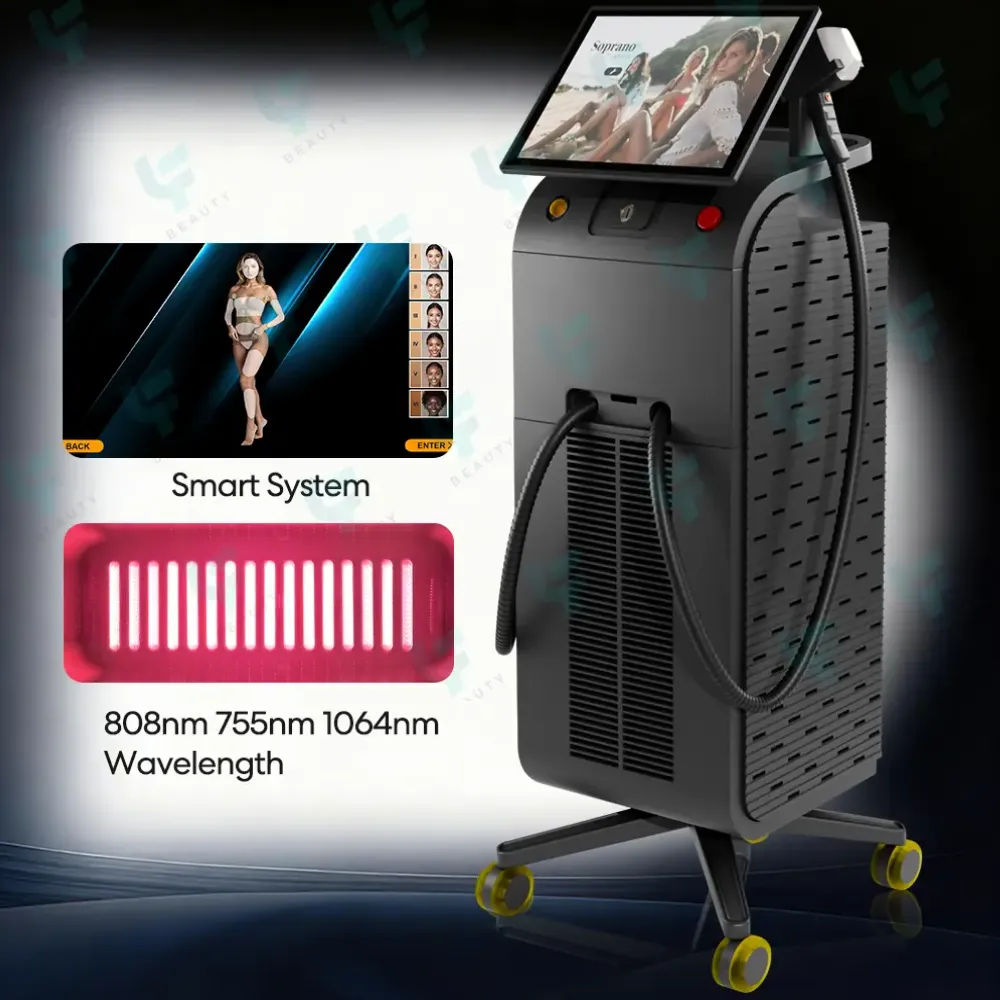
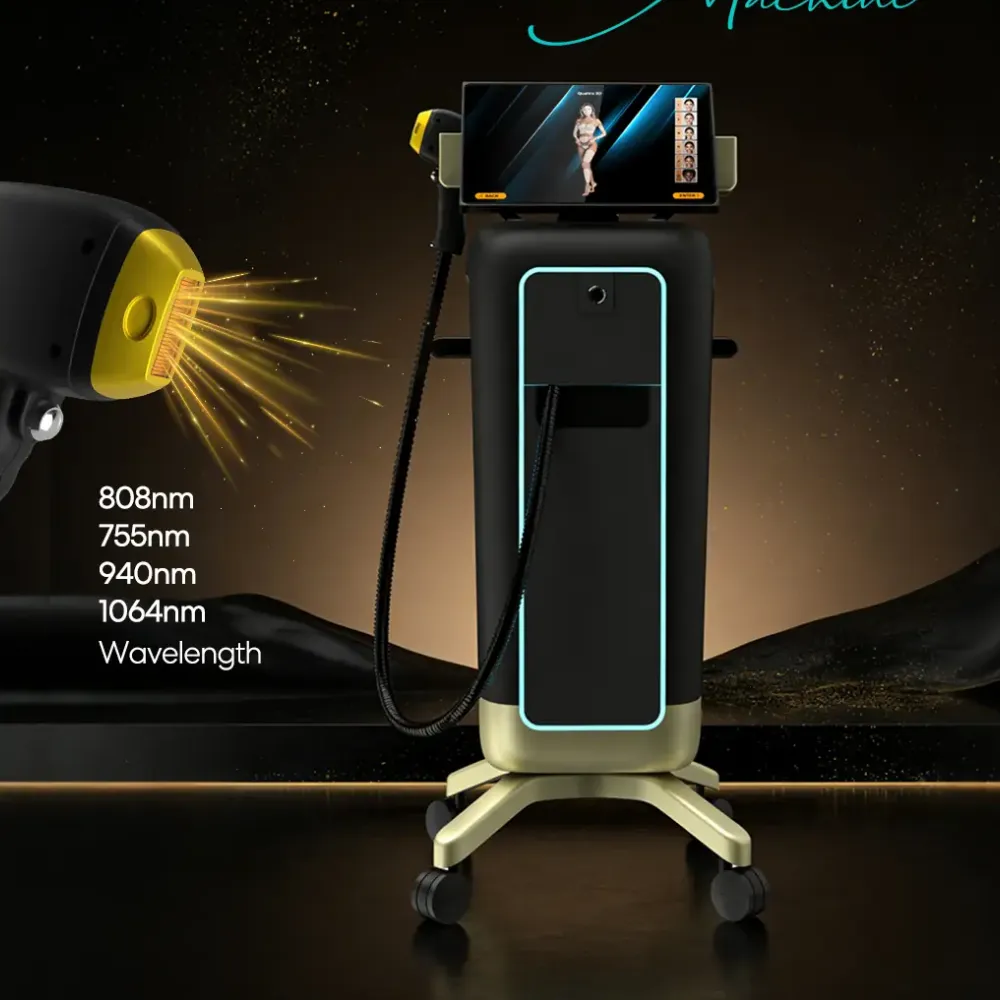
For a product example, see the Lufenbeauty 808 nm machine listed with dual TEC cooling. If you’re considering that configuration, request the exact model and ask what each TEC cools before comparing it with another offer.
A diode laser cooling system may combine several parts on one heat path. A TEC, or thermoelectric cooler, uses electricity to move heat from its cold side to its hot side. The hot side needs a way to shed both the heat moved by the module and the heat generated by its electrical input. A heat sink or another suitable path handles that job in the design.
| Term on the quote | What it describes | What to request |
|---|---|---|
| Sapphire | A material that can form the handpiece’s contact window | Handpiece ID, contact surface drawing, and how the surface is cooled |
| TEC or Peltier | An active module that moves heat from one side to the other | Which part it cools and how the system removes heat from the hot side |
| Water or liquid cooling | A path for carrying heat in a fluid | A diagram showing the loop, monitored points, and how the loop sheds heat |
| Air cooling | Air used to carry heat away from components or directed at the skin, depending on the design | Where the airflow goes and what job it performs |
If a seller calls its diode laser cooling system “dual TEC,” ask whether the modules serve the same part or different parts. Then ask how the controls respond if one module stops working. A parts count does not explain how the design behaves. Request an answer tied to the offered configuration and the manufacturer’s documents.
Electrolab’s Portuguese-language component demonstration explains how Peltier modules work. Use it to understand the hot and cold sides before reviewing a device drawing. The accompanying explanation here covers the same principle in English.
When a diode laser cooling system has a liquid loop, ask the seller to show where the fluid picks up heat and where it releases it. In a system with a radiator and fans, for example, the fluid carries heat to the radiator and air carries heat away from it. The diagram for your model should identify the actual path. Ask the installer what the room and equipment placement must provide.
There is also a practical difference between a sensor inside the loop and a measurement at the contact surface. A diode laser cooling system can report more than one temperature. Write down the location and label of each reading before you add it to a purchase comparison. Keep the displayed reading and the independent test measurement in separate fields if you get both.
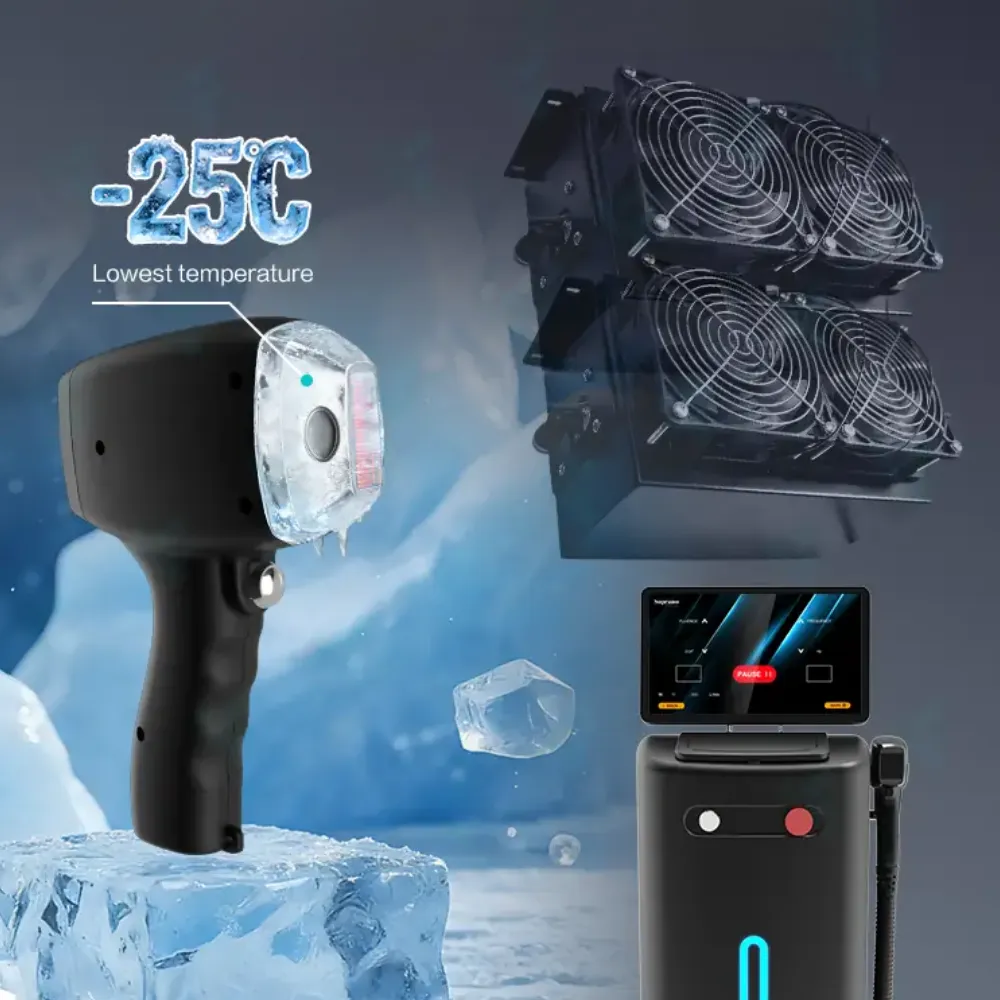
Ask the seller to identify the machine, handpiece, measurement point, and test method. Have them explain whether the reading is a setpoint, a live sensor value, or a separate surface measurement. Request the room temperature and humidity, the starting state, and the operating pattern used in the bench test. Use the maker’s documented procedure and have the seller explain how it relates to your expected use.
When you compare a diode laser cooling system, ask for the full record from start through recovery. A single number gives you one point in time. Ask when the test began, when load was applied, how long it ran, and what happened after it stopped.
Keep different measurement points on separate rows. Once you have matching tests, compare the results side by side.
For a diode laser cooling system with logged readings, have the vendor mark warmup, operation, breaks, and recovery. Ask how often the sensor records a value and whether the graph shows raw readings or an average. Check whether each chart uses the same scale and units.
If a number jumps, ask what the machine was doing at that point.
A useful comparison includes any warnings or pauses that occurred during the approved demo. Ask whether the system logged the event and whether the seller can show the record alongside the readings. Keep the written explanation with the quote. This lets the person who accepts delivery check the same item even if they missed the demo.
Illustrative scenario. A clinic gets two reports for the same type of handpiece measurement. One report ends as soon as the load stops, while the other includes a recovery period. The buyer asks both sellers to include recovery and to mark the same phases. The revised request gives the clinic a basis for comparing the records without picking a clinical setting.
Include the serial or test unit identifier when the seller can supply it. If the test uses a demo unit, ask how the seller will show that the shipped unit has the same relevant configuration. Agree on which checks the supplier will repeat at handover, who will witness them, and where both parties will record the results. See the full diode machine buying guide for the other items to compare.
Add an acceptance column for the diode laser cooling system. For each check, write down what the seller agrees to show and which document defines an acceptable result. Leave a space for the observed reading, date, and initials. If the room is outside the conditions used for the demo, ask the installer how to record that difference.
Decide how to handle a missing test before delivery. The supplier might send the record ahead of time, repeat the check on site, or explain why a different test applies. Put the agreed next step on the order so the handover team knows who will close the item.
A diode laser cooling system may monitor temperature, flow, or other conditions depending on the model. Ask which conditions the quoted unit monitors, what the user sees on the display, and whether the machine warns, limits operation, or stops. Request the relevant pages from the instructions and ask who can confirm the system is ready to return to service.
Write down how staff reach support and what information the support team needs. The service contact may ask for the model, serial number, message shown, and event time. Ask where the machine stores fault information, if available. For a diode laser cooling system, use the maker’s documented demonstration to review fault behavior and leave fault testing to the supplier’s authorized staff.
Ask which diode laser cooling system tasks the operator can perform and which require a technician. If the device uses liquid, request the specified fluid, the schedule for checks or replacement, and the document that covers the work. Ask about filters, approved parts, and any service work the supplier requires to keep coverage in force.
Get the responsibilities in writing. Who supplies the parts, pays freight, and books a visit if a cooling component fails? Ask the seller to distinguish the time to respond from the time to repair. You can use Lufenbeauty’s service page to start that conversation, then confirm the terms for the actual model and delivery location on the quote.
Illustrative scenario. Two offers include a warranty, but only one names the party that pays labor for a pump replacement. The buyer adds columns for parts, labor, travel, and return freight. The next call is about filling those fields. The buyer can then see which costs have been assigned and which remain open.

Bring a blank comparison sheet for each diode laser cooling system. Put the device and handpiece ID at the top, then list the measurement point, test conditions, and the period covered. Use the same sheet with each vendor. Ask for the file behind any graph the seller presents and add the document date beside the reading.
Put the same notes in the file you share with the service team. If the diode laser cooling system later shows a warning, the handover record can help staff identify the unit and find the right manual. Keep the service phone number and the document revision near the machine records.
Ask the supplier to identify what cools the sapphire window. A diode laser cooling system can use sapphire as the interface and TEC as part of its heat path. The window material alone gives you no detail about which parts move the heat. The model diagram and demonstration should answer that question.
Find out where the diode laser cooling system measures it and what the machine was doing. One display may show fluid temperature and another may show a setpoint. Ask for results from the same point under comparable conditions and use the manufacturer’s documents to interpret them.
Use the instructions for the exact diode laser cooling system. Ask which fluid the maker specifies, whether the operator may replace it, and how the work is recorded. A quote that lists water cooling leaves those service details open until the seller supplies the document.
Ask for the instructions for the quoted configuration, a comparable test record, and written service terms. For each open point, note which document you need and who will send it. If you’re narrowing a shortlist, use the professional diode equipment range to identify the configuration you want to discuss.
Before you choose a diode laser cooling system, keep the heat path, test record, and service terms together. If you’re evaluating a Lufenbeauty model, request the model documents and a written quote with your delivery location and the handpiece you’re considering.