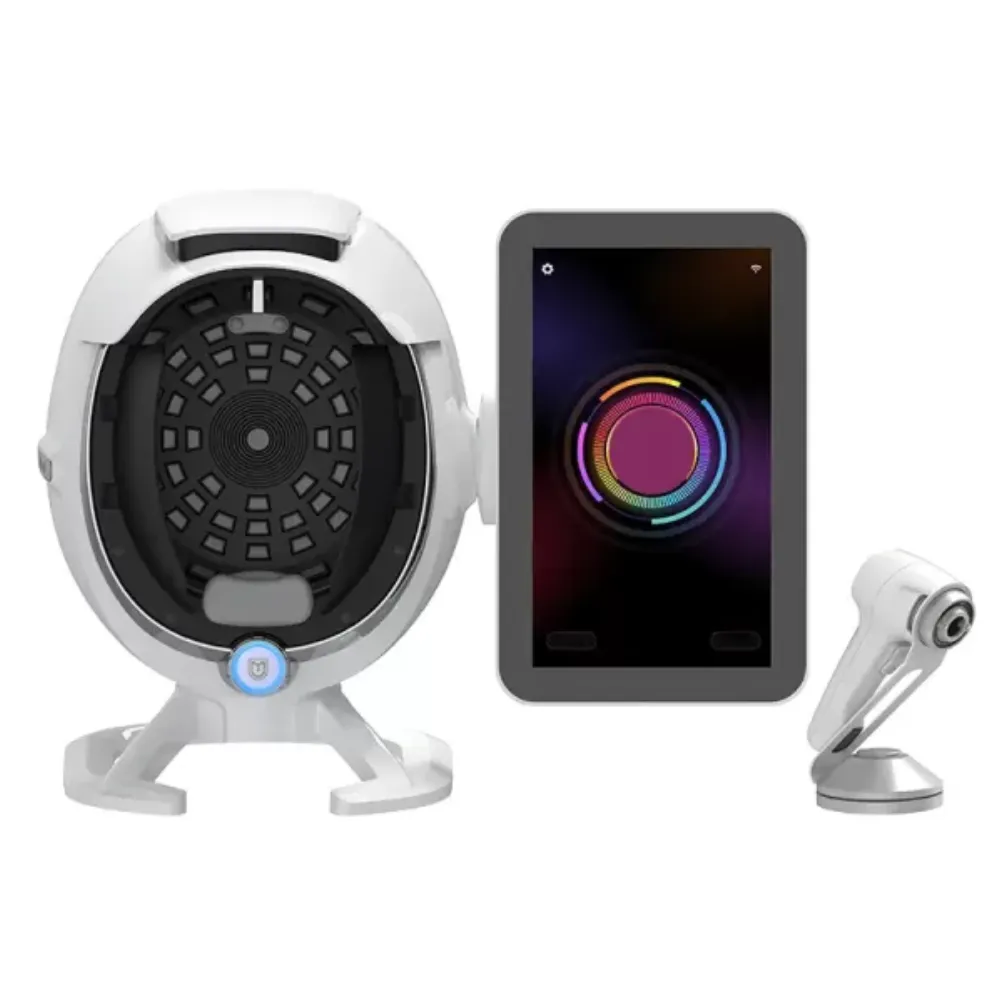
Skin Analysis Machine Buying Guide for Clinics
Choose a skin analysis machine by testing repeatable capture, clear reports, data access, and ownership costs against your clinic’s workflow. A long feature list can’t...

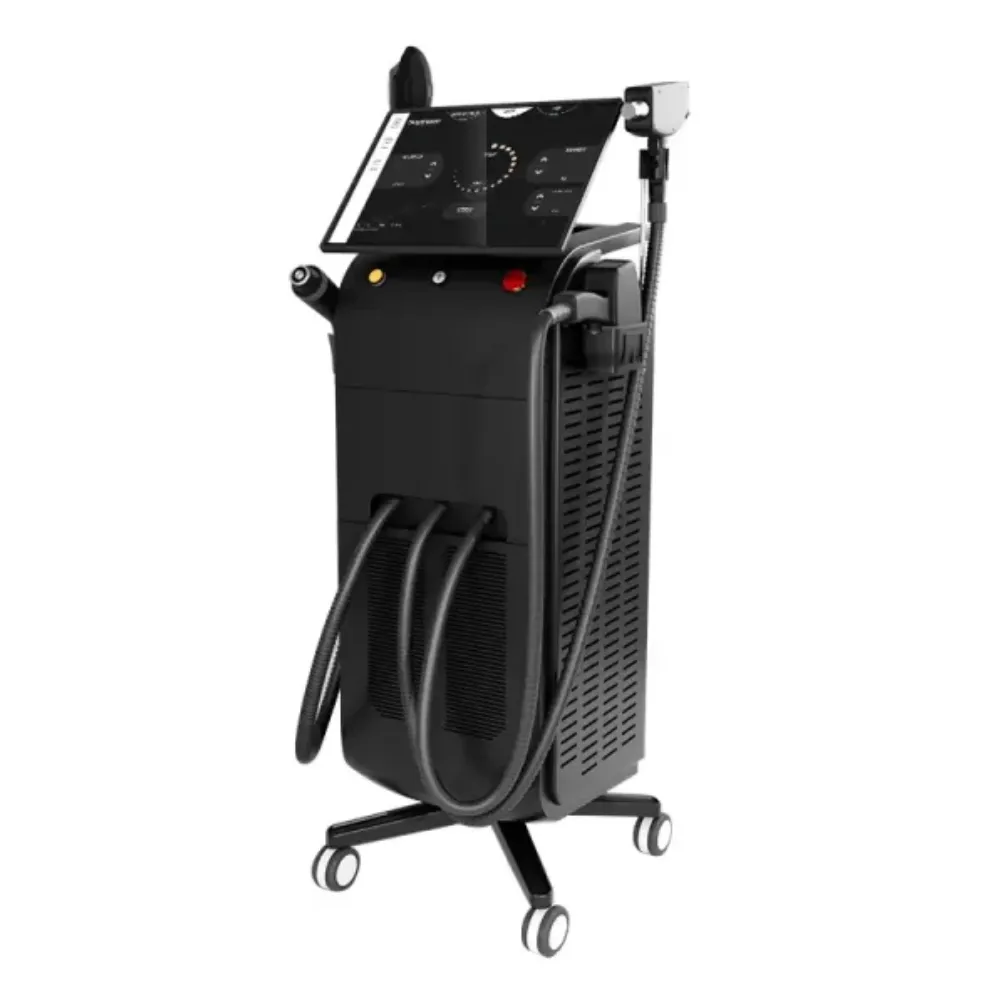
Learning how to choose a diode laser hair removal machine starts with your clinic’s needs and the evidence behind each quote. Compare the exact model, supported uses, usable output, cooling, total cost, and service terms. Then agree on training and acceptance checks before you pay the balance.
A polished case and a large wattage number tell you little on their own. Your purchase needs to fit the clients you can serve, the staff you can train, and the work your room can support. A useful buying process turns those needs into written questions that every supplier must answer.
This guide is for clinic owners, salon operators, and equipment distributors buying professional systems. It explains what to request and compare. Treatment settings and client care must come from the specific device instructions and qualified training.
Key Takeaways
Planning a purchase? Send LufenBeauty your buying requirements, including your market, planned services, room constraints, and budget. Ask for a model-specific document pack and an itemized quote.
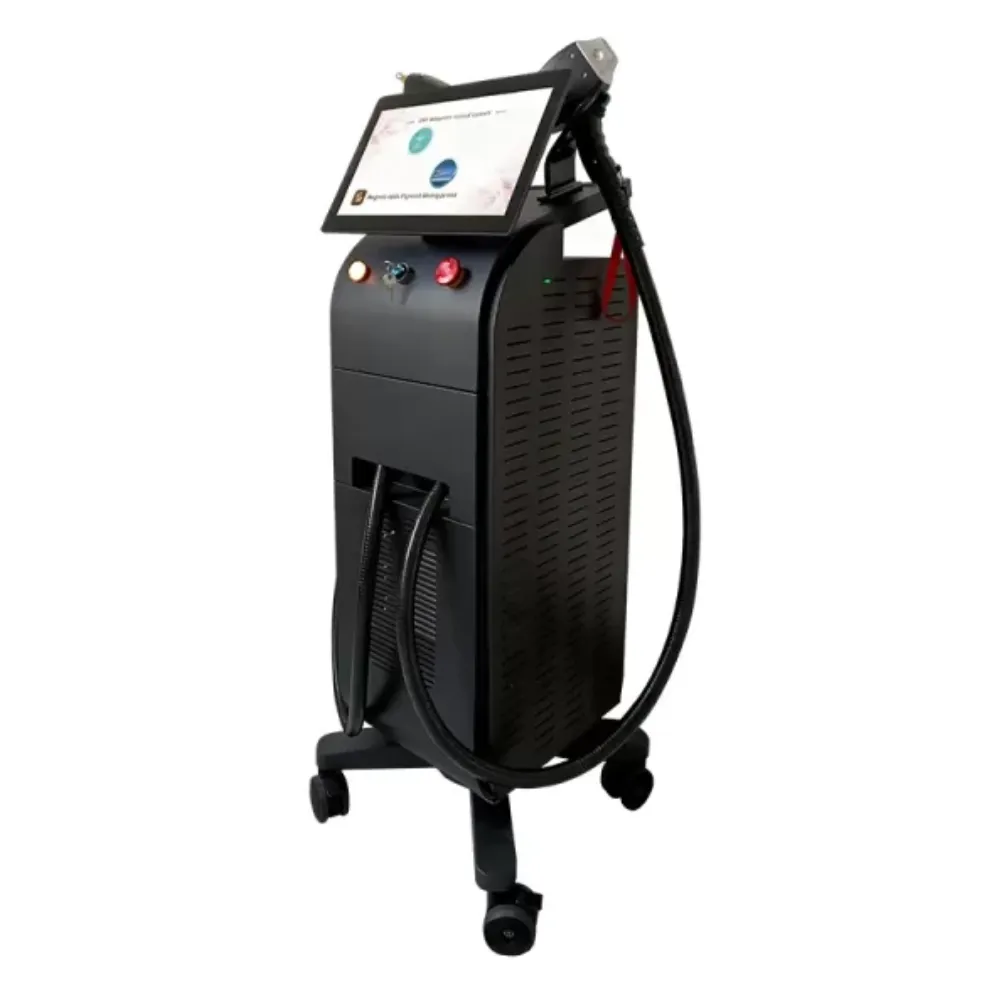
Start with a short brief that staff, the owner, and the supplier can all read. Record where the device will be used, who will operate it, and which services the practice plans to offer. Include your opening date, available room, power supply, and service contact needs.
Next, list the client groups and treatment areas your qualified clinical lead expects to assess. Ask that lead to define the limits of the planned service. A sales chart that labels every skin type as suitable is not enough to make that decision.
Keep clinical suitability separate from commercial demand. Enquiries show interest; they do not establish that every person can be treated. The American Academy of Dermatology’s laser hair removal FAQ describes variable results and possible adverse effects. It also stresses the value of an experienced provider.
Use those limits when discussing machine options. Ask the supplier to identify the intended uses, restrictions, and training for the quoted model. Request the instructions for use before committing to a purchase, rather than waiting for a manual inside the shipping crate.
Your brief should also state how the machine will earn its place in the business. Will it serve a dedicated hair removal room or share space with other treatments? Will one operator use it, or will several people need training and access to service records?
Give each supplier the same request form. Ask them to answer each line with a document, a written term, or a clear statement that the item is not included. Keep sales promises beside their supporting records so the team can see where evidence is missing.
Sort the answers into needs, useful extras, and open questions. A need is something the purchase must meet, such as the required model documents or a room constraint. An extra is a feature the team may value but can trade against price, training time, or service access.
Do not give an unknown item a passing score. If a supplier has not provided a test condition, a part price, or a repair term, leave that field open. Set a date for a reply and decide who will review it. This keeps a neat scorecard from hiding gaps.
Once the answers arrive, reduce the list to models that meet the needs. Have staff handle the proposed handpiece where practical and note any questions about reach, weight, or the screen. Record these as observations from the demonstration, rather than claims about how every operator will feel.
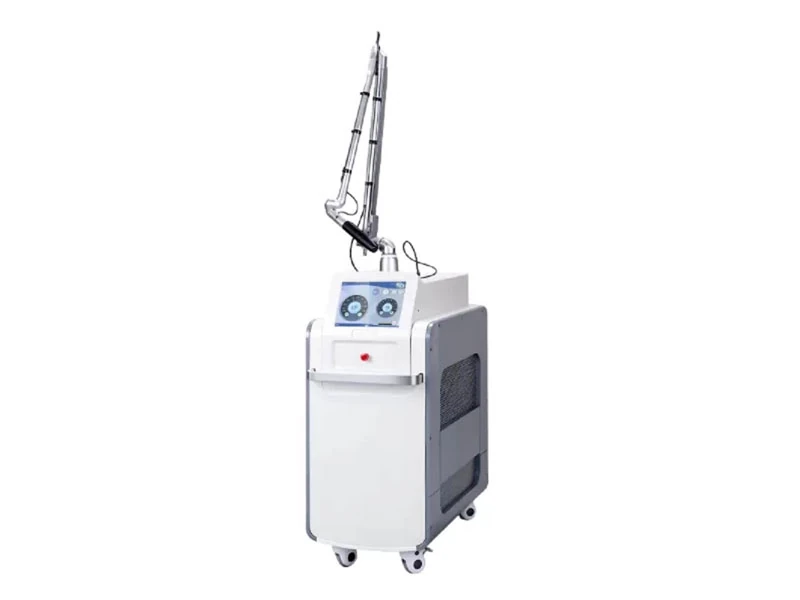
Diode, alexandrite, and intense pulsed light (IPL) are different options to assess. Start with the clinical scope, model evidence, and local requirements. Then compare the practical fit of each platform, including room needs, training, and service access.
Our diode laser and IPL comparison and diode versus alexandrite guide provide further questions for that discussion. Use the current device documents to settle the final choice. A general comparison cannot approve a model for a specific client or market.
Avoid buying extra functions merely because they appear inexpensive in a bundle. Each added module should have a defined use, a trained operator, and a cost you can justify. Ask whether one failed module would stop the whole platform and how repairs would be handled.
Illustrative scenario: A first clinic sets a narrower brief. An owner initially asks for the machine with the most functions. After reviewing staffing and room use, the team requests a dedicated hair removal quote and a separate bundled-platform quote. Comparing training, repair access, and room time gives them a clearer decision, without assuming either option will produce more revenue.
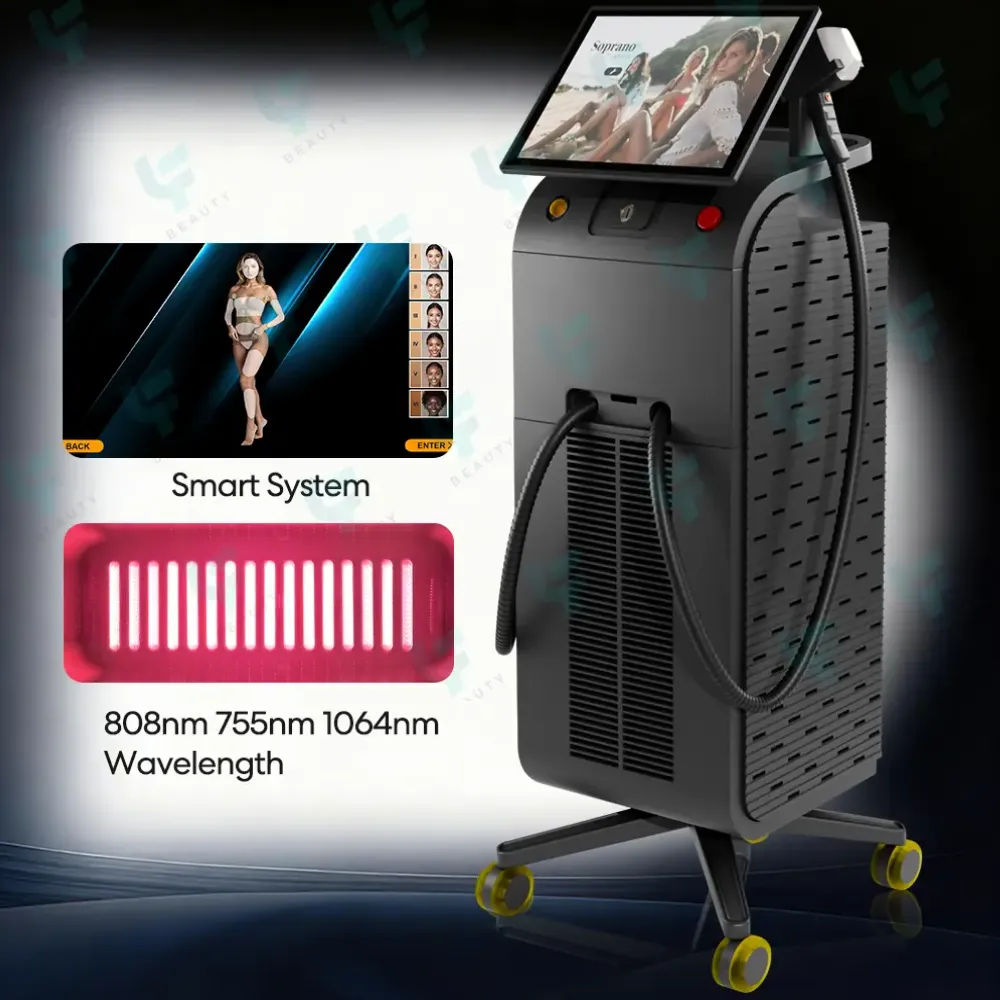
Professional listings may describe 808nm, 810nm, or multiple wavelengths such as 755nm, 808nm, and 1064nm. Request the exact configuration supplied with the quoted handpiece. Ask which wavelengths it emits, how they are delivered, and which supporting documents match that configuration.
Do not treat a wavelength label as proof of every claimed benefit. In particular, ask how a multi-wavelength diode handpiece differs from separate laser technologies with similar wavelength labels. The source, pulse delivery, intended use, and model evidence all need review.
Ask whether the displayed settings apply to the combined output or to a selected mode. If a supplier quotes performance for several configurations, have them identify which data belong to the unit you will receive. A brochure covering a whole product family can hide important differences.
This is also the point to discuss hair and skin suitability with a qualified professional. Do not accept a universal treatment promise based only on the number of wavelengths. Keep the final service scope tied to the exact model’s instructions and relevant clinical evidence.
Power in watts and energy density in joules per square centimeter describe different things. DTU Nanolab’s fluence reference defines fluence as pulse energy divided by area. That definition helps explain a specification; it does not set a safe treatment dose.
Ask whether a quoted wattage means electrical input, optical output, or a laser component rating. Then ask where and how that value was measured. Numbers with different meanings cannot be ranked as though they were the same specification.
| Specification | What to Ask the Supplier | What to Record |
|---|---|---|
| Power, W | Is this input power, optical output, or a component rating? | Measurement point and test conditions |
| Energy density, J/cm² | What can the quoted mode deliver at the stated spot and pulse settings? | Supported combinations and test method |
| Pulse duration | What range applies to this mode and configuration? | Units, limits, and relevant instructions |
| Repetition rate, Hz | At what other settings is the stated rate available? | Output, cooling, and load conditions |
| Spot size | Which treatment windows are included? | Dimensions and compatible handpieces |
| Cooling | What is measured, where, and under what load? | Ambient conditions, duration, and limits |
| Handpiece life | What does the stated shot count mean? | Warranty threshold and replacement terms |
A brochure’s largest values may come from different modes or test conditions. Ask for a supported settings table rather than combining every maximum into one imagined performance level. Your trained operator should review that table with the instructions.
For a demonstration, agree on a repeatable comparison. Use the same quoted configuration and document the conditions. Observe handling, preparation, cleaning, and reset time as well as device operation; a short firing clip does not describe a full appointment.
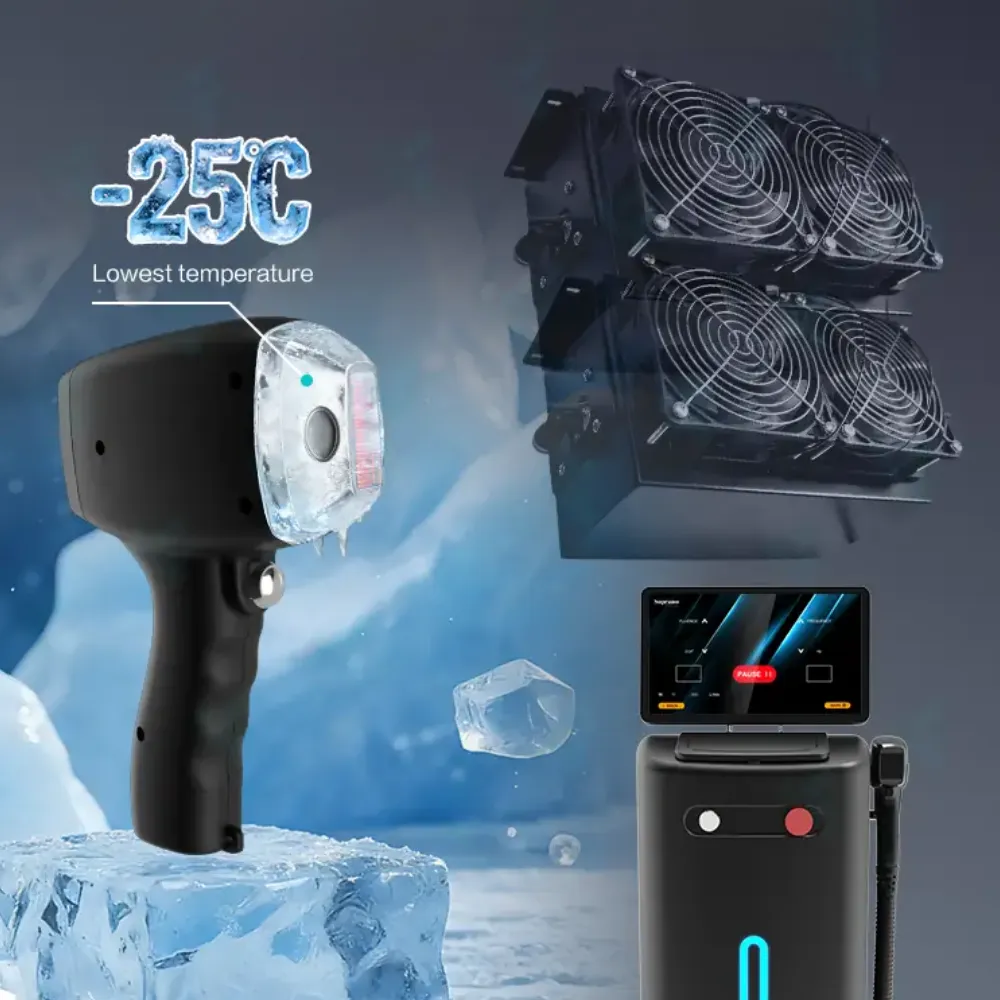
Ask the supplier to explain the cooling design and show the service instructions that apply to it. A component list may mention water circulation, air cooling, thermoelectric cooling, or a contact window. The list alone does not establish performance during your planned workload.
Request the location of each temperature measurement and the conditions used for any cooling claim. Ask about room temperature, test duration, starting conditions, and the point at which the machine limits output or stops. A cold surface measured before use is a different claim from stable performance under load.
Find out what the operator should do if an alarm appears. Ask which checks belong to trained users and which require a service engineer. Do not bypass an alarm or open the machine to keep an appointment moving.
The Health Canada facility safety guide provides background on laser hazards, training, and protective measures. It is an older safety resource, not a current licensing checklist. Check the current rules in your own jurisdiction and the model’s instructions.
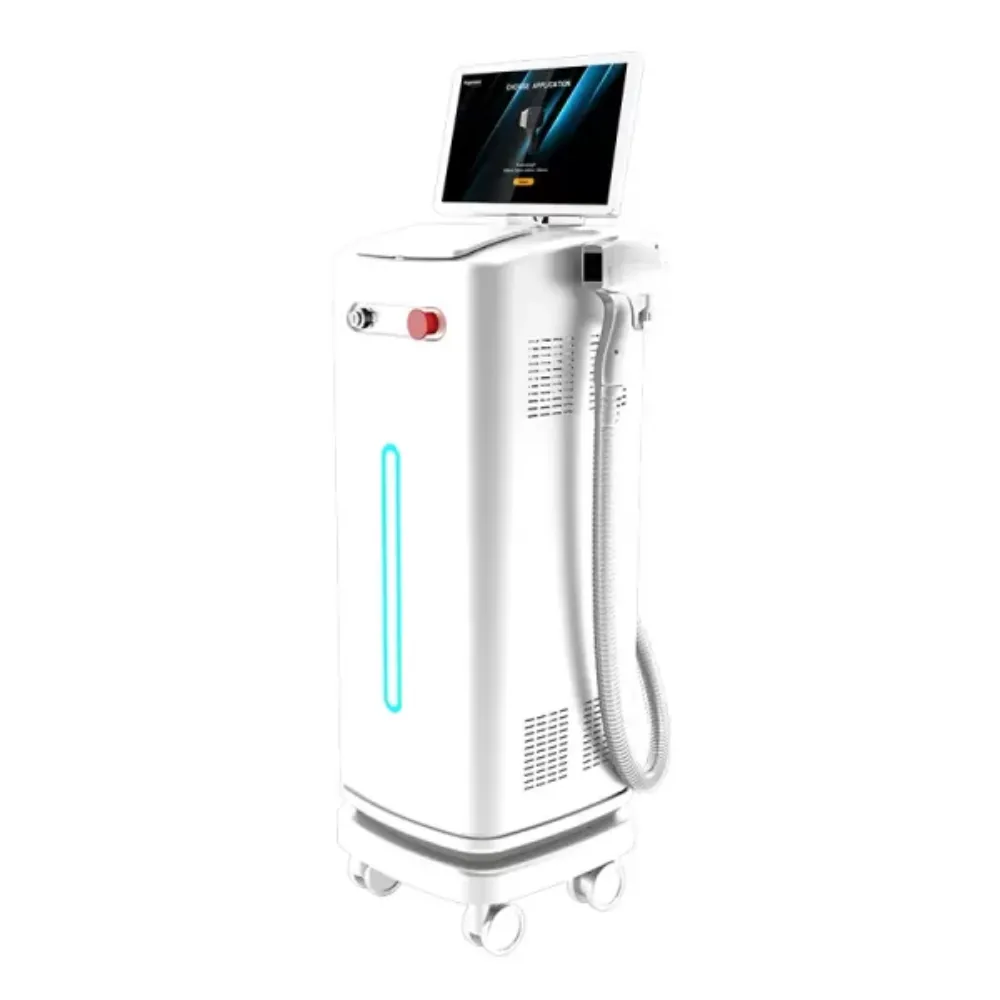
The original buying advice remains useful: investigate the supplier’s production capability, component sourcing, and after-sales support. Make that investigation specific. Ask who manufactures the quoted device, who sells it, and who will take responsibility for service in your market.
Review the business identity, invoice details, factory contact, and model label together. Request a live demonstration of the actual configuration where practical. Keep copies of the signed quote, documents, and correspondence in one purchase file.
You can review LufenBeauty’s company information when preparing supplier questions. Confirm any claim that matters to your order in the contract and relevant product records. A company profile supports due diligence, but it does not replace model-level evidence.
If a named laser bar, pump, or other component affects your decision, ask how its identity can be traced. Request the relevant specification and confirmation for the delivered configuration. A well-known component brand does not, by itself, prove clinical results or a finished system’s service life.
Ask for the device name, model identifier, legal manufacturer, intended uses, instructions, and applicable market documents. Match these details across the label, quote, manual, and supporting records. Resolve differences before shipping, especially where a distributor uses its own product name.
Ask a qualified regulatory adviser to check what is required for your intended market and use. Have the supplier identify the relevant official record or document rather than relying on a badge in a brochure. This guide does not establish the regulatory status of any LufenBeauty model.
For private-label orders, define who controls the label, manual, software version, and model mapping. A logo change should not leave the buyer unable to connect the delivered machine with its documents. Agree on how later changes will be recorded and communicated.
| Document or Record | Purpose in the Purchase | Unresolved Issue to Flag |
|---|---|---|
| Model and configuration list | Defines what is included | Different names across documents |
| Instructions for use | Explains intended use and operating limits | Manual belongs to another configuration |
| Applicable market documents | Supports a qualified compliance review | Record cannot be matched to the device |
| Output and load test report | Explains the performance claim | Missing method or conditions |
| Cleaning instructions | Defines approved care of contact parts | Generic advice without model coverage |
| Warranty and service agreement | Allocates cost and responsibility | Exclusions or shipping costs unclear |
A longer headline warranty is useful only if its coverage is clear. Ask whether the host, handpiece, cooling parts, and accessories have different terms. Record the start date, any shot limit, and the events that end coverage.
Clarify who pays for diagnosis, labor, replacement parts, and transport. Ask whether repairs happen locally or require international shipping. Find out whether a replacement handpiece is new, repaired, or exchanged, and how its remaining warranty is calculated.
Review support hours, language, contact route, and the difference between a first response and a repair. Ask what evidence the service team will need, such as an error log or serial number. Do not assume that a quick reply means a fixed repair deadline.
The earlier article stated fixed warranty periods and lifetime support without linking formal terms. For your order, use the signed terms for the exact configuration. Ask LufenBeauty’s service team for the current written scope before building those promises into your own customer offer.
Request an itemized quote from each shortlisted supplier. Use the same currency and note the quote date, validity, payment schedule, and delivery terms. List included handpieces, tips, accessories, training, and service so that a low initial price does not hide missing items.
Separate the machine price from freight, insurance, import charges, local delivery, and installation. Obtain advice on taxes and import duties for your actual route. Do not reuse another buyer’s landed cost as though it applies to your order.
Ask which room changes are needed and who will confirm them. Power, ventilation, access, and protective equipment should be reviewed before delivery. Include the cost of any required work in the purchase budget rather than treating it as an opening-day surprise.
Use a fixed planning period and list each cost once. Separate cash paid upfront from costs paid over time. That makes it easier to compare an outright purchase with a financed offer without counting the equipment price twice.
| Cost Group | Items to Request or Estimate | Evidence to Use |
|---|---|---|
| Initial purchase | Machine, included handpieces, accessories | Signed itemized quote |
| Delivery and setup | Freight, insurance, import costs, installation | Route-specific quotes and local advice |
| Room readiness | Required work, protective equipment, training | Site review and written scope |
| Routine ownership | Approved supplies, scheduled service, checks | Model instructions and service quote |
| Parts and repairs | Handpiece replacement, labor, shipping | Current parts prices and warranty terms |
| Business interruption | Rescheduling, repair delay, backup options | Your own documented assumptions |
Treat downtime as a scenario rather than a supplier fact. Ask how your schedule would change if the device were unavailable. Use your own costs and booking data, and keep uncertainty visible instead of presenting a precise return that the evidence cannot support.
Illustrative scenario: Two quotes have different boundaries. A salon receives one price with delivery and training included and another for the machine alone. The team adds comparable delivery, setup, and training lines before comparing totals. It also requests handpiece prices, leaving unknown costs blank rather than assuming they are free.
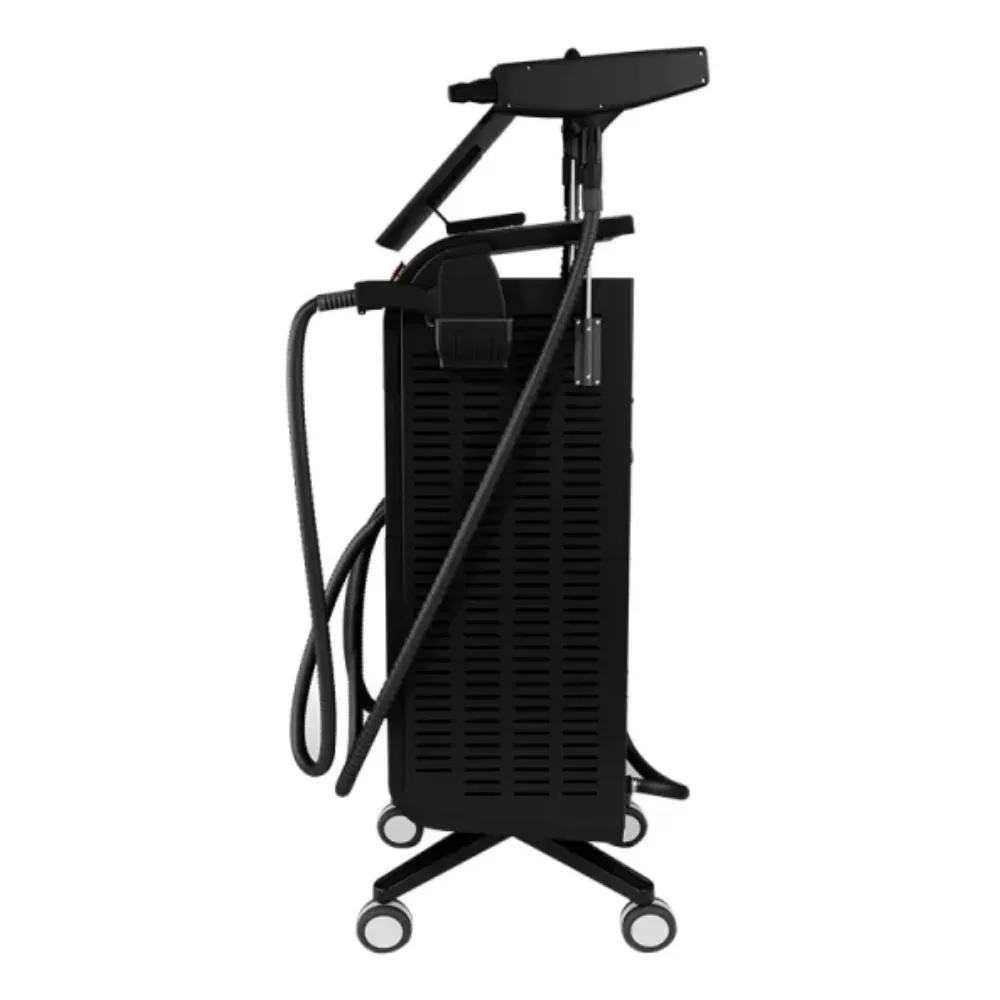
Check when each payment is due and what work or evidence must be supplied at that stage. Agree on who approves the final configuration and how changes affect price or delivery. Keep bank details and the payee tied to the verified seller in the purchase file.
Ask how a damaged shipment, missing part, or late delivery will be handled. Find out who makes the freight claim and what evidence they need. These questions belong in the order terms, while both sides can still agree on a clear process.
If you use finance, compare the full payment schedule with the cash price. Include fees and ask your adviser to review the offer. Do not compare a monthly payment with a one-time purchase price without accounting for the term and total amount paid.
Suppose a planning exercise uses USD12,000 for equipment, USD1,500 for delivery and setup, USD500 for training, and USD1,000 as a service reserve. The planned cash requirement is USD15,000. These are invented budgeting inputs, not LufenBeauty prices or a market benchmark.
The reserve is money set aside, not proof that repairs will cost that amount. Taxes, financing, room work, and other expenses are excluded from this example. Replace every line with a real quote or a clearly labeled estimate before using the sheet to approve a purchase.
Keep revenue assumptions on a separate sheet. Base them on your own eligible client demand, pricing, staffing, and appointment capacity. A device purchase should not depend on treating every enquiry or filling every available slot from the first month.
Comparing configurations? Review the professional diode laser machine range, then request comparable quotes for the models that fit your brief. Ask for a written list of inclusions and exclusions before comparing totals.
Ask who provides training, which model it covers, and how staff competence is assessed. Request a syllabus and agree on the format, language, participants, and follow-up support. A sales demonstration or a general video should not be treated as a complete staff training program.
Have the relevant qualified lead review client assessment, operating limits, protective measures, alarm response, cleaning, and record keeping. Confirm that the training fits local practice requirements. Ask what happens when a new staff member joins or the software changes.
Use the site review to check that the delivered device can be brought into the room and used as intended. Review access, utilities, storage, and the working area with the supplier and appropriate local professionals. Document who must complete each task before the first appointment.
Request the cleaning and disinfection instructions for every reusable contact part. Confirm which parts can be removed, which products are compatible, and what steps trained users may perform. Do not infer a complete hygiene process from the presence of a removable tip or a chamber.
Do not copy a generic disinfectant concentration or replacement interval into your practice procedure. Use the supplied instructions and applicable infection-control requirements, with professional review where needed. If the documents are unclear, resolve that gap before putting the equipment into service.
Our diode machine maintenance guide can help you organize questions for the supplier. Any general maintenance advice must be checked against the exact model’s current instructions. Ask which records to keep and which tasks require authorized service.
Acceptance should describe what is checked, who checks it, and how a failed item is handled. Agree on these terms before dispatch. A signed delivery receipt can confirm that a crate arrived without proving that every purchase requirement has been met.
| Acceptance Item | Check to Agree in Advance | Record to Keep |
|---|---|---|
| Identity | Model, serial number, supplied configuration | Label photos and packing list |
| Condition | Shipping damage and missing accessories | Dated inspection record |
| Documentation | Correct manual, warranty, and market documents | Versioned document pack |
| Setup | Installation and required site checks | Authorized setup record |
| Function | Supplier-approved checks and alarm review | Signed test record |
| Training | Agreed instruction and competence review | Attendance and assessment record |
| Open issues | Remedy, owner, and agreed deadline | Written issue list |
Arrange qualified testing for any output measurements required by the contract. Do not improvise tests on people or bypass protective measures to prove a sales claim. Use a supplier-approved process and define who is authorized to conduct it.
Illustrative scenario: A delivery review finds a mismatch. A distributor receives documents bearing a different model name from the purchase order. The team records the mismatch and asks for a traceable explanation before accepting the document pack. It resolves the identity question first, without assuming the difference is harmless or that it proves a defect.
No. First establish what the wattage describes and how it was measured. Then compare the usable settings, cooling, handling, and supported configuration for your needs. A large input-power or component-rating number alone does not establish treatment suitability or appointment capacity.
There is no universal purchasing answer. Ask your qualified lead to define the service scope and review model evidence. Compare the exact configurations and their costs; do not choose solely by counting wavelength labels or assuming broader claims apply to every client.
Ask which handpiece is included, its compatible modes and tips, replacement price, lead time, and warranty conditions. Clarify how any shot count is defined and recorded. Find out whether service requires sending the handpiece, the host, or both, and who pays the freight.
A dated video can help show the agreed configuration before shipping. It does not verify everything that happens during transport, installation, or local setup. Agree on both pre-shipment evidence and delivery checks, and keep the process tied to the contract.
Give them the same brief and compare their written answers. Look for traceable documents, clear performance conditions, complete costs, and service terms you can understand. Follow up on gaps instead of assigning value to claims that neither supplier has supported.
Bring the buying brief, model documents, quote, warranty, training scope, and acceptance plan into one file. Assign an owner to each unresolved item. Order when the people responsible for clinical use, business costs, and required local checks have reviewed their parts.
Knowing how to choose a diode laser hair removal machine means being able to explain why a particular model fits your practice and which evidence supports that choice. Contact LufenBeauty for a model-specific buying discussion with your requirements, document questions, and cost checklist ready.