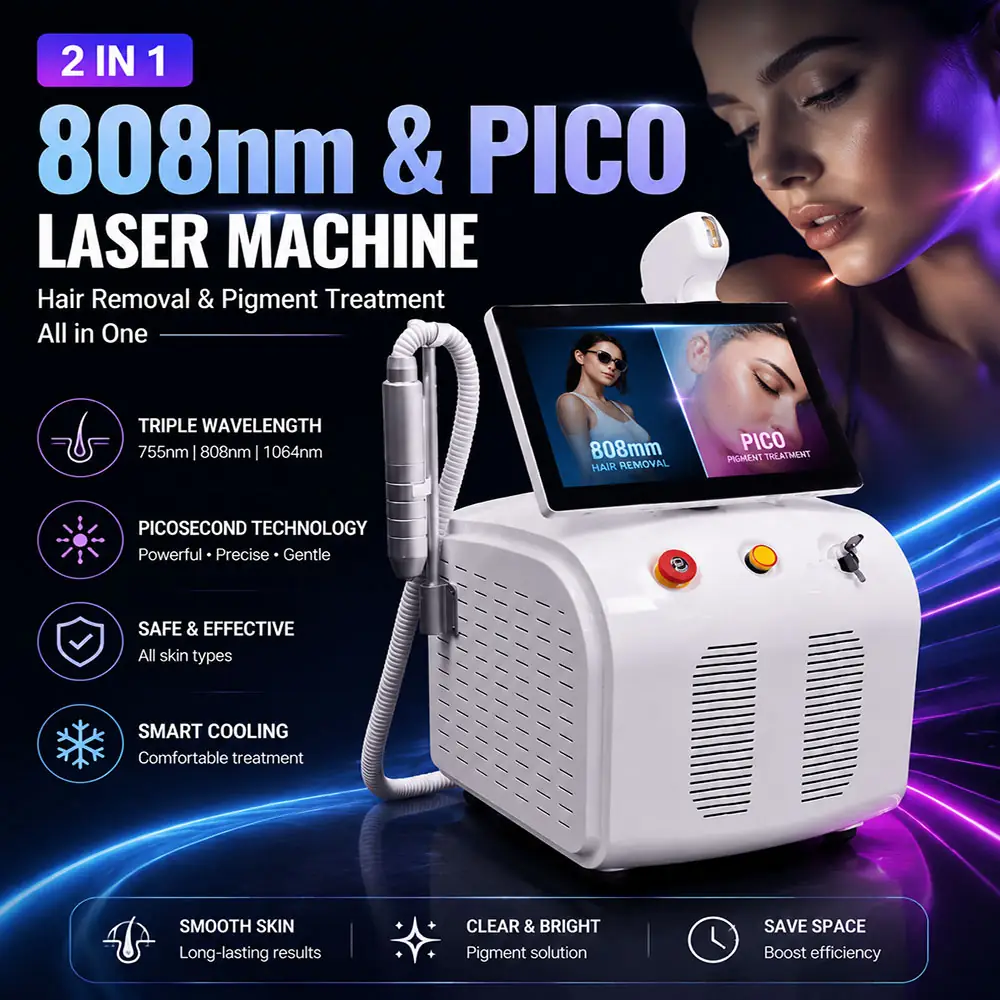
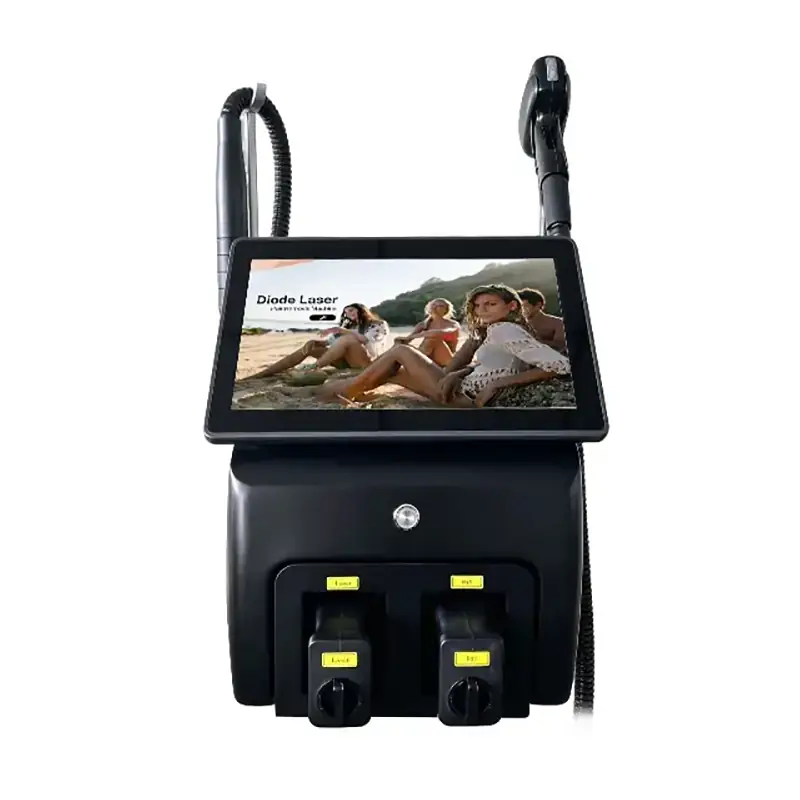
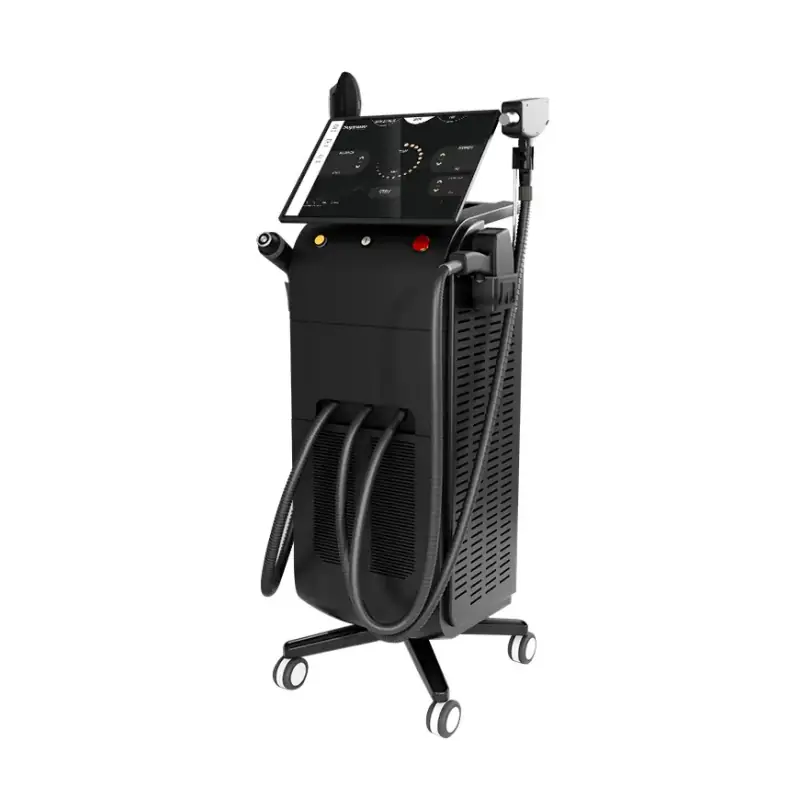
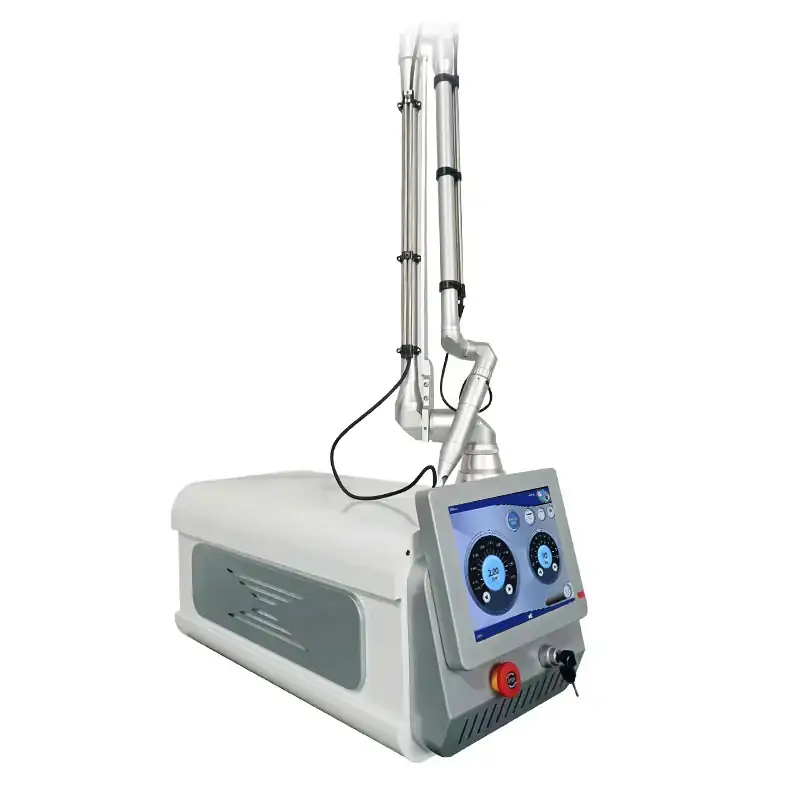
For many beauty clinics, growth brings a new challenge: how to offer more treatments without continuously adding more equipment.
More equipment does not necessarily make a clinic’s work more efficient. Clinic owners need to think about usable space, daily work routines, and equipment usage frequency. A multi-functional laser device solves this problem well. It integrates hair removal and pigment treatment functions into one single machine.
What Is a 2-in-1 Diode Laser and Picosecond Laser System?
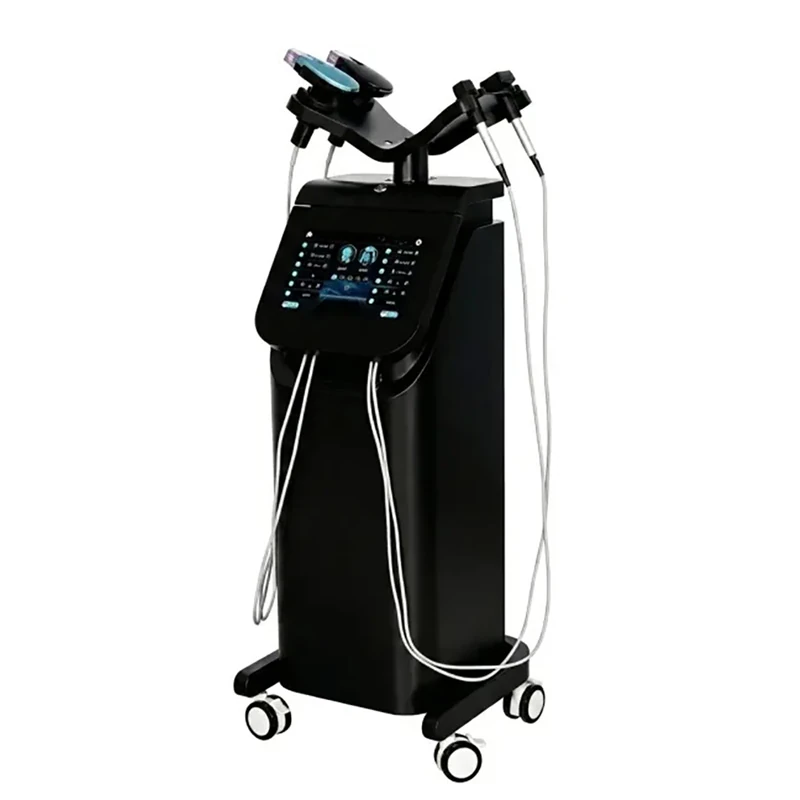
A 2-in-1 laser system refers to an aesthetic device that integrates two different laser technologies in one platform. The diode laser module is mainly used for hair removal, while the picosecond laser module focuses on pigment-related treatments, such as tattoo removal and skin pigmentation care. By combining these functions, clinics can offer more treatment options with a single device.
The dual-module design offers distinct advantages. One module handles hair removal, while the other specializes in tattoo removal, freckle treatment, and carbon powder skin rejuvenation, allowing one device to meet a variety of beauty needs. Its compact structure and simple layout make handling daily operations much easier.
How Diode Laser Hair Removal Technology Works
Diode laser hair removal uses laser energy to target hair follicles through selective photothermolysis. The melanin in the hair follicle absorbs the laser energy and changes it into heat. The heat then works on the follicle to help reduce hair growth.
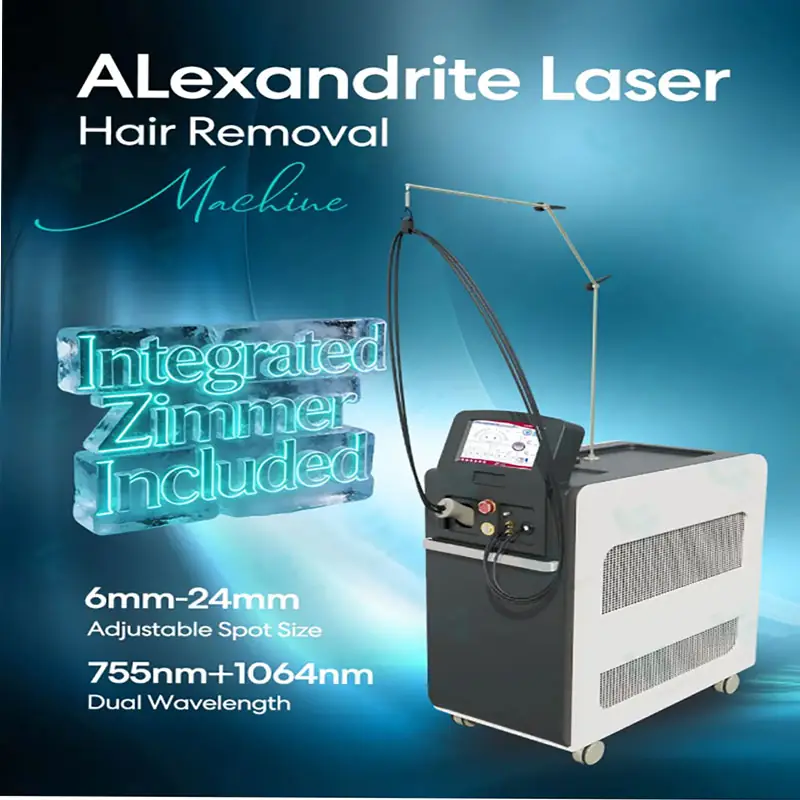
The 755nm wavelength is highly absorbed by melanin, which makes it a good option for fine hair and follicles located closer to the skin surface. The 808nm wavelength is widely used in diode laser hair removal because it provides a balance between treatment depth and energy absorption. It can be applied to many common hair removal areas.
The 1064nm wavelength penetrates deeper than shorter wavelengths and has lower melanin absorption. Because of this, it is often considered a suitable option for darker skin types and deeper hair follicles.
Understanding 755nm, 808nm, and 1064nm Triple-Wavelength Applications
This triple-wavelength design gives beauty practitioners great flexibility in treatment adjustments. Operators can tailor every treatment plan precisely. They can fully adapt to each client’s unique conditions, including hair thickness, follicle depth and skin types. This targeted adjustment mode makes laser treatments more accurate and suitable for diverse client needs.
Wavelength
Main Advantage
Common Application
755nm
Higher melanin absorption
Fine hair and superficial follicles
808nm
Balanced penetration and absorption
General body hair removal
1064nm
Deeper penetration
Dark skin and deeper follicles
How Picosecond Laser Technology Works for Tattoo and Pigment Treatments
Picosecond lasers use ultra-short picosecond-level pulses, setting them apart from conventional nanosecond laser devices. Instead of relying heavily on heat to break down pigments, this advanced technology uses photoacoustic effects to shatter pigment particles mechanically. This method minimizes thermal damage to surrounding skin tissue for gentler, safer treatments.
This versatile laser technology supports a wide range of aesthetic procedures.. It works perfectly for fading stubborn tattoos, correcting various skin pigmentation issues, and refining skin texture for overall rejuvenation.
Picosecond Laser vs Traditional Nanosecond Laser Technology
The main differences are pulse duration and energy delivery.
Technology
Pulse Duration
Main Effect
Nanosecond laser
Nanosecond level
Photothermal reaction
Picosecond laser
Picosecond level
Photoacoustic pigment fragmentation
According to research indeded by the National Library of Medicine, picosecond laser technology has been studied for tattoo removal and pigment treatment because of its ability to deliver high peak power within extremely short pulses. (National Library of Medicine)
Diode Laser Hair Removal Machine vs Picosecond Laser Machine: Which Technology Fits Your Clinic?
Laser aesthetic technologies are engineered with targeted use cases in mind, catering to distinct beauty treatment needs. Diode laser tech is purpose-built to deliver reliable, high-efficiency hair removal results. In contrast, picosecond laser innovation excels at resolving various skin pigment and tattoo concerns.
Diode Laser and Picosecond Laser Systems Comparison
Feature
Diode Laser System
Picosecond Laser System
Main Purpose
Hair removal
Tattoo and pigmentation treatments
Working Principle
Selective photothermal action
Photoacoustic pigment fragmentation
Common Wavelengths
755nm + 808nm + 1064nm
532nm/1064nm/1320nm
Main Target
Hair follicles
Pigment particles
Typical Users
Hair removal clinics
Aesthetic clinics and skin treatment centers
Selecting the Right Laser Technology Based on Treatment Applications
Each clinic has a different service focus, so the choice of laser equipment should always align with your core business. Clinics specializing in hair removal will prioritize stable diode laser output, a variety of wavelengths, and durable system performance. For full-service beauty clinics, an integrated laser platform offers unparalleled versatility, seamlessly encompassing hair removal and pigmentation correction services.
Purchasing an integrated dual-function laser device means eliminating the need to invest in multiple separate units. These devices not only simplify equipment layout but also perfectly adapt to various daily treatment needs. This design not only gives beauticians greater operational freedom, but also helps clinics calculate the costs and benefits – the investment in equipment does not need to be too large, but the service capacity can be maximized.
A Practical 2-in-1 Diode Laser and Pico Laser Solution for Beauty Clinics
Applying a Triple-Wavelength Diode and Pico Laser System in Beauty Clinics
Each client’s skin type and hair characteristics are unique. Therefore, personalized parameter settings are key to ensuring clinical efficacy. This device has a built-in diode laser module that supports three wavelengths:755nm, 808nm, and 1064nm, meeting the hair removal needs of all parts of the body. Operators can flexibly adjust parameters according to hair thickness, follicle depth, and treatment area. This ensures both the safety of the treatment process and achieves more precise and ideal results.
Beyond hair removal, the device also integrates a picosecond laser module, effectively addressing common cosmetic issues such as tattoo removal and pigmentation, with stable and reliable performance. One device, two functions, allowing clinics to easily expand their services and enhance business flexibility and overall competitiveness without the need to purchase separate machines.
This dual-technology design creates great practical value for aesthetic clinics of all sizes. It simplifies your equipment arrangement and saves precious indoor clinic space. This single compact device also expands your available treatment projects. It serves as an affordable, easy-to-use upgrade to optimize your daily clinic operations.
How to Choose the Right 2-in-1 Laser Aesthetic Machine for Your Clinic?
Before purchasing, clinics should evaluate their treatment goals and customer demand.
Evaluating Your Treatment Requirements and Client Needs
Important considerations include:
Main treatment services offered
Expected daily treatment volume
Target customer groups
Available treatment space
Required application range
Evaluating Functionality, Performance, and Equipment Investment
Every beauty clinic has unique business characteristics. Your service scope, target clients, and daily treatment volume decide which laser device suits your clinic best. Advanced redundant functions cannot bring actual profit growth. The most suitable laser equipment always fits your core business and daily operation scenarios.
Clinics that focus on hair removal need stable and durable laser performance to support continuous high-frequency treatments. Full-service aesthetic clinics pay more attention to equipment versatility. A 2-in-1 laser device can freely switch between hair removal, pigment correction and tattoo removal treatments, so clinic owners can expand service items without purchasing additional equipment.
The actual performance of laser equipment directly determines the long-term value it can bring to a clinic. A user-friendly interface allows staff to learn quickly and easily, resulting in higher daily work efficiency. Stable and consistent energy output ensures that every client enjoys uniform, reliable, and high-quality treatment. The low-maintenance design effectively reduces equipment failures and downtime. It saves time, effort, and costs, creating sustainable long-term value for clinics.
FAQ
Q1: Can a 2-in-1 Laser System Perform Diode Hair Removal and Pico Treatments Independently?
A: Yes. A well-designed 2-in-1 system has independent treatment modules, allowing the diode laser and picosecond laser functions to support different applications. Clinics can choose the appropriate handpiece and treatment mode based on the specific procedure.
Q2: How Can Clinics Distinguish a True Picosecond Laser from a Rebranded Q-Switched Laser?
A: Buyers need to confirm the actual pulse duration of the equipment. True picosecond lasers operate with picosecond pulse widths, while traditional Q-switched systems typically operate at the nanosecond level. Carefully verifying this parameter before purchasing is essential.
Q3: Why Is a Triple-Wavelength Diode Laser Better Than an 808nm-Only System?
A: Triple-wavelength laser systems stand out for their excellentadaptability. Each wavelength works on different skin tones and hair follicle depths, covering far more cases than a single 808nm wavelength alone. With 755nm, 808nm, and 1064nm wavelengths integrated in one device, practitioners can easily adjust treatment settings to fit every client’s unique skin and hair conditions, delivering safer, more personalized results.
Q4: What Cooling System Features Are Important for Continuous Daily Operation?
A: Consistent cooling is critical for busy clinics with all-day continuous treatments. This device integrates TEC semiconductor cooling, water circulation cooling and sapphire contact cooling. The multi-cooling structure stabilizes the temperature of the treatment tip, prevents heat buildup during long working hours, and maintains steady laser output. It greatly improves treatment safety and delivers a smooth, pain-friendly experience for clients.
Conclusion
Choosing a 2-in-1 laser platform requires careful evaluation of technology, applications, and practical clinic requirements. A combination of triple-wavelength diode technology and picosecond functionality can provide broader treatment possibilities compared with single-purpose equipment.
A diode laser hair removal system combined with picosecond functions allows clinics to handle both hair removal and pigment-related procedures with a single platform.
Opening a new medical spa, upgrading an existing practice, or expanding your treatment menu is one of the most exciting milestones for any aesthetic professional....
Introduction Multifunctional aesthetic devices integrate various treatment technologies into a single unit. As system integration increases, routine maintenance becomes essential. Dust, residue, contaminated cooling water,...
Introduction Professional beauty clinics often need equipment that can handle different treatment needs without taking up too much space. This is especially important for clinics...
The medical aesthetics equipment market is growing rapidly worldwide. Laser hair removal technology has become one of the fastest-growing treatment options among cosmetic clinics, medical...
Choosing an RF microneedling machine involves more than comparing power ratings and needle counts.. Two machines may look similar on paper but offer very different treatment...
The global non-invasive body contouring market is growing rapidly. Today’s clients are no longer satisfied with simple fat reduction; they demand dual-action treatments that sculpt,...