RF Microneedling Cartridge Cost: A Clinic Buyer’s Guide
RF microneedling cartridge cost depends on the exact device and tip: compare the cartridge code, pack size, delivered price, and approved fit. Public seller prices...

In the ever-evolving field of aesthetic medicine, the quest for safer, faster, and more effective treatments has led to significant advancements in laser technology. Among these innovations, the picosecond laser tattoo remover stands out as a revolutionary tool, which is changing the way professionals remove tattoos and rejuvenate their skin. But what exactly is a picosecond laser and why is it considered to be superior to traditional methods? Let’s study the science, advantages and applications of this cutting-edge technology.
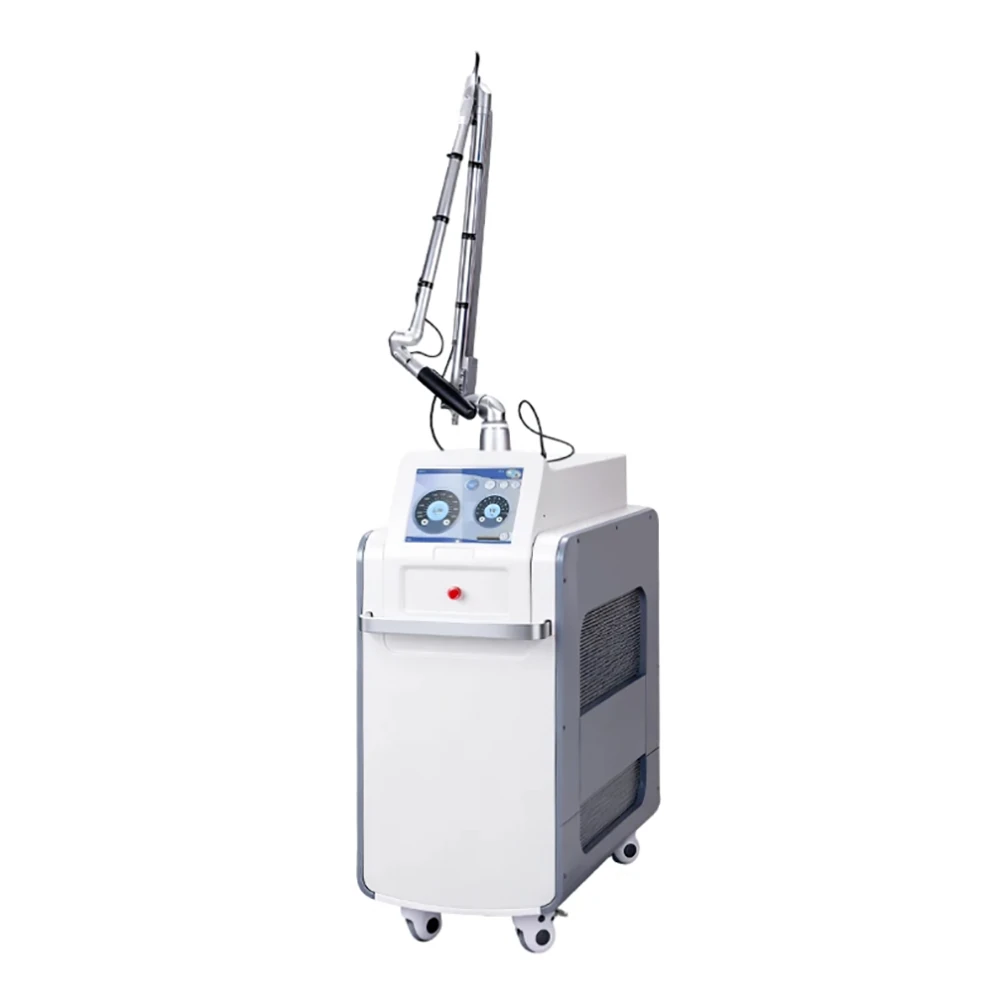
A picosecond laser is a kind of laser that emits optical pulses lasting for one trillionth of a second (picosecond). The duration of this ultrashort pulse is very important because it allows the laser to crush pigment particles into tiny dust-like particles more effectively than traditional lasers. The rapid energy transfer has a photo-mechanical effect, which leads to the expansion and rupture of pigment particles without significantly heating the surrounding tissue. This process reduces the risk of thermal damage to the maximum extent, and enhances the body’s ability to absorb and eliminate the pigment particles.
The development of picosecond lasers marks an important milestone in laser technology. Studies have confirmed that due to its ultra-short pulse mechanism, picosecond laser systems can achieve tattoo removal up to 90% after 3-4 treatments.(Source: http://journals.lww.com/dermatologicsurgery/Pages/default.aspx)
The most obvious advantage of picosecond laser tattoo machine lies in its excellent clinical efficiency. Traditional Q-switched nanosecond lasers relies on photothermal effects, and its long pulse duration (nanosecond) often requires 6 to 10 or more treatments to significantly fade tattoos. In contrast, picosecond lasers runs with ultra-short pulses of one trillionth of a second, which instantly releases energy in a very short time, resulting in a strong photo-mechanical effect (or photoacoustic effect). This effect is like “precision blasting”, which crushes tattoo pigment particles (especially stubborn blue and green pigments) into finer dust-like fragments. Therefore, picosecond lasers can achieve the same or even better removal effect only after 3-5 treatments, saving patients a lot of time and the cost of multiple treatments.
The ultra-short pulses of picosecond lasers significantly reduce the risk of thermal damage to the surrounding skin. Traditional lasers pulse lasts for a long time, which can produce too much heat, resulting in burns, scars and pigment changes. In contrast, picosecond lasers provides a safer treatment option with low incidence of side effects.
Picosecond lasers is widely used, which can effectively aim at various pigment types, including black, blue, green, and even red and yellow. This versatility makes them suitable for removing various types of tattoos, as well as treating pigmented lesions such as melasma, freckles, and age spots.
Compared with traditional lasers, patients usually report less discomfort during picosecond laser therapy. Less thermal shock means less pain and faster recovery time. In addition, the shortest downtime associated with picosecond laser therapy enables patients to resume their daily activities more quickly.
| Technical Aspect | Details |
| Size (excluding joint arm, height x length x width, mm) | 105 × 48 × 133 cm |
| Machine Net Weight | 110 kg |
| Joint Arm Weight | 4 kg |
| Power | 2000 W |
| Over-current Protector Model | 220V, 10A |
| Laser Wavelength | 1064 nm, 755 nm, 532 nm, 1320 nm |
| Laser Output Frequency | 1 – 10 Hz |
| Spot Diameter | 2 – 10 mm adjustable |
| Maximum Output Energy of Single Pulse | 0.05–1.0 mJ (progressive with 0.05) |
| Cooling Water | Deionized water or pure distilled water |
| Cooling Mode | Built-in closed-cycle water-cooled type |
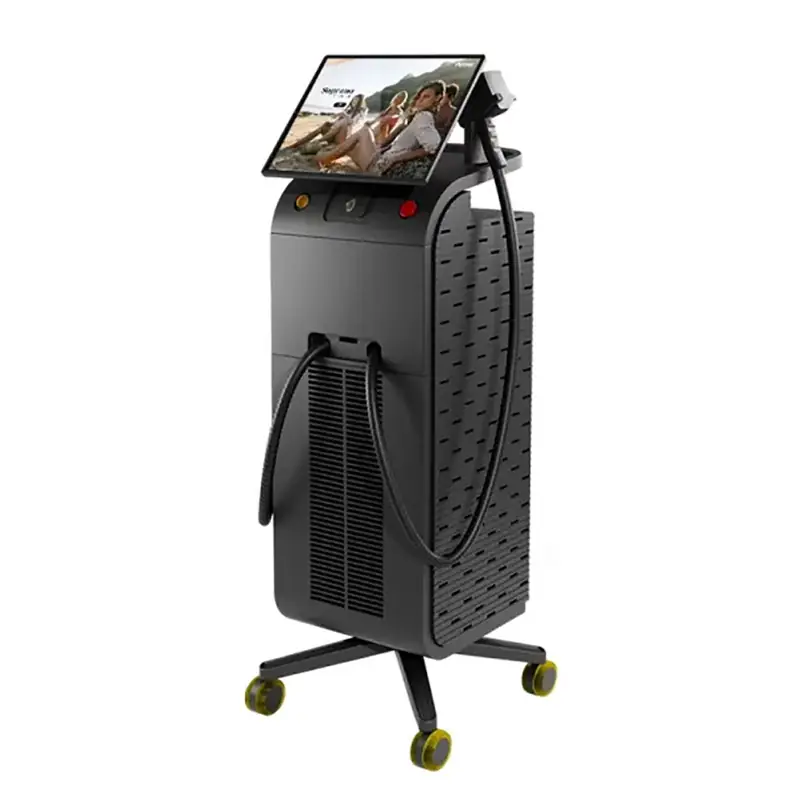
The picosecond laser tattoo machine is composed of several key modules, including the host computer of laser therapeutic instrument, laser joint arm, laser power supply, cooling system and display control system. The laser cavity generates a high voltage pulses that excites the xenon lamp, which in turn stimulates a YAG crystal rod to emit laser with a specific wavelengths (755/1064/532 nm). Then, the light is directed through a series of mirrors and lenses to focus the laser beam to the treatment area.
The cooling system plays an important role in maintaining the best working temperatures and ensuring the life and reliability of the laser. The display control system provides an intuitive interface for operators to monitor and adjust treatment parameters, which improves the accuracy and ease of use.
The picosecond laser is widely used in several key fields of beauty and medical industries, which is attributed to its accuracy, safety and versatility in dealing with different skin problems. Based on market data and the distribution of users, the main application industries are.
These institutions focus on non-surgical cosmetic treatments, and picosecond laser tattoo removal machine is mainly used to completely remove all kinds of pigment and tattoo. Its ability to treat all pigment colors with minimal risk of scarring makes it a staple tool in high ‑ volume clinics.
In surgical operation and hospital environment, the machine supports pre-operation and post-operation care, such as removing residual pigment. Surgeons attach importance to its fast treatment cycle and high safety, and it is suitable for patients seeking a combination of surgery and cosmetic effects.
Spas and chain parlors offering beauty and tattoo services use the picosecond laser for efficient multi ‑color tattoo and pigment removal. The compact design and adjustable spot size of picosecond laser tattoo removal machine make it suitable for small spaces while maintaining professional performance.
A: Before tattoo removal with picosecond laser, patients are advised to avoid sun exposure and using tanning products. Please follow the doctor’s advice for the details.
A: Each course usually lasts 15 to 30 minutes, depending on the size and complexity of the tattoo.
A: Avoid direct sunlight and use sunscreen after treatment. In addition, avoid touching the treatment area by hands to prevent infection.
A: Generally speaking, the service life of a picosecond laser machine is more than 10 years. The actual life depends on the frequency of maintenance and use.
A: Picosecond laser is generally applicable to most tattoos, including colored and black tattoos.
The picosecond laser tattoo removal machine is a great leap in laser technology, and it is excellent in tattoo removal and skin regeneration with its high efficiency, safety and versatility. It reduces treatment time, reduces the risk of thermal injury, and handles various types of pigments, making them a must-have for people in facial make-up.
As the increasing demand for safer and more effective cosmetic therapy, picosecond laser technology will be more widely used. By understanding its science and advantages and cooperating with a competent supplier, health care professionals can make wise choices to improve patients’ efficacy and satisfaction.
In the developing field of cosmetic medicine, keeping updated is key to providing top-notch care. The picosecond laser machine is a game-changer, setting new efficacy and safety standards. Embrace this technology and cooperate with reliable suppliers, opening up new possibilities for your practice and patients.