RF Microneedling Cartridge Cost: A Clinic Buyer’s Guide
RF microneedling cartridge cost depends on the exact device and tip: compare the cartridge code, pack size, delivered price, and approved fit. Public seller prices...

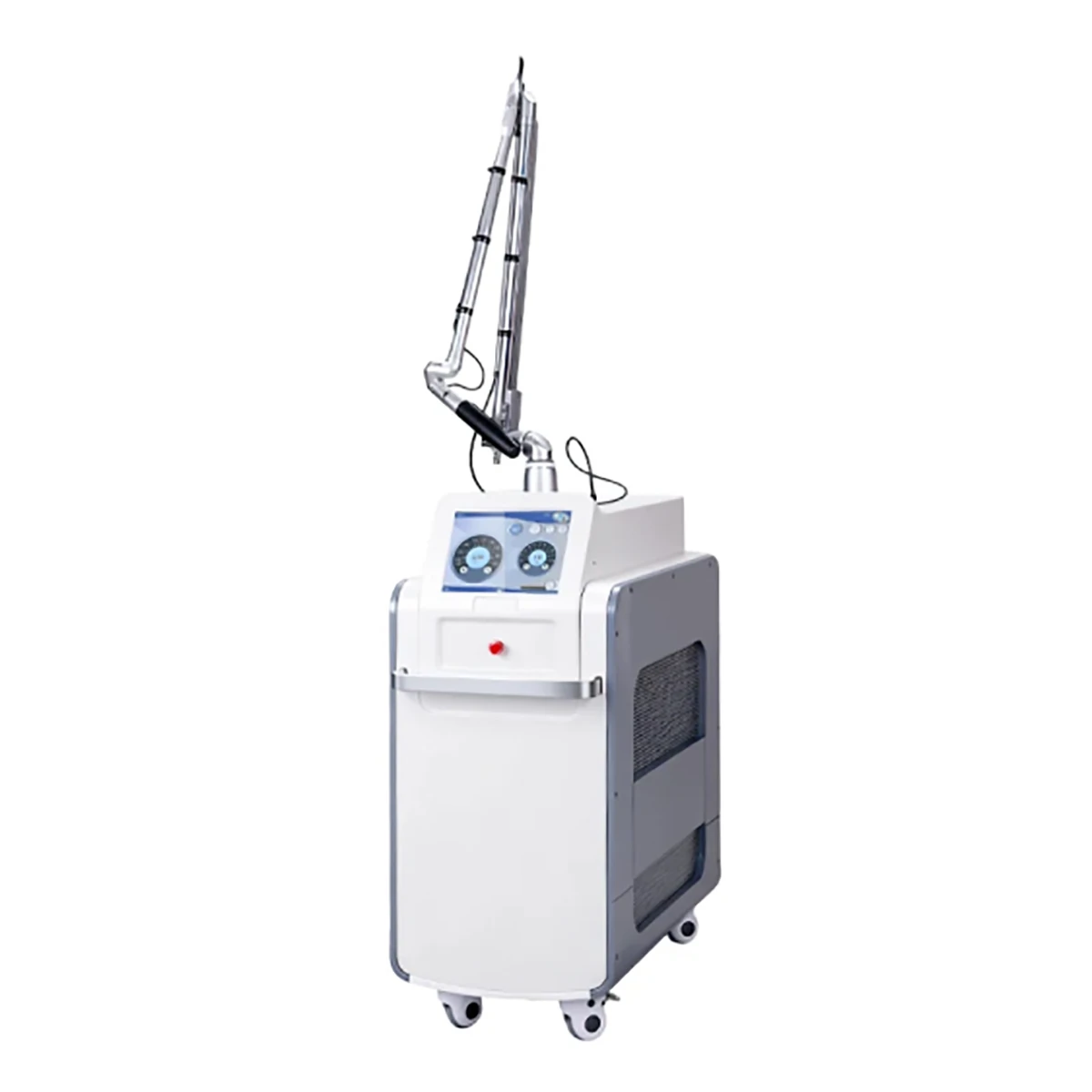
In the global medical and beauty equipment market, Nd:YAG laser devices occupy a core position in pigment removal and tattoo removal projects, with pico laser equipment becoming the mainstream high-end equipment favored by professional beauty salons and medical aesthetic clinics. Unlike traditional lasers, modern picosecond devices provide ultra-short pulse output and high safety, efficiently clearing pigment. This enhances the commercial value for clinics and beauty institutions. However, the market presents extremely uneven pico laser machine price gaps, ranging from hundreds of US dollars to thousands of US dollars. Equipment configuration and core technology shape everything from treatment outcomes to operational safety — and ultimately determine customer trust and long-term ROI. Therefore, buyers should evaluate both the manufacturer’s credibility and the technical specifications of the system before making a purchase decision.
The final effect of tattoo removal and pigment removal treatment is fundamentally determined by the laser pulse width, which is the most core technical indicator for distinguishing professional pico laser machine from low-end counterfeit equipment. Many inferior products on the market falsely label picosecond parameters, resulting in poor treatment effects and frequent customer complaints, which is the biggest pitfall in equipment procurement.
Nanosecond Laser (Traditional Q-Switched Laser): This type of laser has a relatively long pulse width (5ns or above), and it mainly acts on skin pigment through the photothermal effect. During operation, laser energy will form continuous heat accumulation on the skin tissue. Although it can break part of the pigment particles, the particles after crushing are large in volume, difficult for the human body to metabolize and eliminate. At the same time, long-term thermal accumulation is likely to cause skin blisters, redness, swelling and secondary melanin precipitation, with poor treatment safety and low efficiency.
Picosecond Laser: The pico laser machine adopts ultra-short picosecond-level pulses (one trillionth of a second in length), which mainly produces photomechanical shock effects instead of thermal effects. Ultra-short pulses generate rapid pressure waves that shatter pigment into fine particles, allowing the body to clear them more efficiently. These ultra-fine particles are easily absorbed and metabolized by human macrophages and lymphatic tissues, potentially improving pigment clearance efficiency. Meanwhile, the ultra-short energy action time almost avoids thermal diffusion to surrounding normal skin tissues, greatly reducing treatment damage and side effects.
A large number of low-priced counterfeit devices on the market simply modify the system interface to pretend to be picosecond equipment, while the internal core is still a traditional nanosecond laser. Buyers must not judge equipment quality only by pico laser machine price. When purchasing pico laser machine, it is necessary to strictly verify the Q-switched technology level of the laser core and the real pulse width data of the equipment. Regular picosecond nd yag laser manufacturer can provide official core parameter test reports and clinical effect verification videos, while counterfeit equipment cannot provide authentic technical certification.
Tattoos and skin pigment lesions in the market are diverse in color and depth, and a single laser wavelength cannot cover all treatment scenarios. The completeness of wavelength configuration directly determines the business coverage capability of the equipment and is a key factor in evaluating the cost performance of pico laser machine.
1064nm Wavelength: It is specially used for the removal of dark pigments, covering classic black and blue tattoos, dark eyebrow tattoos and dark eyeliner tattoos, with strong skin penetration and stable dark pigment crushing effect.
532nm Wavelength: Mainly targeting light-colored and warm-toned pigments, suitable for removing red, brown, orange tattoos and lip liner pigment, making up for the treatment gap of dark wavelength for light color pigments.
755nm Wavelength: Matched with honeycomb focused technology, it has excellent processing ability for stubborn superficial pigments such as chloasma, sun spots and facial dull yellowing. It can realize skin whitening and tone brightening while removing pigments, expanding the skin rejuvenation business of the equipment.
1320nm Wavelength: Mainly used for deep skin cleaning and carbon peeling (Hollywood peeling) projects. It can effectively remove blackheads and whiteheads, shrink pores and improve skin oil balance, meeting the daily skincare maintenance needs of customers.
The professional four-wavelength China pico laser machine launched by formal manufacturers fully covers 532nm, 755nm, 1064nm and 1320nm full-band wavelengths, equipped with independent professional working heads for each wavelength. Compared with single or double-wavelength low-end equipment, this multi-head integrated configuration enables one machine to meet all mainstream businesses such as tattoo removal, whole-face pigment removal, skin whitening and deep skin cleaning for beauty salons. It avoids the repeated procurement cost of multiple devices, greatly improves the comprehensive utilization rate of the equipment, and is the standard configuration of high-quality pico laser machine in the market.
Picosecond laser equipment will generate high instantaneous heat during high-frequency continuous operation. The quality of the heat dissipation system and the power configuration grade directly determine the long-term operation stability, continuous working capacity and service life of the equipment, which is the core hardware guarantee for institutional daily business.
Industrial-Grade Power Configuration: High-performance professional pico laser machine is equipped with 2000W industrial high-power power supply and 220V 10A over-current protector. This configuration can ensure stable laser energy output under 1-10hz high-frequency pulse emission, without energy attenuation even after long-term continuous operation, ensuring consistent treatment effect for each customer.
High-Efficiency Cooling Architecture: Formal picosecond nd yag laser manufacturer adopts a composite cooling mode of built-in closed-cycle water cooling + air cooling. The equipment needs to be matched with deionized water or pure distilled water for circulating heat dissipation, which can quickly take away the heat generated by laser operation. Excellent heat dissipation performance avoids the temperature rise of the treatment probe caused by long working hours, prevents the aging of the laser core and the attenuation of output energy, and effectively extends the service life of the equipment.
When inspecting equipment, buyers must focus on verifying the continuous operation capacity of the equipment. Professional medical-grade China pico laser machine supports 24-hour uninterrupted continuous work, which is an important indicator to measure the quality of core components. Low-end equipment is limited by low power and simple single water cooling system, which is prone to energy instability and equipment crash after continuous work, seriously affecting business progress.
Purchasing laser beauty equipment is not only a simple hardware transaction, but also a long-term technical service cooperation. Complete clinical parameter guidance and after-sales technical support are the key to avoiding operational risks and ensuring stable treatment effects.
Professional Clinical Parameters: Different skin tones, tattoo depths, pigment colors, and lesion types require adjustments in laser frequencies, energy levels, and spot sizes. Without professional parameter guidance, operators are prone to improper operation, resulting in incomplete pigment removal or skin damage.
Complete After-Sales Support: Excellent manufacturers can provide one-stop supporting services including official product manuals, detailed clinical parameter comparison tables, standardized operation videos and online technical guidance. This systematic support can help new operators quickly master operation skills, reduce trial and error costs, and ensure the safety and effectiveness of each treatment.
We provide ongoing technical support, training materials, and remote assistance for customers who purchase our China pico laser machine products. All equipment is equipped with complete parameter guidance documents and operation teaching videos, and provides long-term remote technical after-sales service, helping beauty institutions solve operational technical problems at any time.
To help buyers quickly distinguish professional equipment from low-end entry-level products, we have sorted out a detailed parameter comparison table based on actual product configurations:
| Key Parameters | Professional-Grade Configuration Standard (Lufen Beauty) | Low-End/Entry-Level Equipment Features |
| Available Wavelengths | 532nm / 755nm / 1064nm / 1320nm (full band coverage) | Only single 1064nm or dual 532+1064nm, incomplete business coverage |
| Core Technology | Q-Switched genuine picosecond technology, photomechanical shock effect | Traditional nanosecond technology, dominant photothermal effect, high thermal damage risk |
| Total Power Supply | 2000W industrial high-power power supply | 300W-800W low power, serious energy attenuation at high frequency |
| Cooling System | Water cooling + air cooling dual cooling system | Only simple small water circulation cooling, poor heat dissipation effect |
| Positioning Assistance | High-precision infrared aiming, accurate treatment positioning | No aiming light or large positioning deviation |
| After-Sales Supporting Services | Clinical parameter manual + professional video training + lifelong technical guidance | Only hardware sales, no technical training and after-sales support |
Before placing a formal order, buyers must confirm the following key information with suppliers one by one to avoid procurement traps and ensure equipment quality:
A picosecond nd yag laser machine is a professional medical aesthetic laser device that takes Nd:YAG crystal as the gain medium and outputs ultra-short picosecond pulses. It realizes non-invasive pigment removal and skin rejuvenation through photomechanical shock effect, and is the mainstream professional equipment in the global medical aesthetic laser industry. The multi-wavelength output feature makes it have higher comprehensive applicability than traditional single-wavelength laser equipment.
According to market research firm Mordor Intelligence, the global tattoo removal market is growing at a compound annual growth rate (CAGR) of 9.35% (Source: https://www.mordorintelligence.com/industry-reports/tattoo-removal-market).
The picosecond laser treatment interval is controlled at 4-6 weeks on average, and the minimum interval is not less than 1 month. This cycle can provide sufficient metabolic time for the crushed pigment micro-particles in the body, ensure the full absorption of pigment, and avoid skin burden caused by excessive intensive treatment.
The number of treatments depends on pigment depth, color composition, laser energy and individual metabolic differences. Exogenous pigments such as various tattoos generally require 2-4 treatments to achieve complete removal; endogenous pigments such as chloasma and freckles require 5 or more treatments to achieve stable and obvious skin brightening effects.
For treatment areas with rich blood vessels, customers need to avoid alcohol and aspirin drugs 3 days before treatment and 2 weeks after treatment to prevent bleeding. Women are prohibited from treatment during menstruation; patients with hypertension, heart disease, epilepsy, blood coagulation defects and scar constitution are forbidden to receive treatment. The treatment area must be thoroughly cleaned to remove all cosmetics and residual drugs before operation.
A: Patients should avoid sun exposure and tanning products before treatment. Always follow specific medical advice based on the individual’s skin condition.
A: Typically, each session lasts between 15 to 30 minutes, depending on the size and complexity of the tattoo.
A: Avoid direct sunlight on the treated area and apply sunscreen. Do not touch or pick at the area to prevent infection.
A: Generally, a professional pico laser machine has a lifespan of over 10 years, provided it is maintained correctly and used according to manufacturer guidelines.
A: Yes, with the correct combination of wavelengths (1064nm, 532nm, 755nm), a picosecond laser can effectively treat most black and colored tattoos.
When purchasing pico laser equipment, beauty institution operators should abandon the simple price-oriented purchasing concept and focus on the core technical parameters and comprehensive configuration of the equipment. The four core evaluation indicators of pulse width technology, wavelength coverage, heat dissipation power and technical support are the key to distinguishing high-quality equipment from inferior products. Choosing standardized, parameter-transparent and service-perfect picosecond nd yag laser manufacturer and genuine China pico laser machine can effectively avoid operational risks, ensure stable treatment effects, reduce long-term operating costs, and maximize the investment return and market competitiveness of medical aesthetic institutions.