RF Microneedling Cartridge Cost: A Clinic Buyer’s Guide
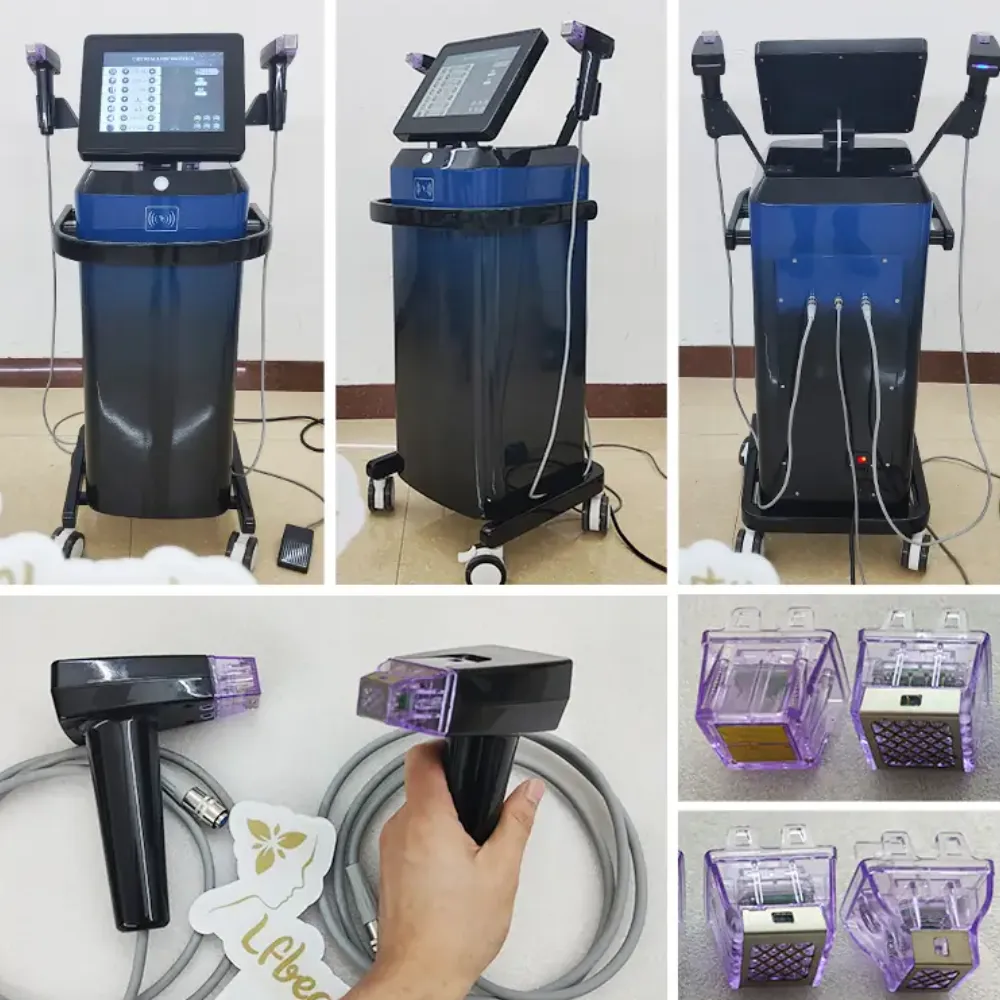
RF microneedling cartridge cost depends on the exact device and tip: compare the cartridge code, pack size, delivered price, and approved fit. Public seller prices...

In the ever-evolving landscape of aesthetic medicine, the quest for innovative and effective skin rejuvenation solutions remains a top priority. Among many available technologies, the fractional laser CO2 machine has become a leader, completely changing the way we deal with skin surface reconstruction and scar treatment. However, what makes the portable fractional laser CO2 machine different from the traditional similar equipment? This comprehensive guide delves into the intricacies of this cutting-edge device, exploring its definition, unique advantages, product specifications, and primary applications.
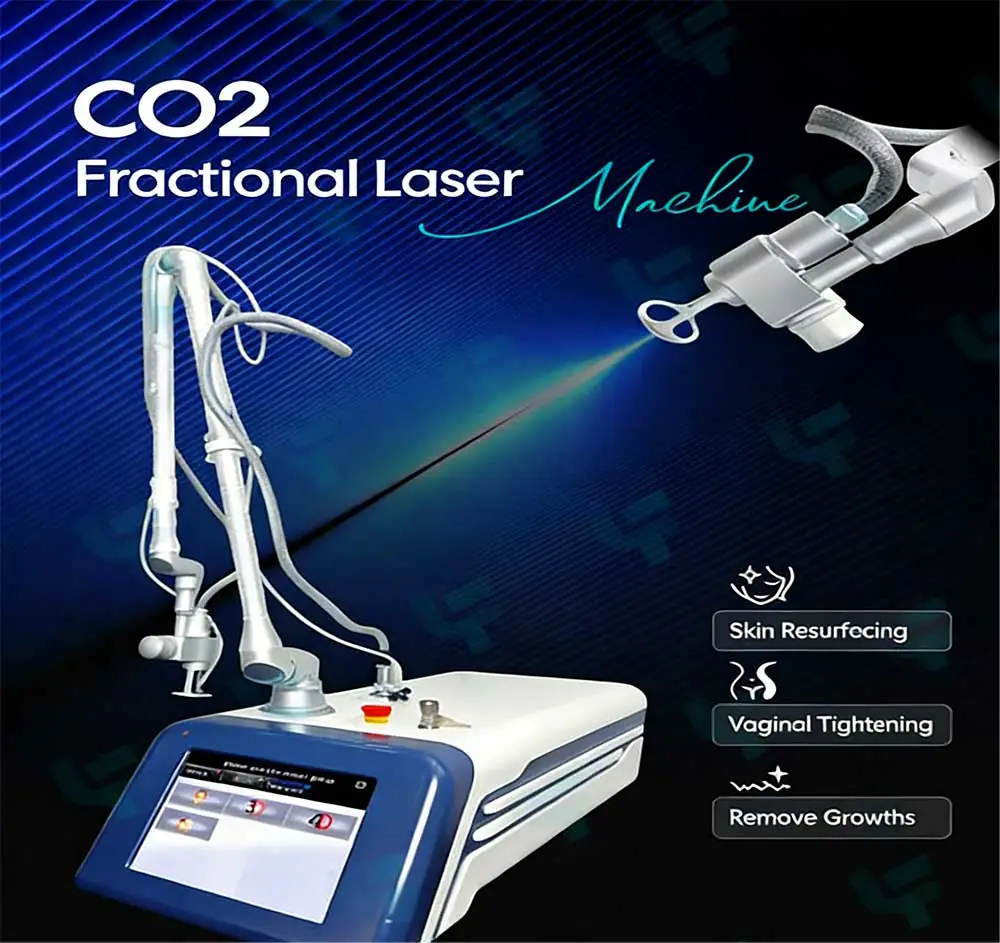
A fractional CO2 laser machine is a sophisticated medical device that delivers a precisely controlled beam of CO2 laser light with a wavelength of 10,600 nanometers to the skin. Unlike traditional full-thickness laser treatments that cover the entire skin surface, fractional lasers divide the beam into countless micron-sized spots, creating tiny columnar vaporization zones on the skin while preserving the integrity of surrounding tissue. This innovative approach, known as “fractional photothermolysis,” promotes faster healing and carries a lower risk of complications compared to traditional full-face treatments. This technology is driving the rapid expansion of the global aesthetic laser and CO2 laser device market. Industry reports indicate that the CO2 fractional laser system market size was approximately $799.2 million in 2024 and is projected to reach approximately $1.5 billion by 2035, representing a CAGR of approximately 5.9% over the next decade, primarily driven by the growing demand for advanced skin resurfacing and rejuvenation therapies. (Source: https://www.wiseguyreports.com/reports/co2-fractional-laser-system-market?utm_source=chatgpt.com)
There are three key differences between portable fractional CO2 laser machines and traditional systems.
The most obvious advantage of portable fractional CO2 laser equipment is its breakthrough spatial adaptability. Compared with the traditional vertical CO2 fractional laser equipment (usually weighing 100-200 kg, which requires fixed installation and special treatment room), portable equipment only weighs 25-40 kg, and is easy to be placed on a treatment cart or treatment table, occupying less than 0.5 square meters. This extremely compact design allows for plug-and-play operation, requiring no complex site modifications or professional installation, and can be put into operation on the day of delivery.
More importantly, portable devices have completely broken the space limitations of medical services. They can not only move easily between different treatment rooms, but also support flexible business models, such as on-site services, hotel spa partnerships and equipment sharing among multiple chain stores. For clinics in high-rent downtown, the saved space is directly converted into a cost advantage; For organizations looking for extended services, portable devices have opened up a new source of income. In contrast, the vertical equipment is fixed in one place, which can not meet the requirements of the modern medical beauty industry for flexibility and expanded service radius.
Portable fractional laser CO2 machines offer a significant leap forward in functionality compared to single-function devices, integrating three core treatment modes within a compact body:
This multi-functional design rivals large, upright devices in terms of coverage while reducing investment costs to one-third to one-fifth of the latter.
Notably, the portable device features one-button switching between treatment modes, and with multiple quickly interchangeable treatment heads, doctors can switch between different treatments within two minutes.
High-end fractional CO2 laser machines almost universally come standard with imported American RF (radio frequency) tubes, compared to the DC glass tubes commonly used in traditional equipment:
In order to better understand the performance of portable fractional CO2 laser, let’s take a look at the main specifications of a leading model.
| Specification | Details |
| Wavelength | 10,600 nm |
| Laser Apparatus | Sealed off laser device simulated by direct current |
| Optical Beam Quality | TEM00 |
| Output Power | 30W |
| Spot Size | 0.02~0.05 mm² |
| Aiming Beam | Red semiconductor laser (650nm) |
| Beam Transport Device | Articulated arm with 6-joint and balance weight |
| Working Mode | Continuous operation |
| Output Mode | Continuous, single pulse, interval pulse, and super pulse |
| Scan Scope | Max 20mm x 20mm, Min 0.1mm x 0.1mm |
| Scan Graphics | Circle, triangle, square, rectangle, hexagon, ellipse, line |
| Scanning Mode | Random, Normal, and Midsplit scan |
| Scanning Speed | More than 10m/s |
| Energy | 1-60W |
| Distance | 0.1-2.6mm |
| Cooling System | Circulating water cooling |
| Weight | 31kg |
| Dimension | 93cm x 52cm x 36cm |
| Power | 220V/110V |
Ensuring the safety and effectiveness of medical equipment is the most important. Portable fractional laser CO2 machine meets strict international and industry standards, including:
These certifications ensure that the equipment meets the highest quality and safety requirements, so that both medical service providers and patients can feel at ease.
A Fractional laser CO2 machine is very effective in treating various types of scars, including acne scars, surgical scars and burn scars. The laser can stimulate the generation of collagen, promote skin regeneration, and make skin smoother and more uniform. In addition, these machines are also used for general skin surface repair, solving problems such as fine lines, wrinkles and large pores.
Stretch marks are caused by rapid skin stretching, weight gain or sudden growth during pregnancy, which can be significantly improved by laser CO2 treatments. The laser stimulates the secretion of collagen, which is helpful to flatten and shrink stretch marks over time.
Portable fractional laser CO2 machines are also used for non-invasive vaginal tightening and rehabilitation. The energy of laser is helpful to tighten the vaginal walls, improve lubrication, improve sensitivity, and solve common problems related to vaginal relaxation and aging.
Portable fractional laser CO2 machines cater to a diverse range of industries, with the top three being:
CO2 fractional laser treatment is highly effective in treating various types of scars. Atrophic acne scars, burn scars, and skin regeneration are considered the “gold standard” indications for CO2 fractional laser treatment. Only specialized medical institutions are qualified to perform this treatment and have the capacity to handle severe cases. These institutions include dermatology departments in public hospitals and chain cosmetic clinics. These institutions typically have high average transaction values and stable repurchase rates, and they primarily use high-end vertical systems.
Beauty salons/light medical aesthetic clinics have high customer traffic and mainly offer low-energy, short-recovery-period skin care treatments (such as enlarged pores, fine lines, and epidermal regeneration). The required equipment is mostly portable or small desktop devices, and the decision-making process is highly sensitive, with products being updated and replaced very quickly.
Within general hospitals, the market is gradually expanding into departments such as gynecology, developing specialized treatment tools for specific needs (such as vaginal tightening and treatment of stress urinary incontinence). This area is showing significant growth momentum, but the overall market size is still somewhat smaller compared to dermatology.
A: It is the “gold standard” for pitted acne scars (acne scars), and it also has a clear effect on surgical scars, burn scars, stretch marks, enlarged pores, fine lines, epidermal pigmentation (freckles/age spots), and skin growths (warts/moles). The device, equipped with a gynecological probe, can be used for vaginal tightening treatments such as vaginal laxity treatment.
A: Usually, 3-5 treatments constitute one course, with each treatment spaced 1-2 months (4-8 weeks) apart. The specific number of treatments varies from person to person. Superficial problems may show results in 1-2 treatments, while severe scars require a full course of treatment.
A: Most people begin to see visible improvement after 1 month. The peak period for collagen remodeling is 2-3 months after the procedure, and the effect can last for 6 months to 1 year. It is a “gradual” effect, requiring patience to wait for tissue regeneration.
A: Strict sun protection for at least 3 months, with physical barriers (hats, masks, parasols) as the first choice. Choose a broad-spectrum mineral sunscreen with SPF ≥ 30, and apply it after the scabs have fallen off.
A: No. The thermal effect of the laser stimulates collagen regeneration and remodeling, actually thickening the dermis, making the epidermis denser, and enhancing the skin barrier function.
Portable fractional laser CO2 machines represent a significant advancement in skin regeneration technology, offering unparalleled portability, versatility, and superior performance. They can treat all kinds of skin conditions, and its compact size and low maintenance requirements make it an attractive choice for health care providers in all industries. By knowing its unique advantages, product specifications and main applications, you can make a wise decision to apply this innovative equipment to your practice, and ultimately improve the curative effect and satisfaction of patients.
As demand for non-invasive and effective skin treatments continues to grow, the portable fractional laser CO2 system will play a key role in the future development of cosmetic medicine. Whether you are an experienced professional or a beginner in the field, choosing this device will open new doors of opportunity for you and elevate your clinical practice to new heights.