AI Skin Analyzer vs Traditional Skin Analysis: Why Are Beauty Clinics Switching to AI-Powered Diagnosis?
Introduction
The beauty and aesthetic industry is becoming increasingly focused on data-driven skincare solutions. Customers today expect more than general recommendations based on visual observation. They want clearer insights into their skin conditions and more personalized skincare plans supported by objective data.
Traditional skin analysis methods often rely on professional experience, which may result in inconsistent evaluations and limited information. Unlike conventional approaches, an AI skin analyzer combines advanced imaging technology, artificial intelligence algorithms, and multi-dimensional analysis to provide more comprehensive skin assessments.
As more beauty clinics and aesthetic centers adopt intelligent skin analysis machines, AI-powered technology is transforming how professionals evaluate skin conditions, communicate with customers, and develop personalized skincare strategies. This guide explores the differences between AI skin analysis and traditional methods and explains why AI-powered solutions are becoming increasingly popular in modern beauty clinics.
What Is Traditional Skin Analysis and How Does It Work?
Traditional skin analysis has been widely used in beauty salons, skincare centers, and aesthetic clinics for many years. In most cases, professionals evaluate skin conditions through visual inspection, customer consultation, and basic testing methods.
Although experienced professionals can provide valuable insights, traditional analysis methods have several limitations when clinics need standardized and repeatable results.
Manual Skin Evaluation Based on Visual Inspection and Experience
Traditional skin assessment usually starts with a professional observing the customer’s facial condition.
Common evaluation factors include:
Skin dryness or oiliness
Visible pores
Fine lines and wrinkles
Pigmentation appearance
Redness or sensitivity signs
This approach depends significantly on the professional’s knowledge and experience. Different operators may focus on different details, which can make results less consistent.
For beauty clinics managing many customers, relying only on manual evaluation can make it difficult to create standardized consultation processes.
Common Limitations of Traditional Skin Analysis Methods
While traditional analysis remains useful, it may not provide enough information for modern personalized skincare services.
Some common limitations include:
Limited visualization capability
Traditional observation mainly focuses on visible surface conditions. However, some skin concerns may require more advanced imaging methods to analyze differences in pigmentation, texture, or deeper skin characteristics.
Lack of quantitative data
Customers often want to understand their skin condition through clearer measurements rather than simple descriptions. Without digital analysis, it can be difficult to compare skin changes over time.
Lower consultation efficiency
Manual assessment requires professionals to spend more time explaining conditions and preparing recommendations, especially during busy clinic hours.
As beauty businesses continue moving toward personalized services, many clinics are looking for professional skin analysis equipment that can provide faster and more consistent results.
What Is an AI Skin Analyzer and How Does It Work?
An AI skin analyzer is an intelligent skin imaging system that uses cameras, image processing technology, and AI algorithms to analyze facial skin conditions.
Unlike traditional methods that mainly depend on human observation, AI-powered systems collect image data and convert it into structured information. This helps beauty professionals evaluate skin conditions from multiple perspectives and provide more data-supported skincare suggestions.
Modern AI skin analysis solutions commonly combine facial scanning, image recognition, and deep learning technologies to analyze various skin characteristics and support personalized consultations.
AI-Based Image Recognition for Objective Skin Assessment
The core advantage of an AI skin analyzer is its ability to transform facial images into measurable skin information.
Through AI algorithms, the system can analyze various skin characteristics, including skin texture, wrinkle patterns, pigmentation distribution, pore conditions, moisture-related characteristics, and skin sensitivity indicators.
Instead of depending only on visual judgment, AI technology provides a more structured reference for professionals.
For beauty clinics, this means consultations can become more transparent. Customers can better understand their current skin condition and the reasons behind recommended skincare programs.
Multi-Spectral Imaging for Deeper Skin Condition Detection
One important difference between advanced skin analysis devices and basic cameras is imaging technology.
Multi-spectral imaging uses different light sources to capture various skin characteristics. Different wavelengths can highlight different aspects of skin appearance, helping professionals observe information that may not be obvious under normal lighting.
Imaging Technology
Application
White Light Imaging
Visible skin conditions, including texture, pores, wrinkles, and pigmentation appearance
Polarized Light Imaging
Skin texture details, fine lines, and uneven skin appearance
UV or Wood’s Light Imaging
Pigmentation-related analysis and hidden skin condition visualization
Red Light Imaging
Redness, vascular appearance, and skin sensitivity analysis
By combining multiple imaging modes, a professional skin analyzer can provide a more comprehensive view compared with ordinary facial photography.
Automated Skin Reports and Personalized Recommendations
Another major advantage of AI-powered skin analysis is automated reporting.
After image collection, the system can organize analyzed information into visual reports, allowing professionals to:
Explain skin conditions more clearly
Track changes during skincare programs
Recommend suitable care solutions
This improves communication between professionals and customers because the consultation is based on visible data rather than only verbal explanations.
AI Skin Analyzer vs Traditional Skin Analysis: Key Differences
The main difference between AI skin analysis and traditional evaluation is the transition from experience-based judgment to data-supported assessment.
Comparison
Traditional Skin Analysis
AI Skin Analyzer
Analysis Method
Manual observation and experience
AI image analysis and data processing
Imaging Technology
Basic photography or visual inspection
High-resolution and multi-spectral imaging
Result Consistency
Depends on operator experience
More standardized through AI algorithms
Data Presentation
Mainly verbal explanation
Visual reports and quantified information
Customer Experience
Traditional consultation
Interactive and data-driven consultation
Accuracy and Objectivity
Traditional skin analysis relies heavily on professional experience. Experienced aestheticians can identify many visible concerns, but results may vary between different operators.
An AI skin analyzer provides additional digital information through image processing and algorithm-based evaluation. This helps clinics establish a more consistent consultation workflow.
Detection Depth and Imaging Technology
Basic skin analysis devices may only capture surface appearance, while advanced AI skin analysis machines combine different imaging technologies to provide more detailed information.
Multi-spectrum imaging allows professionals to observe different skin characteristics under different lighting conditions, improving the overall understanding of skin status.
Efficiency and Customer Experience
Time efficiency is another important factor for beauty clinics.
Traditional analysis often requires manual adjustments and explanations. In comparison, AI-powered systems can automate image capture, analysis, and report generation, helping clinics create a smoother consultation experience.
For customers, seeing visual analysis results can also make skincare recommendations easier to understand.
Why Are Beauty Clinics Adopting AI Skin Analysis Devices?
As customer expectations continue to rise, beauty clinics are looking for technologies that can improve consultation quality, optimize daily operations, and support more personalized skincare services. AI-powered skin analysis devices provide a practical solution by combining advanced imaging, intelligent analysis, and visual reporting.
Improve Diagnostic Accuracy and Build Customer Trust
Customers often find it difficult to understand their skin conditions through verbal explanations alone. When professionals describe concerns such as uneven texture, pigmentation, or signs of aging, customers may not fully understand why certain skincare programs are recommended.
AI skin analysis changes this communication process by providing visual references and structured reports.
Instead of simply telling customers that they have certain skin concerns, professionals can use AI-generated analysis results to explain:
Where specific concerns appear;
How different skin characteristics compare;
Why a customized skincare plan may be suitable.
This visual approach helps make consultations more transparent and improves customer confidence.
It is important to note that AI serves as a diagnostic aid, not a substitute for professional expertise. Final skincare recommendations should always be made by qualified practitioners based on each customer’s individual needs.
Increase Consultation Efficiency and Service Value
For beauty clinics, efficiency is closely connected with business growth.
Traditional skin evaluation often requires professionals to spend considerable time observing, explaining, and recording customer information. With an AI skin analyzer, image capture and report generation can become more streamlined.
A modern facial skin analyzer can help clinics:
Reduce repetitive manual assessment work;
Standardize consultation procedures;
Provide clearer before-and-after comparisons;
Improve customer engagement during consultations.
By integrating skin analysis technology into daily operations, clinics can create a more efficient workflow while maintaining a personalized service experience.
Provide Personalized Skincare Solutions
Every customer has different skin characteristics. Factors such as skin type, moisture balance, pigmentation, sensitivity, and aging signs can vary significantly between individuals.
AI-powered skin analysis machines help professionals collect more detailed information before recommending skincare programs.
Instead of using a general approach, clinics can develop more targeted solutions based on:
Current skin condition;
Specific areas of concern;
Long-term skincare goals.
This personalized approach is becoming increasingly important as the beauty industry moves from product-focused services toward customized skin management.
How to Choose a Professional Skin Analyzer for Your Clinic?
Choosing the right professional skin analyzer requires more than considering appearance or basic camera functions. Beauty clinics should evaluate whether the equipment can provide reliable imaging, practical operation, and useful analysis results.
Check Camera Resolution and Imaging System
Image quality is one of the most important factors affecting skin analysis results.
A professional skin analysis device should provide high-resolution image capture, stable lighting conditions, consistent facial positioning, and multiple imaging modes when needed.
Compared with ordinary cameras, specialized skin analysis equipment is designed to capture more detailed facial information and support deeper image evaluation.
Multi-spectral imaging is commonly used in advanced skin imaging systems because different light sources can highlight different skin characteristics.
Evaluate Detection Functions and AI Analysis Capability
A good AI skin analyzer should provide meaningful analysis functions.
When evaluating equipment, clinics should consider:
Number of measurable skin indicators;
AI algorithm capability;
Report generation functions;
Data comparison features.
The purpose of AI analysis is to help professionals better understand skin conditions and communicate recommendations more effectively.
Consider Operation Experience and Service Efficiency
Beauty clinics usually need equipment that can be used efficiently by different team members.
Important factors include a simple operation process, automated image capture, a clear user interface, and easy report generation.
A user-friendly skin analysis machine can reduce staff training requirements and help maintain consistent service quality.
K33 AI Skin Analyzer: An Advanced Solution for Professional Skin Diagnosis
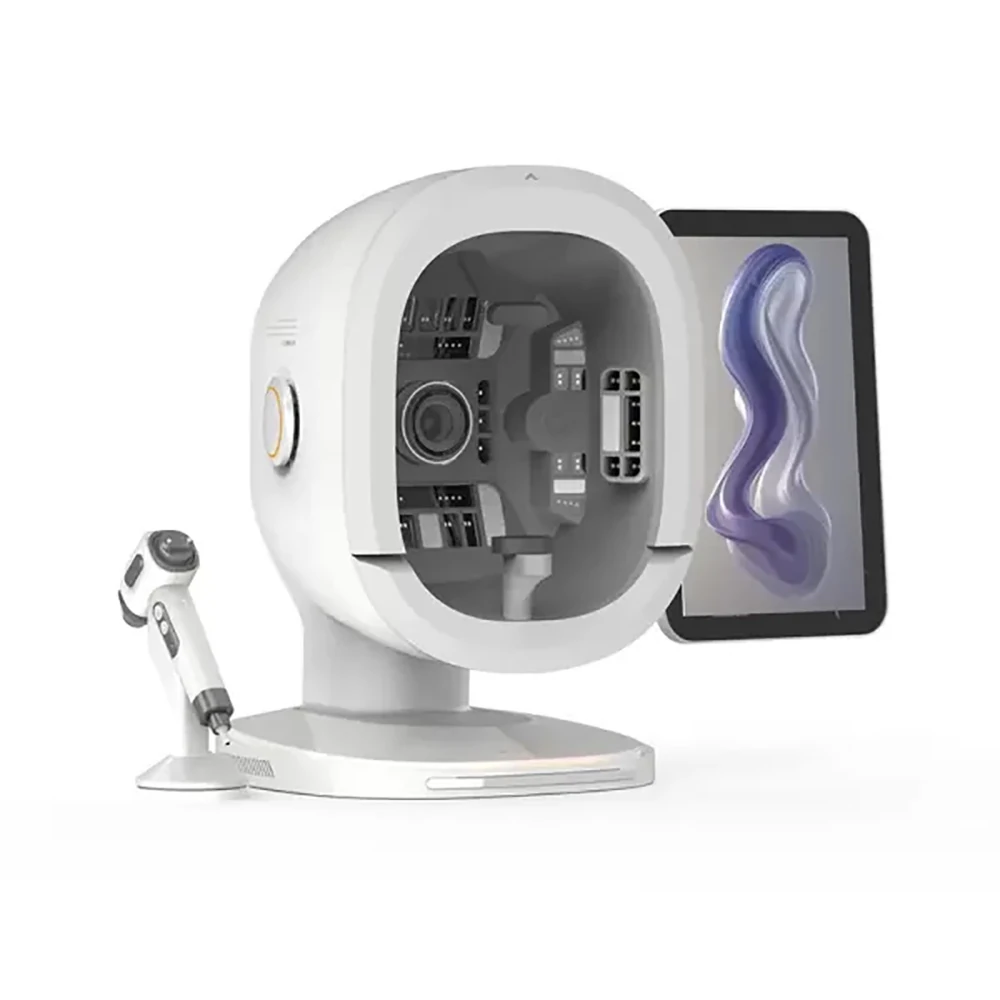
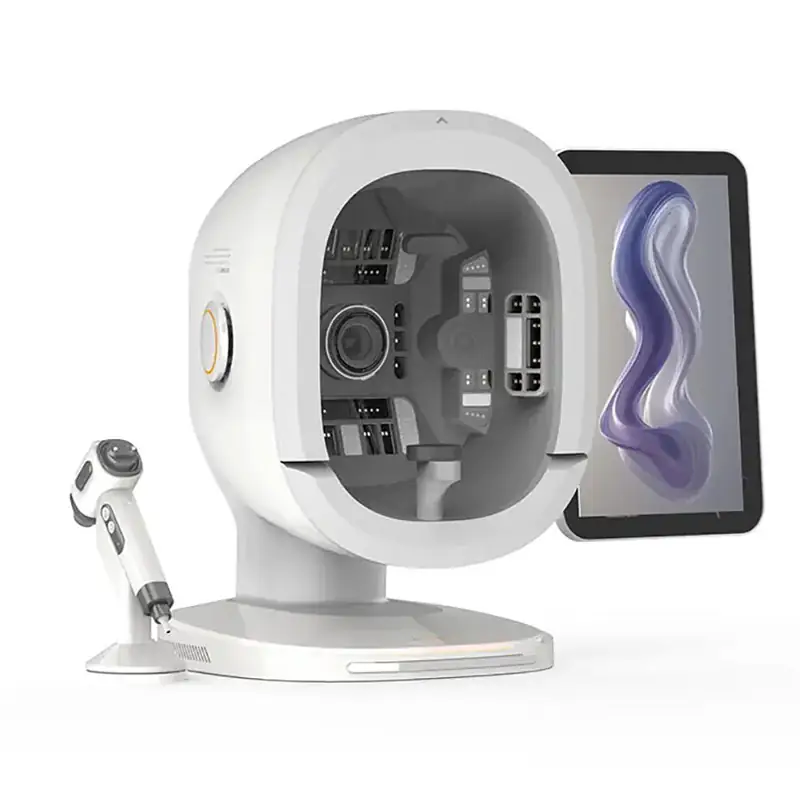
Among the available AI-powered skin analysis solutions, the K33 AI Skin Analyzer combines advanced imaging technologies and intelligent analysis functions to support professional skin assessment in beauty clinics, aesthetic centers, and skincare institutions.
This skin analysis device is designed to help professionals collect comprehensive skin information, improve consultation efficiency, and provide more personalized skincare recommendations through AI-assisted analysis.
Triple-Camera 3D Imaging for Efficient Facial Data Collection
Traditional skin analysis devices often rely on single-camera systems, which may require manual angle adjustments and affect the consistency of captured facial data.
The K33 AI Skin Analyzer adopts a triple-camera 3D panoramic capture system with three industrial-grade cameras to collect frontal, left, and right facial views simultaneously. Equipped with a 36MP high-resolution camera, the device completes automatic multi-angle image acquisition without requiring users to change positions.
This design helps improve scanning efficiency and provides more consistent facial data for professional skin evaluation.
8-Spectrum Imaging Technology for Comprehensive Skin Evaluation
Different skin characteristics may require different light conditions to reveal more detailed information.
The K33 integrates 8-spectrum imaging technology, including white light, positive polarized light, negative polarized light, UV/Wood’s light, red light, brown light, parallel white light, and mixed light.
By combining multiple spectral modes, the system analyzes various skin conditions related to texture, pigmentation, wrinkles, sensitivity, and overall skin quality. Compared with conventional skin analyzers using fewer imaging methods, the K33 provides more comprehensive assessment data.
AI Analysis and Intelligent Skin Assessment
Beauty professionals need objective skin data to provide more personalized skincare recommendations.
The K33 uses AI algorithms to process captured facial data and generate visual analysis reports. It evaluates more than 30 quantitative indicators covering aging, sensitivity, pigmentation, skin quality, and other skin-related conditions.
With features such as skin age evaluation and aging simulation, the system helps professionals present skin changes more clearly and support long-term skincare planning.
Dual Skin and Scalp Detection for Expanded Applications
Many traditional skin analyzers focus only on facial assessment, limiting their use in broader skincare services.
The K33 is equipped with a handheld microscopic detection probe featuring three-spectrum light source switching, close-up imaging, and water detection functions. This allows professionals to examine both facial skin and scalp conditions in greater detail.
By combining facial analysis and scalp detection in one device, the K33 helps clinics, beauty centers, and skincare institutions expand their service capabilities.
Customized Skin Tone Analysis for More Accurate Results
Different skin tones may present different visual characteristics during skin evaluation.
The K33 supports customized skin tone analysis by optimizing detection algorithms and evaluation parameters for diverse skin tones. This helps provide more objective and consistent assessment results for different users.
With advanced imaging technology, intelligent analysis, and flexible detection functions, the K33 AI Skin Analyzer provides a reliable solution for professional skincare consultation and personalized beauty services.
Conclusion: AI Skin Analysis Is Becoming the Future of Professional Beauty Diagnosis
The shift from traditional skin evaluation to AI-powered analysis represents a new direction for the beauty industry. While professional experience remains important, modern beauty clinics increasingly need standardized data, advanced imaging technology, and visual analysis tools to provide more personalized and transparent skincare services.
An AI skin analyzer helps bridge the gap between professional expertise and data-driven evaluation by transforming facial images into measurable skin information. This allows beauty professionals to better understand customer concerns, improve consultation efficiency, and create more targeted skincare solutions.
For clinics and aesthetic centers seeking to enhance service quality and customer experience, adopting professional skin analysis equipment can provide a more efficient and reliable approach to modern skincare management.
The K33 AI Skin Analyzer combines advanced imaging technology and intelligent analysis functions to support professional skin assessment. It helps beauty clinics and skincare centers provide more accurate, personalized, and data-driven skincare services. For more information about AI skin analysis solutions, contact Lufen today to explore the right solution for your beauty business.
Key Takeaways Introduction Modern beauty clinics, medical spas, skincare centers, and beauty brands increasingly use digital imaging to make skin consultations more objective. A digital...
Key Takeaways Why Is Fractional CO2 Laser Increasingly Used for Modern Skin Resurfacing? CO2 laser treatment is widely used for skin resurfacing because water strongly...
Enter the Lufenbeauty’s Fractional RF Microneedling Machine—a cutting-edge, non-surgical innovation that is reshaping the standards of professional anti-aging, skin tightening, and body remodeling. If you...
Opening a new medical spa, upgrading an existing practice, or expanding your treatment menu is one of the most exciting milestones for any aesthetic professional....
Introduction Multifunctional aesthetic devices integrate various treatment technologies into a single unit. As system integration increases, routine maintenance becomes essential. Dust, residue, contaminated cooling water,...
Introduction Professional beauty clinics often need equipment that can handle different treatment needs without taking up too much space. This is especially important for clinics...