How to Choose an Nd:YAG Laser Tattoo Removal Machine for a Professional Clinic?
Introduction
Choosing a laser tattoo removal machine is not simply about comparing power ratings or product prices. For professional clinics, the real challenge is finding a system that can handle different tattoo colors, pigment depths, and treatment requirements while maintaining stable performance over time.
Many clinics struggle with equipment selection because a single wavelength may not be suitable for different pigment types. In addition, insufficient energy output, limited parameter flexibility, or inefficient cooling systems can affect treatment versatility and daily operation. This is why understanding the technology behind the equipment is essential before making an investment.
A Nd:YAG laser tattoo removal machine powered by Q-switched Nd:YAG laser technology provides a widely used solution for professional pigment-related applications. By combining specific wavelengths, short pulse duration, and adjustable energy settings, these systems are designed to address diverse aesthetic treatment needs.
In this guide, we will explore the key factors professionals should consider when choosing a laser system, from wavelength selection and pulse performance to cooling design and practical clinic applications, helping you make a more informed equipment decision.
An Nd:YAG laser tattoo removal machine is an aesthetic laser system that uses a neodymium-doped yttrium aluminum garnet (Nd:YAG) crystal as the laser medium to generate laser energy for pigment-related applications.
By delivering specific wavelengths of laser energy, these systems are commonly used for tattoo removal, pigmentation treatments, and other aesthetic procedures where precise pigment targeting is required.
Professional systems typically use Q-switched Nd:YAG laser technology, which is designed to produce high-energy laser pulses within extremely short durations for pigment treatment applications.
How Does Q-Switched Nd:YAG Laser Technology Work?
The key to Q-switched technology lies in how the laser pulse is generated. Instead of emitting a continuous beam, the system temporarily stores energy inside the laser medium and releases it all at once in a single, nanosecond-level pulse. The Q-switch acts like a gate: it holds back the emission until the stored energy peaks, then lets it through as a concentrated high-peak-power burst.
When this ultra-short pulse reaches the skin, it is absorbed by the target pigment particles. Because the energy is delivered so quickly, it does not rely primarily on gradual heat buildup. Instead, it generates a photoacoustic effect, creating a rapid mechanical pressure wave that breaks pigment particles into smaller fragments. The body’s immune and lymphatic systems then clear these fragments naturally over time.
The effectiveness of this process depends on how well several key parameters are controlled:
Laser wavelength
Pulse width
Energy output
Repetition rate
Treatment settings selected by the operator
For professional clinics, adjustable settings are important because different pigments, treatment areas, and skin conditions require different approaches. Among these factors, wavelength is the natural starting point for understanding system performance, since it determines which pigment colors can be targeted effectively.
Understanding the Role of 1064nm and 532nm Wavelengths
One of the most important considerations when choosing an Nd:YAG laser tattoo removal machine is wavelength selection. Different wavelengths have different penetration depths and pigment absorption characteristics.
Wavelength
Characteristics
Common Applications
1064nm
Provides deeper penetration and is commonly absorbed by darker pigments.
Black tattoos; Blue tattoos; Dark-colored pigments; Deeper pigmentation concerns such as Nevus of Ota
532nm
Has a shorter penetration depth and is more strongly absorbed by certain lighter pigments.
Red tattoos; Orange pigments; Brownish pigments; Some superficial pigmentation treatments
A dual-wavelength configuration combining 1064nm and 532nm allows clinics to address a wider range of pigment colors compared with single-wavelength systems.
Key Factors to Consider When Choosing a Laser Tattoo Removal Machine
Evaluate Laser Type and Available Wavelengths
The laser type and wavelength configuration are among the first factors professionals should consider.
For tattoo removal applications, Q-switched Nd:YAG laser technology with multiple wavelength options is commonly preferred because it can support different pigment targets.
A professional system should ideally provide:
Suitable wavelengths for different pigment colors
Stable energy output
Flexible treatment parameters
A dual-wavelength system with 1064nm and 532nm is widely used because these two wavelengths cover many common tattoo and pigmentation applications.
Additional wavelength options, such as 755nm, may further expand treatment possibilities depending on the device configuration.
Check Pulse Energy and Peak Power Output
Pulse energy determines how much laser energy is delivered during each pulse, while peak power reflects how quickly that energy is released.
For pigment treatment applications, sufficient energy output is important because pigment fragmentation relies on effective laser energy absorption.
When evaluating a laser tattoo removal machine, professionals should consider:
Single pulse energy
Multi-pulse energy capability
Energy adjustment range
Higher adjustable energy output provides operators with more flexibility when working with different treatment requirements.
Consider Pulse Width and Treatment Precision
Pulse width is another important specification because it affects how laser energy interacts with pigment particles.
Nanosecond-level pulse widths are commonly used in Q-switched Nd:YAG laser systems because they deliver energy rapidly and help generate a strong photoacoustic effect.
A shorter pulse duration can help concentrate laser energy within a brief period, reducing unnecessary heat diffusion to surrounding tissues.
When comparing equipment, clinics should pay attention to whether the pulse width matches the intended applications.
Look for Adjustable Frequency and Energy Settings
Different treatment areas may require different operating parameters.
For example:
Small tattoo areas may require precise energy control
Large tattoo areas may benefit from higher repetition rates
Pigmentation treatments may require customized settings
An adjustable frequency range and flexible energy control system allow operators to adapt treatment parameters according to practical requirements.
Pay Attention to Cooling System and Machine Stability
A reliable cooling system is essential for laser equipment because stable temperature control helps maintain consistent operation during repeated treatments.
Professional Nd:YAG laser systems may use different cooling approaches, including:
Water cooling systems
Air cooling systems
Internal heat dissipation structures
For water-cooled laser equipment, using appropriate water quality is also important. Pure or distilled water is generally recommended because mineral deposits from tap water may affect the cooling system over time.
Applications of Nd:YAG Laser Tattoo Removal Machines
Nd:YAG laser technology is widely used across aesthetic clinics, dermatology centers, and professional tattoo removal facilities. With appropriate wavelength selection and treatment parameters, these systems allow clinics, salons, and tattoo removal specialists to offer a wider range of aesthetic services.
Tattoo Removal and Tattoo Correction
Tattoo removal is one of the most common applications of Nd:YAG laser technology.
Different tattoo pigments absorb laser wavelengths differently, which is why wavelength selection plays an important role in treatment planning.
Professional tattoo removal applications may include:
Black tattoo removal
Colored tattoo treatment
Eyebrow tattoo removal
Eyeliner tattoo removal
Tattoo lightening before cover-up work
For tattoo studios and aesthetic clinics, a versatile laser tattoo removal machine can help expand treatment offerings and address a wider range of client needs.
Pigmentation Treatment in Dermatology Clinics
Besides tattoo removal, Nd:YAG laser systems are also commonly used for pigmentation-related applications.
Depending on the wavelength and treatment parameters, professional clinics may use these systems for:
Nevus of Ota
Freckles
Age spots
Post-traumatic pigmentation
Other pigment-related concerns
Because pigmentation conditions vary significantly, proper parameter selection and professional operation are essential for achieving consistent results.
Carbon Peeling and Skin Rejuvenation Treatments
Carbon peeling, also known as Hollywood Carbon Peel or Carbon Laser Peel, is another popular application of Nd:YAG laser systems for skin rejuvenation treatments.
During the procedure, a layer of carbon-based lotion or powder is applied to the skin. The carbon particles absorb laser energy, and the interaction between the laser and carbon particles helps remove surface impurities while improving skin texture and overall appearance.
This treatment is popular among aesthetic clinics and skin management centers because it can complement other cosmetic services and expand treatment offerings.
Portable Nd:YAG Laser Tattoo Removal Machine: A Versatile Solution for Professional Clinics
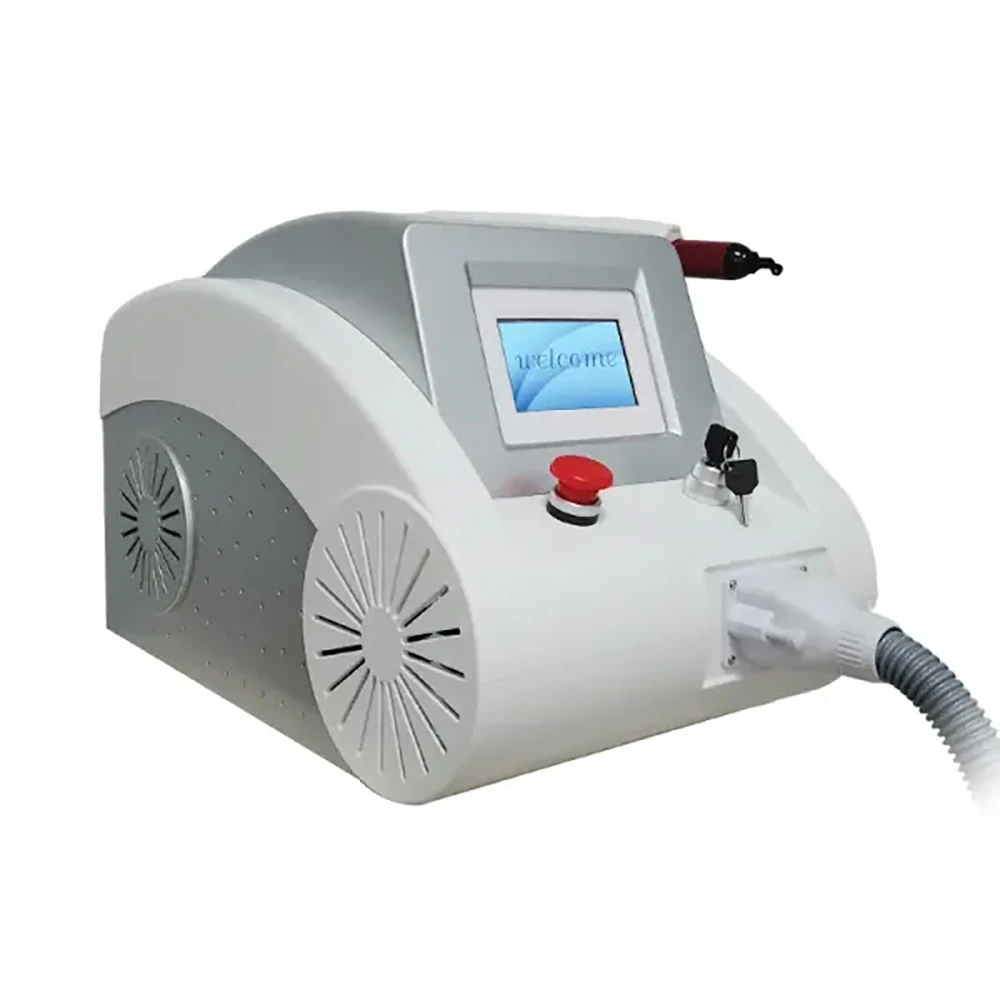
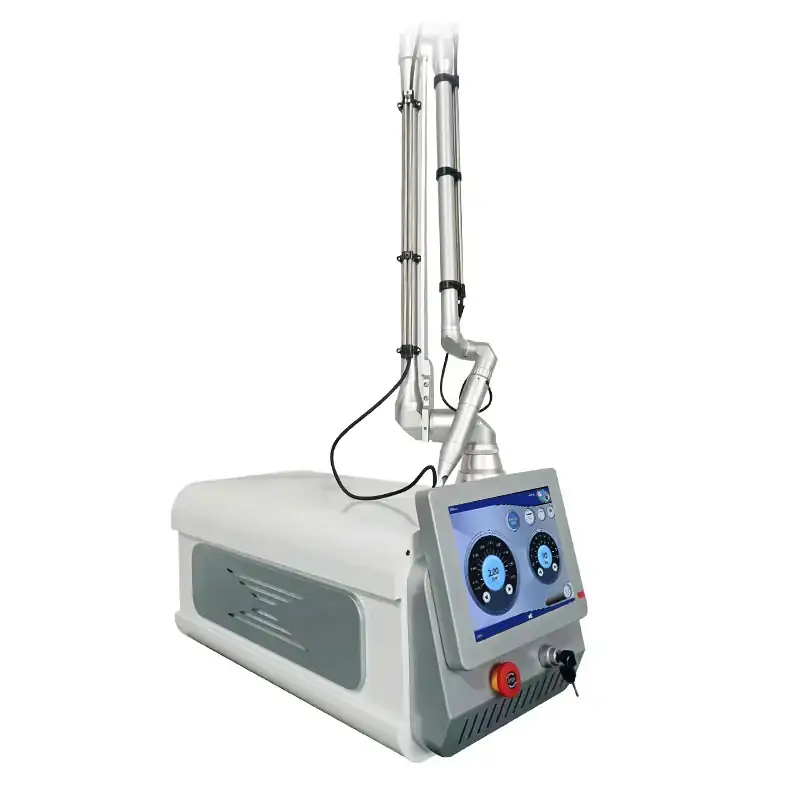
Based on these selection criteria, the Portable Nd:YAG Laser Tattoo Removal Machine provides a flexible solution for clinics seeking multi-functional pigment treatment capabilities.
With multiple wavelength options, adjustable operating parameters, and a compact design, this Q-switched Nd:YAG laser system supports tattoo removal, pigmentation treatments, and carbon peeling applications in professional settings.
Multi-Wavelength Configuration for Multiple Aesthetic Applications
This Nd:YAG laser system supports multiple wavelengths, including 1064nm, 532nm, and 755nm honeycomb probe (optional), allowing clinics to address different pigment-related applications.
The multi-wavelength configuration helps expand treatment options, including tattoo removal, pigmentation treatments, carbon peeling, and skin rejuvenation procedures.
High Peak Energy and Short Pulse Width for Effective Pigment Treatment
Equipped with Q-switched technology, the system delivers nanosecond-level pulses with adjustable energy settings to support precise pigment targeting.
With an 8–10ns pulse width, energy adjustment from 10–2000mJ/cm², and multi-pulse peak energy exceeding 1500mJ, the system is designed for flexible treatment parameter control.
Portable Design with Reliable Cooling System
Designed for professional clinics with limited space or mobile requirements, this portable Nd:YAG laser system features a compact structure with a package weight of approximately 20kg.
Its triple cooling system, combining closed-loop water cooling, air cooling, and a built-in radiator, helps maintain stable performance during operation.
Flexible Configuration for Global Clinic Applications
Supporting AC 110V/220V ±10% and 50/60Hz power requirements, the system is suitable for different regional electrical environments.
With multiple treatment functions integrated into one platform, it can support applications in beauty salons, skin management centers, tattoo removal studios, and medical aesthetic facilities.
Frequently Asked Questions
Q1: Why does a Q-switched Nd:YAG laser tattoo removal machine require distilled water?
A: Professional Q-switched Nd:YAG laser systems often use water cooling to maintain stable operating temperatures. Distilled or deionized water is recommended because minerals and impurities in tap water may cause deposits inside the cooling system over time, affecting heat dissipation and equipment performance.
Q2: What is the difference between 1064nm and 532nm wavelengths in Nd:YAG laser tattoo removal?
A: The 1064nm wavelength has deeper penetration characteristics and is commonly used for darker pigments, including black, blue, and dark-colored tattoos. The 532nm wavelength is more suitable for lighter pigments, such as red, orange, and some brown tones. A dual-wavelength system allows clinics to address a broader range of pigment colors.
Q3: How does carbon peeling work with an Nd:YAG laser system?
A: During carbon peeling treatment, a carbon-based lotion or powder is applied to the skin and absorbs laser energy. The interaction between laser energy and carbon particles helps remove surface impurities and improve skin texture. This application allows aesthetic clinics to expand their services beyond traditional tattoo removal.
Conclusion
Choosing the right Nd:YAG laser tattoo removal machine requires careful evaluation of several factors, including wavelength options, pulse energy, pulse width, frequency adjustment, cooling performance, and practical usability.
For professional clinics, a versatile laser system can provide greater flexibility by supporting multiple aesthetic applications through one platform.
The Portable Nd:YAG Laser Tattoo Removal Machine combines 1064nm and 532nm Q-switched laser technology with optional wavelength configurations, adjustable energy settings, and a compact design, making it a suitable option for clinics and aesthetic professionals looking to expand their pigment treatment capabilities. Contact Lufen today to learn more about our Nd:YAG laser solutions for professional aesthetic applications.
Key Takeaways Introduction Modern beauty clinics, medical spas, skincare centers, and beauty brands increasingly use digital imaging to make skin consultations more objective. A digital...
Key Takeaways Why Is Fractional CO2 Laser Increasingly Used for Modern Skin Resurfacing? CO2 laser treatment is widely used for skin resurfacing because water strongly...
Enter the Lufenbeauty’s Fractional RF Microneedling Machine—a cutting-edge, non-surgical innovation that is reshaping the standards of professional anti-aging, skin tightening, and body remodeling. If you...
Opening a new medical spa, upgrading an existing practice, or expanding your treatment menu is one of the most exciting milestones for any aesthetic professional....
Introduction Multifunctional aesthetic devices integrate various treatment technologies into a single unit. As system integration increases, routine maintenance becomes essential. Dust, residue, contaminated cooling water,...
Introduction Professional beauty clinics often need equipment that can handle different treatment needs without taking up too much space. This is especially important for clinics...