RF Microneedling Cartridge Cost: A Clinic Buyer’s Guide
RF microneedling cartridge cost depends on the exact device and tip: compare the cartridge code, pack size, delivered price, and approved fit. Public seller prices...

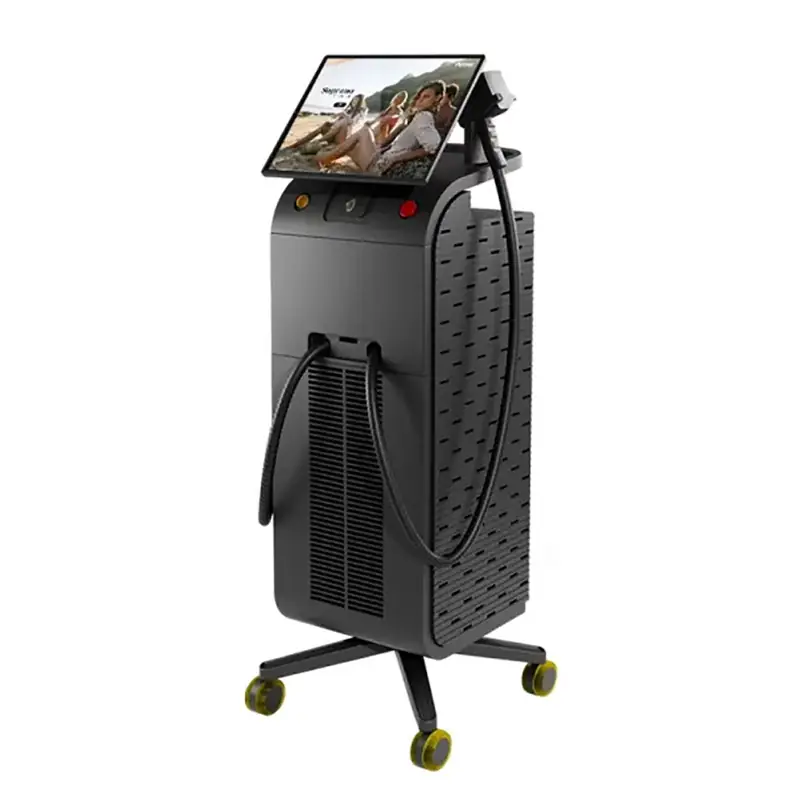
In the ever-evolving field of cosmetic medicine, the right techniques are key to success. For clinics seeking the best possible treatment results, the Alexandrite laser has long been highly regarded as the “gold standard.” In particular, the system combining a 755nm Alexandrite laser and a 1064nm Nd:YAG laser is at the forefront of this field. This article explains why Alex laser devices are the optimal choice for modern clinics. Let’s take a closer look at its scientific principles, market trends, advantages, and practical applications.
In the laser hair removal market, Alexandrite laser is considered a high-end option. Meanwhile, the diode laser remains the most widely utilized type. For dark skin, Nd:YAG lasers are experiencing rapid growth. However, for removing fine hairs on light-colored skin, Alexandrite laser is widely recognized as the industry’s “gold standard”. Top clinics and hospitals use this technology to ensure the best possible treatment results. (Source: https://www.marketdataforecast.com/)
Many of the latest systems are also equipped with 1064nm Nd:YAG lasers. The 755nm setting is suitable for light to medium skin tones. The 1064nm setting allows for safe treatment of darker skin tones. These two settings make it suitable for almost all skin tones (Fitzpatrick I-VI), making it the most flexible tool in professional hair removal treatments.
Alex laser equipment is primarily used by professional clinics. The three largest industries using this technology are:
The demand for Alexandrite laser hair removal is growing rapidly. Experts predict that the market will continue to grow over the next five years. The main reasons are as follows:
| Feature | Alexandrite Laser Machine (755/1064nm) | Diode Laser (808nm) |
| Melanin Absorption | Extremely High | Moderate |
| Treatment Mode | Non-contact (No Gel) | Contact (Requires Gel) |
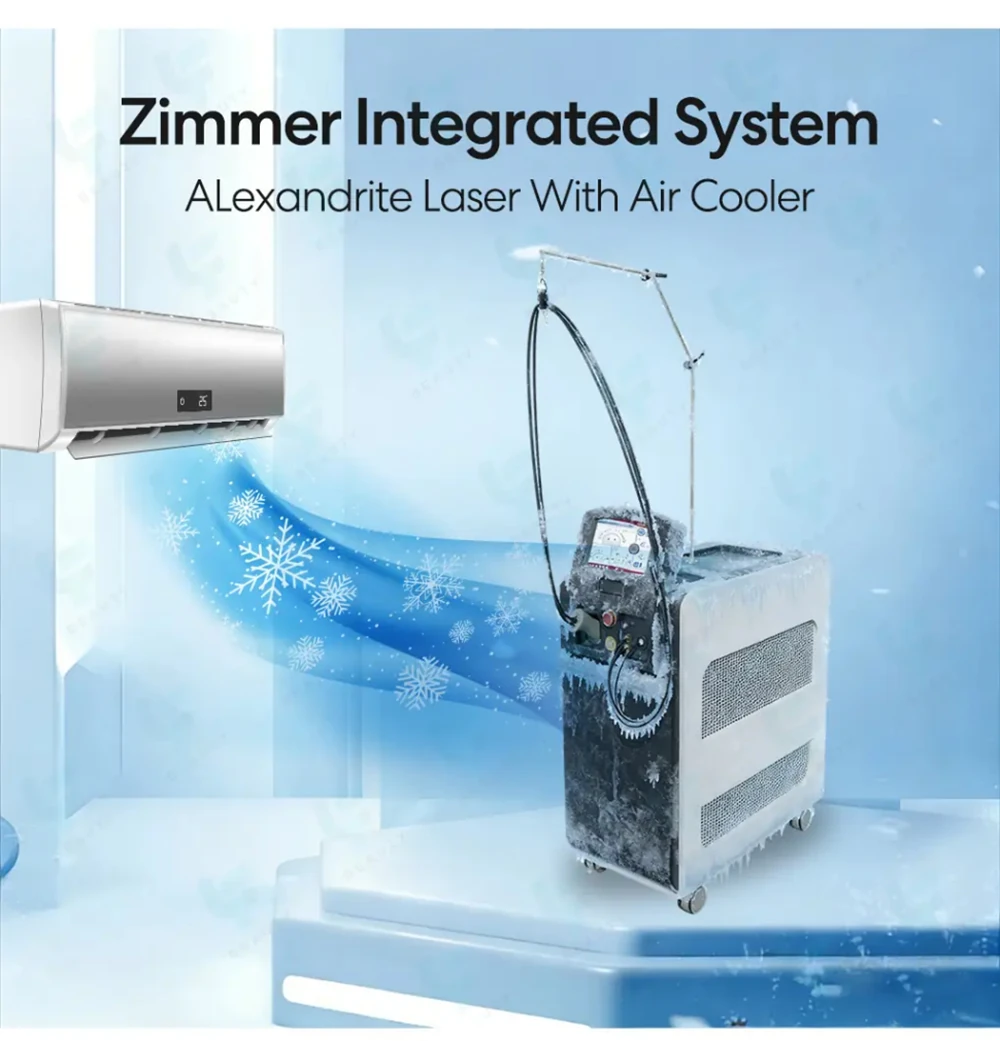
| Cooling Method | Integrated Air Cooler (Zimmer) | Sapphire Tip Cooling |
Broad-spectrum targeting: Achieving coverage of “all skin tones and all hair” This is the most fundamental difference between the dual-wavelength platforms. The 755nm wavelength has an extremely high absorption rate for melanin (approximately three times that of 1064nm), and it has dominant efficiency in treating fine, light-colored hair (such as lip hair and bangs) on light-colored skin. Traditional 755nm wavelengths cannot treat dark skin (prone to burns), but 1064nm wavelengths can penetrate deep into the dermis and have a low melanin absorption rate. The energy bypasses the epidermal melanin and reaches the hair follicle directly, allowing people with dark skin (type IV-VI skin) to safely remove hair.
Compared to single-wavelength devices that can only process specific skin tones, dual-wavelength platforms can serve customers of all races worldwide with a single machine, greatly expanding the clinic’s reach.
Most diode lasers require skin contact and the use of cooling gel. The working principle of the Alexandrite laser is different. Its handle does not need to touch the skin; instead, it protects and cools the skin by spraying cold air. This means that there is no need to use gel, making the treatment process cleaner, faster, and more professional. This is a better experience for customers.
This constitutes the fundamental technological foundation that has earned this device the title of the “Gold Standard” within the field of hair removal.
Semiconductor Laser (808nm): When treating upper lip hair, facial vellus hair, or residual light-colored hairs, results are often suboptimal because the melanin content in these hairs is insufficient to absorb adequate energy.
755nm Wavelength: Exhibits an exceptionally high absorption coefficient for melanin—approximately three times that of the 1064nm wavelength—and even outperforms the 808nm semiconductor laser.
Once the initial removal of coarse hair is complete, this dual-wavelength platform is able to more precisely “target” and destroy the remaining fine, soft hair follicles. It significantly reduces the required number of treatment sessions, typically achieving satisfactory hair-free results 2 to 3 sessions sooner than standard devices; this high level of efficiency is a key factor for clinics in attracting returning clients.
A: This is precisely where the Alexandrite laser reigns supreme.
The 755nm wavelength possesses an exceptionally strong affinity for melanin; it can precisely “target and destroy” hair follicles—even those associated with lip hair, peach fuzz, and fine, light-colored hairs. Typically, just 3 to 5 treatment sessions are sufficient to achieve clinically permanent hair reduction—requiring 2 to 3 fewer visits compared to standard devices.
A: Absolutely—this is exactly why the 1064nm wavelength exists. When a client has a darker complexion or is in the recovery phase following sun exposure, the 1064nm wavelength bypasses the melanin in the epidermis to penetrate directly to the deep-seated hair follicles, ensuring safe and effective hair removal without causing skin damage.
A: We have replaced the need to “endure pain” with advanced “physical technology.” The device features a built-in cooling system that continuously emits a stream of cold air—before, during, and after the laser pulse. This instantly desensitizes the pain receptors in the epidermis, reducing any sensation of pain to a barely perceptible level. More importantly, it vastly enhances epidermal safety, ensuring that no burns occur—even when operating at high energy settings.
Dual-wavelength Alexandrite lasers can meet the needs of all skin types.
It combines the powerful hair removal capabilities of the 755nm wavelength with the safety of the 1064nm laser for dark skin.
Contact us to receive detailed technical specifications, clinical case studies, and customized solutions for this dual-wavelength Alexandrite laser hair removal system—and take a pivotal step toward upgrading your business.