What Is the Difference Between Fractional CO2 Laser and Traditional CO2 Laser?
Key Takeaways
Both fractional and traditional CO2 lasers typically use a 10,600 nm wavelength. The main difference lies in how the laser energy is delivered to the tissue.
Traditional CO2 laser treatment usually covers the selected area continuously. Fractional CO2 laser treatment creates small, controlled treatment columns while leaving untreated tissue between them.
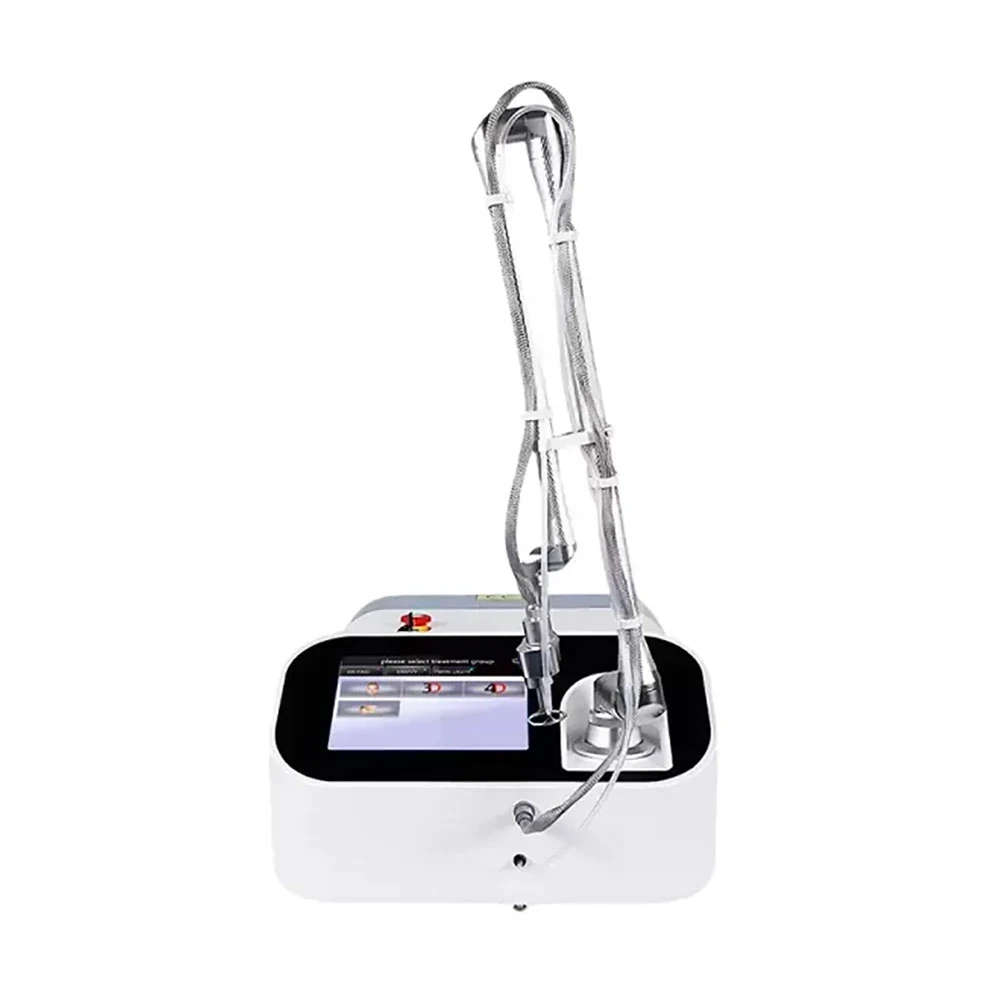
When purchasing afractional co2 laser machine, buyers should consider the laser source, scanning system, articulated arm, and cooling method based on the clinic’s actual needs.
Why Is Fractional CO2 Laser Increasingly Used for Modern Skin Resurfacing?
CO2 laser treatment is widely used for skin resurfacing because water strongly absorbs its 10,600 nm wavelength. Since skin contains a high amount of water, the laser can deliver energy effectively to the target tissue. The resulting heat can remove tissue in a controlled way and support skin remodeling.
This clear interaction with tissue has made CO2 laser a long-standing option for professional skin resurfacing and tissue remodeling.
Modern CO2 laser treatment is no longer about power alone. Energy control and treatment precision also matter. By adjusting the treatment mode and key parameters, clinicians can control how much tissue is treated and how deeply the laser acts.
For this reason, clinics should not simply choose the machine with the highest power. A better approach is to look for a balance between treatment capability, energy control, and ease of operation.
What Is the Difference Between Fractional CO2 Laser and Traditional CO2 Laser?
The main difference lies in how the laser covers the treatment area.
Traditional CO2 laser resurfacing, also called fully ablative CO2 laser treatment, generally treats the selected area continuously. The laser covers a larger part of the surface and creates a more continuous treatment zone. As a result, the skin usually needs more time to heal and re-epithelialize.
Fractional CO2 laser treatment uses a different approach. Instead of treating the entire surface at once, it creates small, controlled columns of thermal injury in the skin. Untreated tissue remains between these treatment zones. This preserved tissue can support the healing process.
Key Technical Differences Between Fractional and Traditional CO2 Lasers
Parameter
Fractional CO2 Laser
Traditional Fully Ablative CO2 Laser
Laser wavelength
Typically 10,600 nm
Typically 10,600 nm
Energy delivery
Creates microtreatment columns or fractional patterns
Treats the selected area continuously or across the full treatment field
Untreated tissue
Remains between treatment zones
Less untreated tissue remains within the treated area
Treatment coverage
Fractional density can be adjusted
Provides broad or full-area coverage
Treatment intensity
Can be adjusted through density and pulse settings
Provides more continuous treatment across the selected area
Recovery requirements
Usually shorter than fully ablative treatment, depending on the settings
Generally requires a longer recovery period
Treatment control
Offers flexible control over treatment density and scanning patterns
Focuses on comprehensive surface resurfacing
Key purchasing considerations
Scanner, pattern control, pulse control, and beam delivery
Beam quality, pulse control, beam delivery, and thermal management
Should a Clinic Choose Fractional CO2 or Traditional CO2 Laser?
The right choice depends first on the clinic’s main treatment applications and the level of control required.
If a clinic focuses on skin resurfacing, fractional CO2 laserdevice can offer greater flexibility. It can also accommodate different treatment areas and settings.
For clinics with these needs, the configuration of the machine deserves close attention. Several features of the LuFen CO2 laser are worth evaluating.
1. Power and Laser Source: Start with Stable Output
Rated power is an important specification, but it should not be the only factor buyers consider. The laser source and output stability also matter. Stable energy delivery gives clinicians a consistent basis for different treatment modes. It also makes parameter adjustments easier.
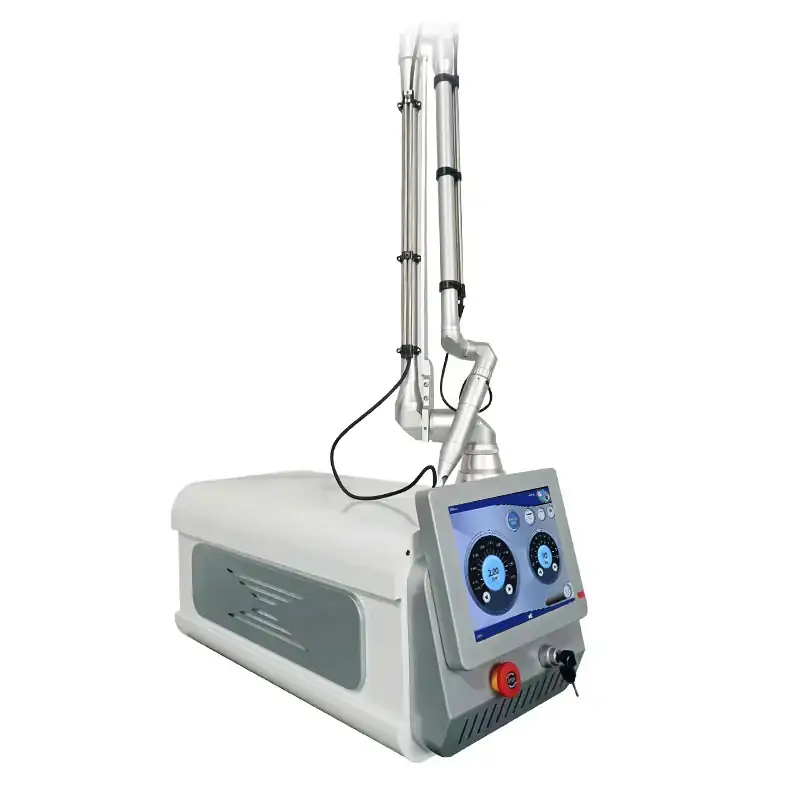
The LuFen CO2 laser uses a 10,600 nm CO2 laser source with 60W–80W power options. Buyers can choose between an RF laser tube and a glass laser tube. These options provide the output needed for different applications, including fractional treatment and pulse/cutting modes.
2. Articulated Arm: Make Treatment Easier to Handle
The beam delivery system affects how easily clinicians can work on different areas of the face and body. Fractional CO2 treatment often requires changes in angle and position. A flexible articulated arm makes these adjustments easier.
The LuFen CO2 laser uses a six- or seven-joint articulated arm with 360° rotation. This allows clinicians to adjust the beam direction according to the treatment area. For clinics that perform localized treatments regularly, the flexible arm can make it easier to move between different areas.
3. Scanning Patterns and Treatment Area: Allow More Flexible Treatment
Fractional CO2 treatment allows clinicians to adjust the treatment area according to the application. When purchasing a fractional co2 laser device, buyers should therefore check the available scanning patterns and treatment area settings.
A machine with only one fixed pattern may provide less flexibility when treating different areas.
The LuFen CO2 laser offers seven adjustable scanning patterns, including rectangular, circular, square, hexagonal, triangular, and linear patterns. The scanning area ranges from approximately 0.1 × 0.1 mm to 20 × 20 mm.
These options allow clinicians to choose a suitable pattern and treatment area for different applications.
4. Cooling System: Support Continuous Operation
Cooling is another important consideration, especially for clinics that use their machines frequently or for extended periods. Effective heat management helps keep the machine operating normally. The cooling method should therefore match the laser power and overall machine design.
The LuFen CO2 laser combines air cooling with internal circulating water cooling. This configuration is designed for its 60W–80W power options. For clinics that use a co2 laser machine for skin frequently, the cooling method is worth reviewing as part of the purchasing process.
Frequently Asked Questions
Q1: What Is the Main Difference Between Fractional CO2 Laser and Traditional CO2 Laser?
A1: Traditional CO2 laser resurfacing uses a fully ablative approach. It treats the selected area more completely and removes the treated surface layer. Depending on treatment intensity, recovery may take around 10–14 days. The risk of post-inflammatory hyperpigmentation may also be higher.
Fractional CO2 laser treatment creates thousands of microscopic thermal injury zones (MTZs) while leaving surrounding tissue untreated. Because untreated tissue remains between the treatment zones, the skin can heal more quickly than after fully ablative treatment.
Q2: What Skin Concerns Can a Fractional CO2 Laser Machine Treat?
A2: A multifunctional fractional CO2 laser machine can be used for various skin treatments. These may include surgical scars, burn scars, traumatic scars, stretch marks, fine lines, wrinkles, enlarged pores, acne scars, and uneven skin texture.
Depending on the machine configuration and clinical protocol, CO2 laser treatment may also be used for certain pigmentary concerns and surgical cutting applications.
Specific indications and treatment settings should be determined by a qualified medical professional.
Q3: What Are the Benefits of a Seven-Joint Articulated Arm and Random Scanning Mode?
A3: A seven-joint articulated arm can provide 360° rotation, making it easier to position the handpiece around different treatment areas. This flexibility can also make localized procedures more convenient.
Random scanning mode changes the sequence in which laser spots are delivered. By distributing treatment points instead of following a fixed sequence, it can help reduce heat buildup in adjacent areas. This may improve treatment comfort and help limit unnecessary thermal exposure.
Q4: How Long Is the Recovery Period After Fractional CO2 Laser Treatment?
A4: Recovery time depends on the treatment intensity and application.
After a lighter resurfacing treatment, patients may experience mild redness for one to two days. Light peeling may then occur over the following days.
More intensive treatment for deeper acne scars or severe scarring may cause small areas of crusting within 24–48 hours. These areas may naturally shed over the next several days.
The actual recovery period varies with treatment settings, skin condition, treatment area, and individual healing response. Compared with fully ablative CO2 laser treatment, fractional treatment generally has a shorter recovery period because untreated tissue remains between the treatment zones.
Q5: What Cooling and Safety Features Should Buyers Consider?
A5: The LuFen CO2 laser combines air cooling with internal circulating water cooling. This cooling arrangement helps manage heat during operation and supports stable performance during extended clinical use.
When evaluating a CO2 laser machine, buyers should also review its safety features, cooling alarms, operating controls, and protection functions in the technical documentation.
Conclusion
For professional clinics, the choice between fractional and traditional CO2 laser should depend on the treatment applications, required level of control, and intended use.If a clinic focuses on skin resurfacing and wants greater flexibility in treatment density, scanning patterns, and treatment areas, fractional CO2 laser is worth considering.
When comparing machines, buyers should look beyond rated power. The laser source, articulated arm, scanning patterns, treatment area, and cooling method also deserve attention.
The LuFen CO2 laser offers a 10,600 nm, 60W–80W CO2 laser source, a six- or seven-joint articulated arm, seven adjustable scanning patterns, and combined air and internal circulating water cooling. These features give clinics a practical configuration to consider during equipment selection.
If you are looking for a fractional co2 laser device, submit an RFQ to receive the LuFen Technical Data Sheet (MTC), complete equipment configuration, and detailed technical specifications. This information can help you make a more informed purchasing decision.
Key Takeaways Introduction Modern beauty clinics, medical spas, skincare centers, and beauty brands increasingly use digital imaging to make skin consultations more objective. A digital...
Enter the Lufenbeauty’s Fractional RF Microneedling Machine—a cutting-edge, non-surgical innovation that is reshaping the standards of professional anti-aging, skin tightening, and body remodeling. If you...
Opening a new medical spa, upgrading an existing practice, or expanding your treatment menu is one of the most exciting milestones for any aesthetic professional....
Introduction Multifunctional aesthetic devices integrate various treatment technologies into a single unit. As system integration increases, routine maintenance becomes essential. Dust, residue, contaminated cooling water,...
Introduction Professional beauty clinics often need equipment that can handle different treatment needs without taking up too much space. This is especially important for clinics...
The medical aesthetics equipment market is growing rapidly worldwide. Laser hair removal technology has become one of the fastest-growing treatment options among cosmetic clinics, medical...