RF Microneedling Cartridge Cost: A Clinic Buyer’s Guide
RF microneedling cartridge cost depends on the exact device and tip: compare the cartridge code, pack size, delivered price, and approved fit. Public seller prices...

The demand for acne scar repair is at an all-time high. Patients who once resigned themselves to accepting uneven skin texture and depressed scars as permanent imperfections are now—driven by the transparency of information on social media and a cultural shift toward greater skin confidence—actively seeking solutions. For aesthetic clinics and dermatology practices, this represents a tremendous opportunity for service—provided, of course, that the technology underpinning these treatments can consistently deliver results that meet patient expectations.
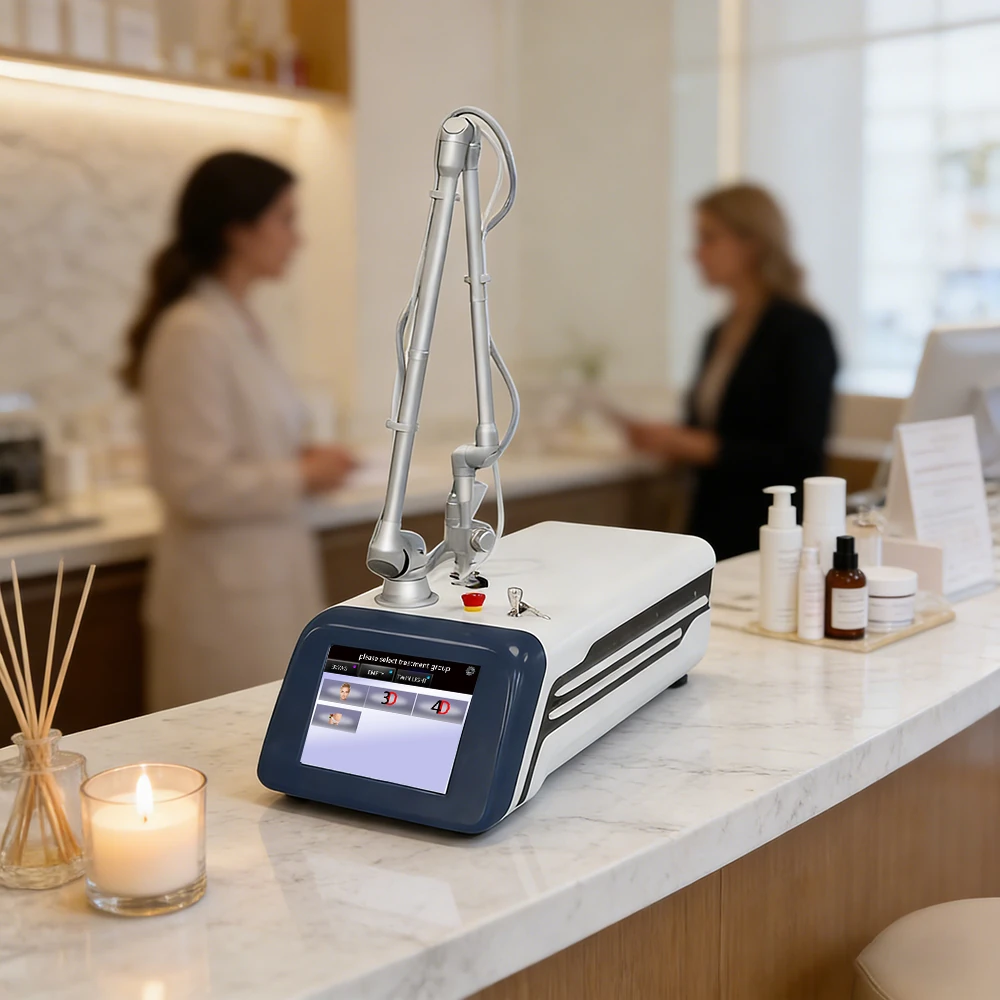
As a manufacturer of medical aesthetic devices, we work closely with practitioners worldwide who have established fractional CO2 laser technology as the cornerstone of their acne scar treatment protocols. This article explores why this therapy is effective, its positioning within the broader landscape of aesthetic treatments, and the technical considerations that distinguish reliable systems from devices that underperform in clinical practice.
Acne scars form when inflammation damages the dermis and disrupts the normal structure of collagen. The body attempts to repair this damage; however, the resulting collagen is often disorganized and insufficient in quantity, leading to the appearance of depressions, uneven contours, or sharp-edged pits in the skin—imperfections that persist long after the acne itself has subsided.
The mechanism behind fractional CO2 laser therapy differs fundamentally from that of topical skincare products, and indeed, from many other energy-based treatments. Rather than merely improving surface texture, this technology creates microscopic thermal channels—controlled zones of localized injury—within the dermis. These thermal injuries trigger a cascade of wound-healing responses, including the synthesis of new collagen and tissue remodeling. In the weeks following treatment, the skin replaces the disorganized scar collagen with new, structurally more stable matrix components.
The “fractional” nature of this technology is critical. Each treatment targets only a fraction of the skin’s surface—typically ranging from 15% to 40%, depending on the density settings—thereby preserving the surrounding intact skin tissue. These healthy areas of skin act as biological reservoirs, accelerating recovery while simultaneously generating sufficient thermal stimulation to remodel the deeper scar tissue. It is precisely this balance between therapeutic efficacy and protective treatment that enables physicians to effectively treat severe scarring while avoiding the prolonged recovery periods and risks of complications associated with traditional ablative techniques.
The effectiveness of CO2 fractional laser treatment for acne scars depends largely on the selection of parameters—and it is precisely here that the quality of the device manifests itself in patient outcomes. The following technical dimensions warrant particular attention:
Energy density and penetration depth determine whether thermal stimulation can reach the scar tissue located within the dermis. Superficial treatments may generally improve overall skin quality, but they are unable to significantly remodel deeper scars. High-quality systems allow for precise control of energy output to match the depth of the scar—a variable that differs significantly across different facial regions and among individual patients.
Pulse duration and thermal relaxation influence the characteristics of the tissue response. Shorter pulses, combined with appropriate cooling, enable deep-tissue treatment through controlled thermal diffusion; conversely, longer exposure times may create more extensive zones of coagulation—a technique suitable for certain types of scars, though it necessitates a longer recovery period.
Scanning patterns and density affect coverage uniformity and healing dynamics. Advanced systems offer a variety of pattern options—including square, triangular, hexagonal, or random distributions—along with variable density settings. Random scanning patterns are particularly effective in the treatment of acne scars, as they minimize overall thermal load and reduce the risk of creating distinct demarcation lines between treated and untreated areas.
The cooling system constitutes another critical differentiating factor. Active contact cooling or cryogenic spray systems protect the epidermis while the dermis undergoes deep heating, thereby enabling the use of more aggressive treatment parameters while simultaneously mitigating the risk of surface damage. This is of particular importance when treating darker skin types, as epidermal protection is directly correlated with the prevention of post-inflammatory hyperpigmentation.
A typical course of treatment for acne scars using fractional CO2 laser therapy consists of multiple sessions, with intervals carefully designed to allow for collagen remodeling between treatments. Most patients require three to six sessions, although severe scarring may necessitate additional visits. Treatment intervals typically range from four to eight weeks, depending on the intensity of the treatment and the individual’s healing rate.
Immediately following treatment, erythema (redness) and edema (swelling) will occur; these symptoms typically subside within three to seven days. Tiny crusts may form in the treated area, representing a natural healing response as the epidermis regenerates from the surrounding intact tissue. Patients can generally resume their normal activities within one week; however, strict sun protection remains crucial for several months following the treatment.
From a clinical operations perspective, this recovery pattern strikes a well-managed balance. The recovery period is sufficiently long for patients to perceive the tangible results of the treatment—thereby reinforcing its value—yet remains short enough to ensure high patient compliance and minimize disruption to their daily schedules.
Acne scar revision is no longer a niche service; for medical institutions committed to building lasting patient trust, it has become a signature core competency. At Lufenbeauty, we view every fractional CO2 laser device we manufacture as the foundation of a long-term clinical partnership.
If you are currently evaluating whether your existing equipment platform has become a bottleneck limiting the efficacy of your acne scar treatments—or if you are establishing a new clinic and wish to build this service upon a bedrock of reliable technology—our team is always ready to discuss your specific clinical environment and patient demographics. A truly exceptional device should not add unnecessary complexity to your workflow; rather, it should seamlessly and comprehensively enhance the outcome of every treatment you deliver.