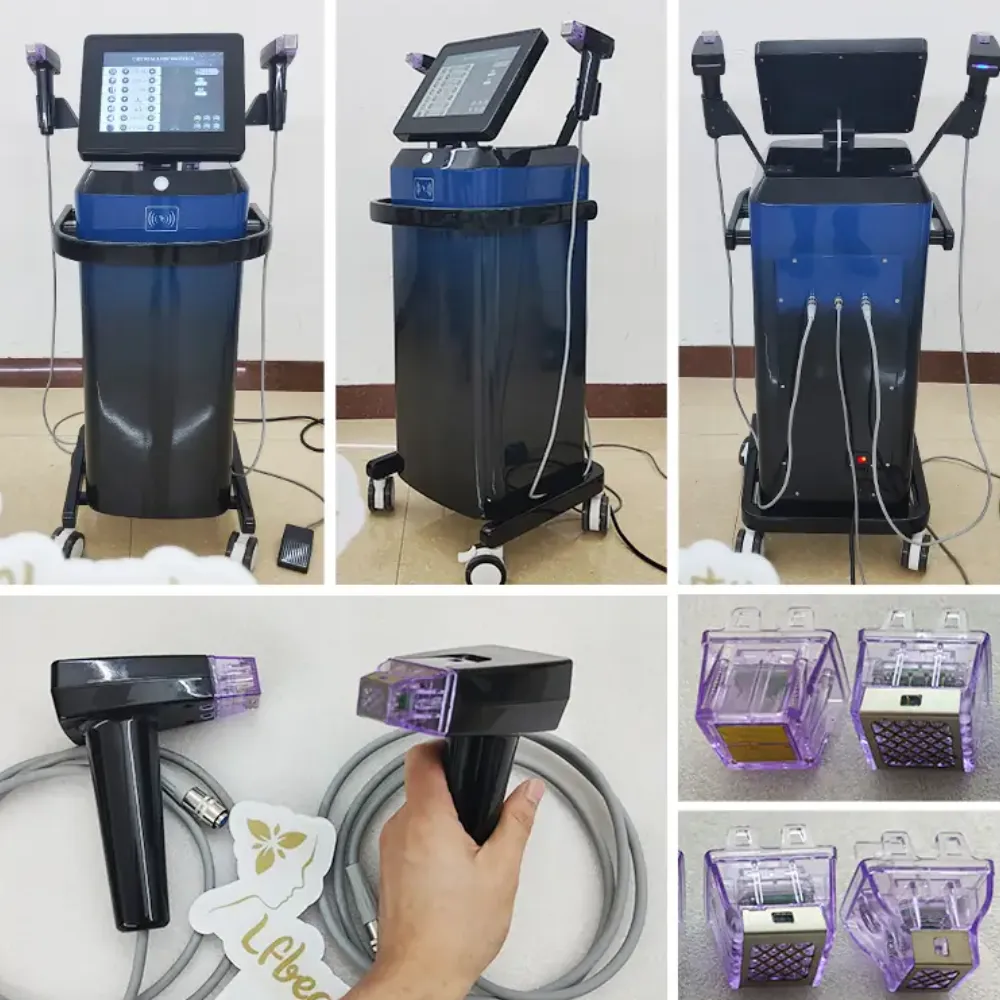
RF Microneedling Cartridge Cost: A Clinic Buyer’s Guide
RF microneedling cartridge cost depends on the exact device and tip: compare the cartridge code, pack size, delivered price, and approved fit. Public seller prices...

In today’s fiercely competitive beauty industry, skin analysis is no longer an optional add-on service; it has become a fundamental prerequisite for clients when choosing a facility. Data indicates that nearly 70% of clients at high-end beauty salons cite vague or unclear analysis results as a primary concern when selecting a provider. Furthermore, over 70% of establishments suffer from persistently high client churn rates—some reaching nearly 20%—due to cumbersome and overly complex analysis procedures.
However, the challenge lies in this: the market is flooded with a mixed bag of skin analysis machines—ranging from portable testers costing a few hundred dollars to medical-grade systems priced at over $200,000. How are beauty salons, clinics, and distributors supposed to navigate this landscape and make the right choice? More importantly, how can they avoid the tragic scenario where initial excitement gives way to the device simply gathering dust after purchase?
Drawing upon real-world client pain points and established industry profitability models, this article provides you with a practical, actionable guide to selecting and operating these devices.

The most significant drawback of traditional 2D imaging devices is their inability to display anything beyond vague patches of color; they fail to accurately identify underlying issues such as deep-seated inflammation, capillary dilation, or collagen depletion. What the client sees is merely a vague reddish tint—rather than a precise diagnosis stating, for instance, that “dermal inflammation has infiltrated to a depth of 0.3mm.” This inherent ambiguity directly breeds skepticism regarding the analysis results, thereby undermining the subsequent conversion of clients into paying customers for specific treatment programs.
User feedback further highlights this issue, with many complaining that they receive inconsistent results under identical lighting conditions, or that the numerical data appears to be randomly generated—rendering the analytical conclusions completely untrustworthy. Such unreliability is a fatal flaw within the beauty salon environment; once a client loses faith in the diagnostic data, they will inevitably lose faith in any treatment plan recommended on the basis of that data.
Devices with fixed-height capture settings often force clients to awkwardly stoop down or stand on their tiptoes to align with the machine. Furthermore, comparing “before-and-after” treatment results frequently requires manual annotation, resulting in a presentation that lacks visual clarity and intuitiveness. In the high-end beauty sector, the diagnostic process itself constitutes a vital component of the overall service experience; cumbersome operational procedures directly erode the sense of ritual and exclusivity that clients expect.
Users have also reported issues such as excessively long device setup times—leaving clients impatient and frustrated—as well as frequent software crashes following system updates. During peak business hours, these technical malfunctions can lead to significant client attrition and irreparable damage to the salon’s reputation.
The algorithms powering many devices are trained primarily on data from individuals with light skin tones; consequently, their detection accuracy drops significantly when analyzing darker skin. In today’s world—characterized by globalization and an increasingly diverse customer base—such algorithmic bias is unacceptable. It not only leads to misdiagnosis but can also trigger serious customer complaints and precipitate a brand crisis.
Based on the pain points outlined above, we have compiled five key criteria to guide your purchasing decision.
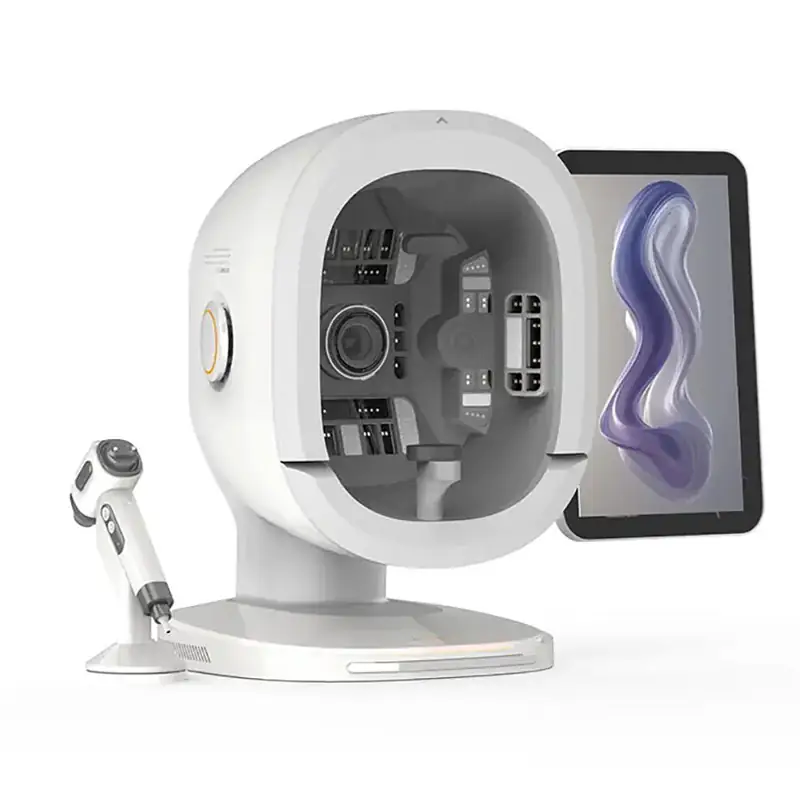
First, regarding imaging technology, you must opt for 3D imaging integrated with cloud computing. Avoid devices that rely solely on 2D imaging, as these are incapable of accurately quantifying three-dimensional skin issues such as acne scars and wrinkles. When making a selection, ensure the device possesses full 180-degree facial capture capabilities—allowing for a complete scan without requiring the client to turn their head—and features 3D modeling and layered visualization functions that clearly reveal the complete condition of the skin, from the epidermis through the dermis to the subcutaneous tissue.
Second, regarding core functionality, the device must incorporate three essential modules. A “Phantom Mode” is crucial for ensuring that the camera angle and positioning remain absolutely consistent across every session; without such fixed positioning, before-and-after comparisons of treatments can be misleading to the client. Furthermore, a multi-terminal synchronization feature—supporting access via both tablets and computers—is essential for completely eliminating the limitations of data silos.
Third, the scope of analysis should encompass multiple imaging modes. These include polarized light imaging, mixed-light analysis for capillary extraction, inflammation mapping, deep-layer pigmentation analysis, UV light imaging, as well as specific analyses for brown spots, red areas, pores, and skin texture. Only through such comprehensive analytical dimensions can the device support truly professional diagnostic conclusions.
Fourth, the underlying algorithms must demonstrate both transparency and interpretability. Avoid “black-box” algorithms; instead, choose a device capable of explaining “why” it recommends a specific treatment or product, rather than merely presenting a final conclusion.
Fifth, data security and privacy compliance must meet established standards. Verify whether the device supports local data storage options, whether its cloud-based data encryption adheres to relevant regulatory standards, and whether clients retain the right to request the deletion of their personal data. These measures are not merely regulatory prerequisites; they serve as the fundamental basis for building and maintaining customer trust.
Purchasing the device is merely the beginning; the true challenge lies in transforming that asset into a steady stream of revenue. Outlined below are three proven strategies for generating profit.
Profit Model 1: Detection as the Gateway—Boosting Project Conversion Rates
Position skin analysis as a free or low-cost tool for attracting foot traffic. By generating visual reports, businesses can build trust with clients and subsequently recommend high-value treatment programs. Data indicates that the implementation of an AI skin analyzer boosts client confidence in the diagnostic reports by nearly 40%. Furthermore, the conversion rate for acne treatment programs rises by 25%, while the rate of cross-selling complementary products increases by 20% to 40%. When clients can visually link their specific skin concerns to a concrete solution, their psychological barriers to making a purchase are significantly reduced.
By conducting continuous skin analyses, businesses can establish comprehensive digital skin profiles for their clients, thereby upgrading the traditional membership card from a mere stored-value instrument into a data-driven service platform. A tiered membership system can be designed as follows: “Basic Members” undergo quarterly analyses, enjoying standard reports and loyalty points—a tier primarily designed to attract new clients and encourage repeat business. “Silver Members” undergo monthly analyses, receiving service discounts and access to a dedicated consultant—a tier aimed at increasing the average transaction value per client. “Gold Members” enjoy unlimited analyses, deeper discounts, personalized treatment plans, and priority booking—a tier designed to secure and retain high-net-worth clients. “Diamond Members” enjoy unlimited, shareable access (including for family members), along with the highest discount rates, invitations to exclusive private salons, and AI-driven predictive analysis services—a tier designed to drive viral growth and word-of-mouth referrals.
This model is particularly well-suited for distributors or chain brands operating multiple retail locations. Revenue streams within this model include leasing AI analysis equipment to smaller beauty salons and charging on a per-scan basis; packaging the AI analysis system as a lightweight, standalone tool and charging an annual service fee; and leveraging diagnostic data to reverse-engineer and custom-formulate skincare products, thereby generating profit through a closed-loop ecosystem encompassing diagnosis, treatment planning, and product sales. Case studies demonstrate that, through the implementation of a standardized operational framework, partner salons can achieve a full return on their investment within four to six months, with in-store conversion rates reaching as high as 40% to 50%.
Before making a purchasing decision, be sure to verify the following points: Does the device support 3D imaging and 180-degree data capture? Does it feature a “Ghost Mode” to ensure accurate comparative analysis? Is there a clear explanation regarding the transparency of its algorithms? Does it support multi-device synchronization and cloud-based data management? Is it capable of accurately analyzing darker skin tones? How are software subscription fees charged, and are there any hidden costs? Does the vendor’s commitment to technical support response times meet your needs? (We recommend requiring a response within 48 hours.) Is a comprehensive staff training program provided? Is warranty service included?
Smart skin analysis machines are not a magic bullet; however, in an era defined by the pursuit of superior customer experiences and precision, failing to leverage AI means falling behind. The key lies in selecting the “right” device—with 3D imaging, Ghost Mode, and algorithmic transparency serving as the absolute baseline requirements. It also involves applying the device in the “right” context: analysis serves as the entry point, conversion is the core objective, and data constitutes the true asset. Finally, “proper training” is paramount; staff must be proficient in interpreting reports and utilizing effective communication scripts, recognizing that AI is a tool designed to amplify professional expertise—not to replace human interaction.If you are currently considering integrating skin analysis machine into your practice, we suggest starting with a small-scale pilot run to identify the solution that best suits your specific needs. After all, while technology is constantly evolving, the ability to truly capture your customers’ hearts remains the ultimate competitive moat for any business.